
Divonne-les-Bains is an orthodontic center on the French side, serving the canton of Geneva. In 2026, a complete treatment in France generally cost between 2,500 and 5,000 euros, compared to 8,000 to 12,000 CHF in Switzerland, according to the High Authority for Health.

Orthodontist on the French side near Geneva: understanding the differences in service area between Divonne and Ferney
Written by Nicolas Barrière : Orthodontist, Qualified Specialist in Dentofacial Orthopedics, founder of the practice at nicolasbarriere.fr. Updated on . Reading time: approximately 11 minutes.
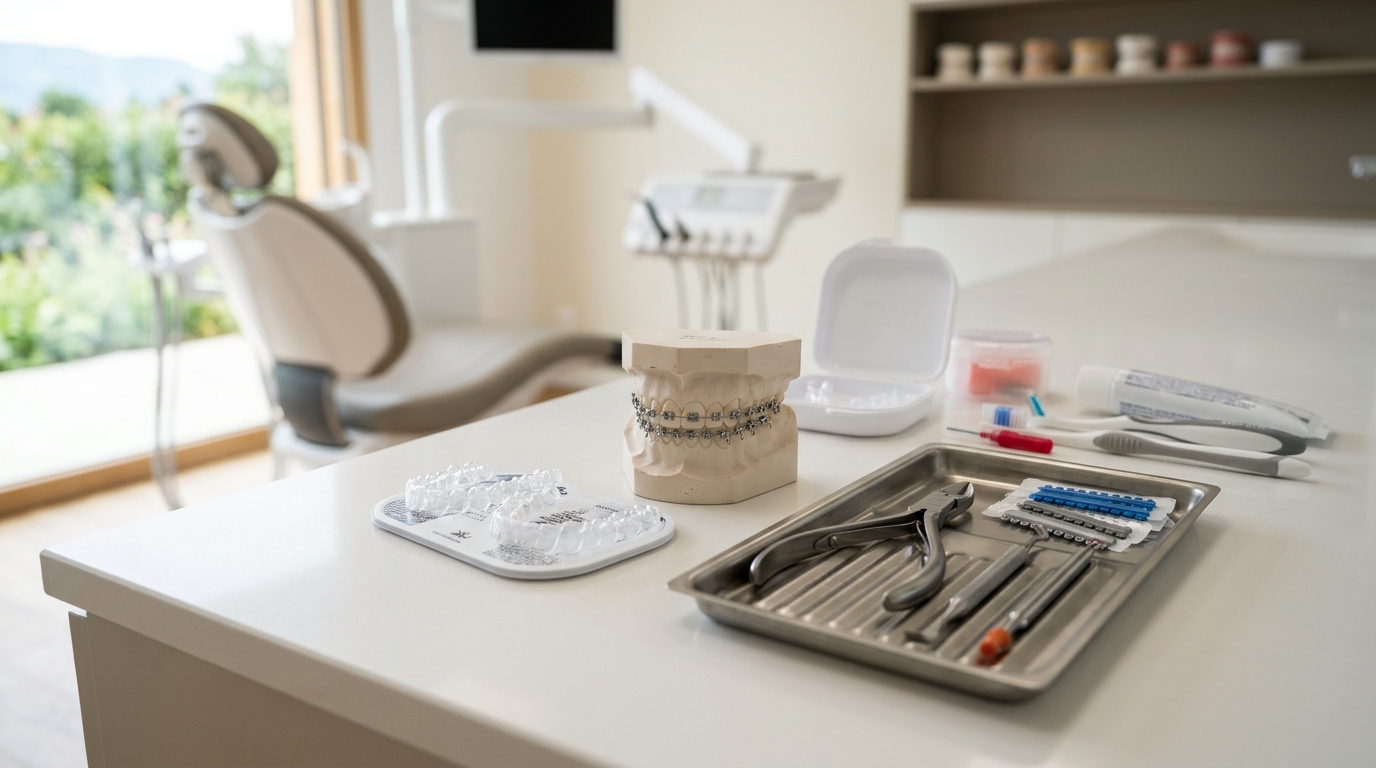
Choosing an orthodontist on the French side near Geneva means deciding between two areas in the Pays de Gex region: Divonne-les-Bains and Ferney-Voltaire. The best choice depends primarily on where you live or work in Greater Geneva and which border crossing is easiest for you.
- Two orthodontic centers on the French side serve the canton of Geneva: Divonne-les-Bains (north of Lake Geneva) and Ferney-Voltaire (urban west).
- In 2026, a complete treatment in France remains significantly more accessible than the prices charged in Switzerland, but clinical diagnosis and the expertise of the practitioner must take precedence over the sole question of cost.
- The average journey time from the centre of Geneva to one of these practices remains less than 20 minutes outside of peak hours.
An orthodontist on the French side of the border near Geneva is accessible via two main areas: Ferney-Voltaire, ideal for residents of Meyrin, Grand-Saconnex, and the airport area, and Divonne-les-Bains, convenient for residents of Versoix, Coppet, or Nyon. Both options allow you to benefit from French rates (as per the national health insurance system) while remaining less than 20 minutes from the center of Geneva.
For families living in Greater Geneva, consulting a specialist on the French side is part of a strategy focused on proximity and continuity of care. This article expands upon the seminal work dedicated to the good organization of the orthodontic practice and its accessibility for patients in the Pays de Gex, focusing on a specific angle: the geographical reading of the choice between Divonne and Ferney for a Geneva patient.
Health alert point: This article is for informational purposes only. Any orthodontic treatment decision requires a complete clinical examination, radiographic assessment, and a personalized consultation with a qualified orthodontist. The information that follows is not a substitute for a consultation.
Divonne-les-Bains or Ferney-Voltaire: which geographical area should be favoured?
The preferred sector depends on the border crossing closest to your home or workplace in the canton of Geneva. The two hubs offer distinct logistical advantages that should be compared according to your travel habits.
Greater Geneva Greater Geneva refers to the Franco-Valdo-Genevan cross-border agglomeration which includes the canton of Geneva, the district of Nyon (Vaud) and several French municipalities in Ain and Haute-Savoie, including those in the Pays de Gex where Divonne-les-Bains and Ferney-Voltaire are located.
Greater Geneva
Lake Geneva Basin
Pays de Gex
Ferney Customs
Divonne Customs
Border workers
The practical advantages of the Ferney-Voltaire area
Ferney-Voltaire is characterized by a direct urban continuity with Geneva. The municipality is adjacent to Geneva International Airport and is directly connected to the canton via the Ferney customs post and the neighbouring Meyrin customs post.
This area benefits from service by Geneva's public transport network (TPG lines), a rare advantage for a practice located on the French side. Patients residing in Meyrin, Grand-Saconnex, Vernier, or the northwest districts of Geneva can access the practice without a car. For families bringing a child to an orthodontic appointment, this transport accessibility significantly simplifies the process.
The dense urban fabric of Ferney-Voltaire also concentrates many dental practices and specialists, which facilitates multidisciplinary pathways when orthodontic treatment requires the joint intervention of a treating dentist, a periodontist or a maxillofacial surgeon.
The logistical specificities of the Divonne-les-Bains sector
Divonne-les-Bains stands out for its smoother cross-border traffic and easy parking. Located in the north of the canton of Geneva, the municipality naturally attracts patients from the northern Lake Geneva basin: Versoix, Coppet, Céligny, and even Nyon on the Vaud side.
For patients traveling via the A1 motorway or living on the right bank of the lake, the Divonne border crossing offers an alternative that is often less congested than urban border crossings. The medical practices in the area generally have private parking, thus avoiding the hassles of paid parking in Geneva's city center.
Key points to remember: If you work in Geneva city centre but live in Nyon, Coppet or Versoix, a meeting in Divonne-les-Bains at the end of the day can represent a significant time saving thanks to a more flexible traffic flow.
How can we concretely compare the two sectors?
The comparison is based on four main criteria: road access, public transport, parking and naturally served patient base. The table below summarizes these differences for a patient residing on the Swiss side.
| Criteria | Ferney-Voltaire area | Divonne-les-Bains area |
|---|---|---|
| Natural Geneva clientele | Meyrin, Grand-Saconnex, Vernier, airport | Versoix, Coppet, Céligny, Nyon (VD) |
| Access to TPG public transport | Direct (cross-border lines) | Limited (recommended vehicle) |
| Parking | Urban, sometimes constrained | Easy access, frequent private parking |
| Border crossing fluidity during peak hours | Heavy traffic (airport area) | Generally more flexible flow |
| Main road route from Geneva | Meyrin Road, A411 motorway | Route de Suisse, A1 motorway |
20 minaverage journey time from Geneva city centre
15 minNyon to Divonne-les-Bains
10 minMeyrin towards Ferney-Voltaire
2border orthodontic centers
These durations are indicative and do not include peak border crossing hours. They vary depending on the day of the week, the weather, and peak border crossing times identified by State services in Haute-Savoie.
Making an appointment in neighboring France: how to organize it?
The organization relies on three levers: anticipating peak border traffic hours, choosing a practice offering suitable parking, and checking your health insurance scheme (LAMal, CMU or cross-border supplementary). Orthodontic follow-up lasts 18 to 30 months with a monthly appointment: the logistics must be sustainable over time.
To ensure smooth patient care despite border traffic, the good organization of the orthodontic practice and its accessibility for patients in the Pays de Gex These remain decisive criteria when making your choice. A practice that offers extended appointment slots in the late afternoon, private parking, and flexible scheduling makes it easier to adhere to your treatment plan.
Anticipating border flows
The peak times at the Ferney and Divonne border crossings are well-known and consistent: between 7:00 and 9:00 a.m. for traffic heading from France to Switzerland, and between 5:00 and 7:30 p.m. for traffic heading in the opposite direction. Scheduling an orthodontic appointment for mid-morning or early afternoon will help you avoid these peak periods.
-
Check your insurance policy
Determine whether you are covered by LAMal, the CMU frontalière (French universal health coverage for cross-border workers), or a Franco-Swiss supplementary insurance plan. Each system determines the reimbursement process for orthodontic treatment received in France.
-
Choose the appropriate geographical area
Combine your place of residence, your place of work and your travel habits to determine whether Divonne or Ferney is logistically more suitable.
-
Schedule an appointment for an initial assessment
The first appointment includes a clinical examination, a radiological diagnosis if necessary, and a discussion of treatment options. The practitioner remains responsible for choosing the appliance (visible braces, lingual braces, or clear aligners): the patient does not choose a brand but the technique best suited to their individual case.
-
Schedule recurring time slots
Active treatment requires regular follow-up. It is advisable to book recurring appointment slots outside of peak border periods for the planned duration of the treatment.
-
Plan for the restraint phase
After the active treatment, a maintenance phase begins to stabilize the results. This involves less frequent appointments but requires continued follow-up.
Do you live in Geneva or in the cross-border agglomeration?
A personalized exchange with the practice allows us to assess the relevance of orthodontic follow-up in France, to anticipate the logistical organization and to answer your questions on the reimbursement procedures.
The status of cross-border workers with regard to orthodontics
Franco-Swiss cross-border workers are covered by a specific health insurance scheme (LAMal or CMU) which conditions the coverage of orthodontic care received in France. According to Information published on the reimbursement of Swiss cross-border workers, The procedures differ depending on the choice of affiliation made when taking up employment in Switzerland.
Patients covered by Swiss health insurance (LAMal) generally have to pay upfront and then request partial reimbursement from their Swiss insurer, within the limits of their policy. Those who have opted for universal health coverage (CMU) benefit from the standard French reimbursement process through the national health insurance system, supplemented, if necessary, by private health insurance. In all cases, a detailed estimate provided by the orthodontist allows patients to anticipate their actual out-of-pocket expenses.
Administrative vigilance: In France, orthodontic treatment is covered by national health insurance only for children and adolescents, under certain conditions (treatment must begin before their 16th birthday, and prior approval is required). For adults, reimbursement is exclusively provided by supplemental health insurance. Check your coverage before starting treatment.
What are the real differences between the two sectors from a clinical perspective?
From a strictly clinical point of view, there is no difference: an orthodontist practicing in Divonne-les-Bains or in Ferney-Voltaire is subject to the same professional rules, the same recommendations of the High Authority of Health and the same code of ethics. The quality of care depends on the practitioner, not the sector.
Dentofacial orthopedics Dentofacial orthopedics (ODF) is the dental specialty that diagnoses and treats abnormalities in tooth position and jaw growth. In France, it is reserved for dentists holding the [relevant qualification/license]. CECSMO or OF THE of dentofacial orthopedics.
An identical regulatory framework
Every orthodontist practicing in France, whether in Divonne or Ferney, is registered with the National Order of Dental Surgeons. They apply the best practice guidelines published in particular by the French National Authority for Health (HAS) guidelines on the indications for dentofacial orthopedics and respects the ethical framework set out in Article R.4127-215-1 of the Public Health Code.
Comparable technical platforms
The practices in both areas generally offer the same techniques: metal braces, ceramic braces (aesthetic brackets), clear aligners, and lingual orthodontics for adults who prefer it. The criteria for choosing a practitioner are based more on experience, qualifications (Qualified Specialist in Dentofacial Orthopedics), communication style, and patient file management than on their precise location within the Pays de Gex.
🧒
Children and teenagers
Interceptive orthodontics from age 4, multi-bracket treatments, transparent aligners adapted for teenagers, monitoring of maxillofacial growth.
🧑
Adults
Clear aligners, lingual orthodontics, aesthetic ceramic brackets, preparation for orthognathic surgery.
🛡️
After treatment
Fixed or removable retention, stability monitoring, long-term orthodontic relapse management.
How much does orthodontic treatment cost in neighboring France in 2026?
The cost of orthodontic treatment depends first and foremost on the clinical diagnosis and the technique adapted to your case, determined by the practitioner after a complete assessment. French prices remain significantly lower than those charged in Switzerland, but this criterion should never take precedence over the expertise of the practitioner and the consistency of the care pathway.
Only a personalized quote, provided after a complete clinical assessment, constitutes a binding agreement with a practitioner. The practitioner's expertise and the technique best suited to your case take precedence over the sole consideration of cost.
«"The price difference between France and Switzerland should never be the sole deciding factor. Orthodontic treatment involves several years of regular follow-up: the consistency of the treatment plan, the stability of the practitioner, and the quality of the clinical dialogue remain the determining factors."»
Reimbursement for orthodontic treatment in France
According to the rules published by the Health Insurance, Orthodontic treatments are covered for children under 16, subject to prior approval from the French national health insurance (Sécurité sociale). Beyond this age, treatment remains possible but is not reimbursed by the mandatory health insurance scheme, except in cases involving jaw surgery.
For cross-border patients, the combination of basic health insurance (LAMal), universal health coverage (CMU), and supplemental health insurance determines the amount actually reimbursed. An orthodontist experienced in treating cross-border patients will be able to advise on compiling the necessary documentation and the types of supporting documents to keep.
What are the typical healthcare pathways from Geneva?
Three typical patient profiles emerge: the Geneva family seeking child/adolescent follow-up, the active adult in need of discreet aesthetics, and the patient resuming treatment after a recurrence. Each follows a slightly different path within the firms on the French side.
👨👩👧
Families of Greater Geneva
Children typically request an assessment as early as 7 or 8 years old, often referred by their pediatrician or dentist. Follow-up care extends over several years, sometimes beginning with interceptive treatment, followed later by multi-bracket braces during adolescence. The proximity of the dental practice is a key factor.
💼
The active adult
He favors discreet techniques: clear aligners or lingual orthodontics. The availability of appointments at the end of the day and a quick commute from his Geneva workplace were significant factors in his decision.
🔄
Resumption of treatment
After a relapse, the patient seeks a precise assessment of their current dental condition and a suitable treatment plan. Their orthodontic history is taken into account in the diagnosis.
An example of an anonymized journey
A cross-border worker residing in Versoix, affiliated with the French national health insurance (CMU), consulted for dental alignment in preparation for future prosthetic work. Following a clinical and radiological assessment, a 14-month treatment plan using clear aligners was recommended. The patient chose the Divonne-les-Bains area for its convenient access from the right bank of the Garonne and the ease of parking. Once the plan was approved, the active phase began with monthly follow-up appointments scheduled for early afternoon, outside of peak cross-border travel times, during which the dentist adjusted the aligners and monitored progress. At the end of the active treatment phase, a combination of lingual wire and a night guard was used to stabilize the results.
How to recognize a qualified specialist orthodontist?
A qualified specialist orthodontist is a dental surgeon holding a recognized additional diploma: the CECSMO or the DES in dentofacial orthopedics. This qualification appears on his professional plaque and in the official directory of the National Order of Dental Surgeons.
CECSMO THE CECSMO The DES (Diploma of Specialized Studies) in orthodontics was the historical specialization diploma, awarded after three to four years of additional training to the state diploma of dental surgeon. It has been gradually replaced by the DES in dentofacial orthopedics, which offers an equivalent qualification.
To verify a practitioner's qualifications, the official directory of the National Council of the Order of Dental Surgeons is the most reliable source. It indicates whether the practitioner is registered as a general dentist or as a qualified specialist in dentofacial orthopedics. This distinction is important: only qualified specialists are authorized to include the term "orthodontist" on their nameplate.
Other dedicated pages within this cluster discuss this in more detail. The process of referring patients to an orthodontic specialist in the Ain region, the organization of a Orthodontic practice in Divonne-les-Bains for families, as well as the specific instructions for the’Orthodontics for children and adolescents in the Gex-Ferney-Divonne area.
Points to consider before choosing your sector
Pay attention to secondary criteria: Choosing an orthodontist often commits you to 2 to 3 years of treatment. Beyond travel time, check the practitioner's availability in case of an orthodontic emergency (loose bracket, irritating wire), the ease of scheduling appointments, and the clarity of the initial treatment plan.
- Consider your place of residence, place of work and commuting habits before choosing between Divonne and Ferney.
- Check the practitioner's qualifications in the directory of the National Council of the Order of Dental Surgeons.
- Always ask for a detailed quote, specifying the technique, the estimated duration and the number of appointments.
- Clarify your insurance plan (LAMal, CMU, supplementary) before starting treatment.
- Anticipate emergency management: opening hours, telephone accessibility, protocol in case of minor incident.
- Consider the retention phase: it is an integral part of the treatment and determines long-term stability.
Are you hesitating between the two sectors?
An initial consultation at Dr. Nicolas Barrière's office in Divonne-les-Bains will allow us to assess the geographical suitability of our area for your specific situation. A qualified specialist orthodontist will guide you towards the most appropriate solution, including if a closer practitioner would be preferable.
📌 Key points to remember
- The choice of an orthodontist on the French side near Geneva is mainly based on the most accessible border crossing: Ferney for the urban areas of Meyrin and Grand-Saconnex, Divonne for the northern Lake Geneva region (Versoix, Coppet, Nyon).
- The two hubs of the Pays de Gex are located less than 20 minutes from the centre of Geneva outside of peak hours.
- French prices remain significantly lower than Swiss prices, but clinical diagnosis and the practitioner's expertise always take precedence over the sole issue of cost.
- The French regulatory framework (HAS, National Order of Dental Surgeons) strictly regulates the qualification of specialists in dentofacial orthopedics.
- Cross-border workers must clarify their insurance status (LAMal or CMU) before starting treatment.
- An initial consultation is essential to establish a personalized diagnosis: only a complete clinical examination can validate a therapeutic proposal.
- Proximity and ease of access to the practice are important: orthodontic treatment lasts several years.
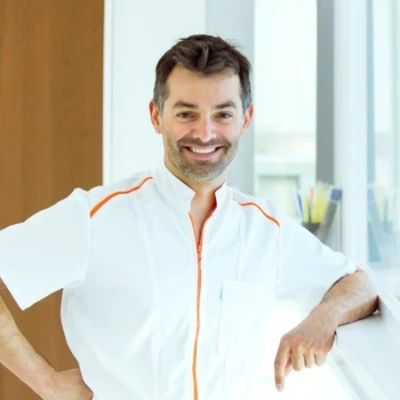
About the author: Dr. Nicolas Barrière
Dr. Nicolas Barrière is an orthodontist, a qualified specialist in dentofacial orthopedics, a former hospital intern, and the founder of his practice in Divonne-les-Bains. He treats children, adolescents, and adults with orthodontic treatments (clear aligners, lingual orthodontics, multi-bracket orthodontics), with particular attention to the care of patients living near the French-Swiss border.
Areas of expertise: Orthodontics, Dentofacial orthopedics, Clear aligners, Lingual orthodontics, Pediatric orthodontics, Adult orthodontics, Orthognathic surgery, Sleep apnea, Retention.
FAQ: Frequently asked questions about borderline orthodontics
How much does orthodontic treatment cost in Switzerland?
Prices in Switzerland are generally considered higher than in France, depending on the chosen technique and the complexity of the case. Beyond this difference, the clinical diagnosis and the practitioner's expertise remain the determining factors, which leads many patients in the Greater Geneva area to consult an orthodontist in France.
What is the average price of orthodontic treatment in France?
In France, the price of complete orthodontic treatment varies depending on the technique (visible braces, lingual braces, or clear aligners) and the duration of treatment. The orthodontist is responsible for choosing the appliance best suited to your individual case: only a personalized quote, provided after a thorough clinical assessment, will reveal the true cost. The orthodontist's expertise takes precedence over the price alone.
How many years of study are required to become an orthodontist?
In France, becoming a specialist in dentofacial orthopedics requires six years of dental surgery studies, followed by a three- to four-year residency. The practitioner obtains their Diploma of Specialized Studies (DES) or CECSMO after nearly ten years of university and hospital training.
Who earns more, a dentist or an orthodontist?
Historically, the high level of specialization and strong demand for dental alignment treatments have often allowed orthodontists to earn higher incomes than general dentists. However, these differences depend largely on the location of the practice, the size of the patient base, and the technological equipment used.
How to become an orthodontist in Switzerland?
In Switzerland, the path begins with a Master's degree in dentistry, lasting approximately five years, followed by postgraduate training in orthodontics accredited by the Swiss Orthodontic Society, with a minimum duration of three years. The entire program represents approximately eight to nine years of study after high school graduation.
Can a patient from Geneva be reimbursed for orthodontic treatment carried out in France?
Yes, depending on your insurance plan. Cross-border workers covered by Swiss health insurance (LAMal) can request partial reimbursement from their Swiss insurer after paying upfront. Those covered by universal health coverage (CMU) follow the standard French reimbursement process. A detailed estimate provided by the orthodontist allows you to anticipate the actual cost.
How long does orthodontic treatment last?
The duration of active treatment is generally between 12 and 30 months, depending on the complexity of the case and the technique chosen. This is followed by a retention phase, essential for stabilizing the results, which can last several years with spaced-out check-up appointments.
Do you need a prescription to see an orthodontist?
No, access to an orthodontist in France is unrestricted, without a mandatory prescription. However, patients are frequently referred by their general dentist or pediatrician, which facilitates the coordination of care and the sharing of medical records.
📚 Sources and references
Official and institutional sources:
- French National Authority for Health: Indications for dentofacial and dentomaxillofacial orthopedics in children and adolescents
- Health insurance: reimbursement for orthodontic treatments
- State services in Haute-Savoie: Franco-Swiss customs procedures
- Republic and Canton of Geneva: Greater Geneva, serving the Franco-Valdo-Genevan agglomeration
Academic and encyclopedic sources:
- Wikipedia: Orthodontics
- Wikipedia: Divonne-les-Bains
- Wikipedia: Ferney-Voltaire
- Wikipedia: Greater Geneva
Specialized press and information:
- France Assos Santé: Reimbursement and cost of orthodontics
- Practical guide on reimbursement for Swiss cross-border workers
📖 Also read about the firm:
- Organization of the orthodontic practice and accessibility for patients in the Pays de Gex region (pillar article)
- Orthodontics in the Ain department, Gex and Saint-Genis-Pouilly area: how does referral to a specialist work?
- Orthodontic practice in Divonne-les-Bains: convenient service area and practical organization for families
- Orthodontist specializing in children and adolescents in the Gex, Ferney, and Divonne area
- Orthodontic emergencies in the office
- Make an appointment at Dr. Nicolas Barrière's office
 French
 English