
The fitting of braces (multi-bracket appliances) is a specialized procedure performed by a qualified orthodontist specializing in dentofacial orthopedics. The practice in Divonne-les-Bains serves the border region and the municipalities of Greater Geneva, approximately 15 minutes away by car.

Orthodontic practice in Divonne-les-Bains: convenient service area and practical organization for families
Written by Nicolas Barrière : Orthodontist, Qualified Specialist in Dentofacial Orthopedics, founder of the practice at nicolasbarriere.fr. Updated on . Reading time: approximately 12 minutes.
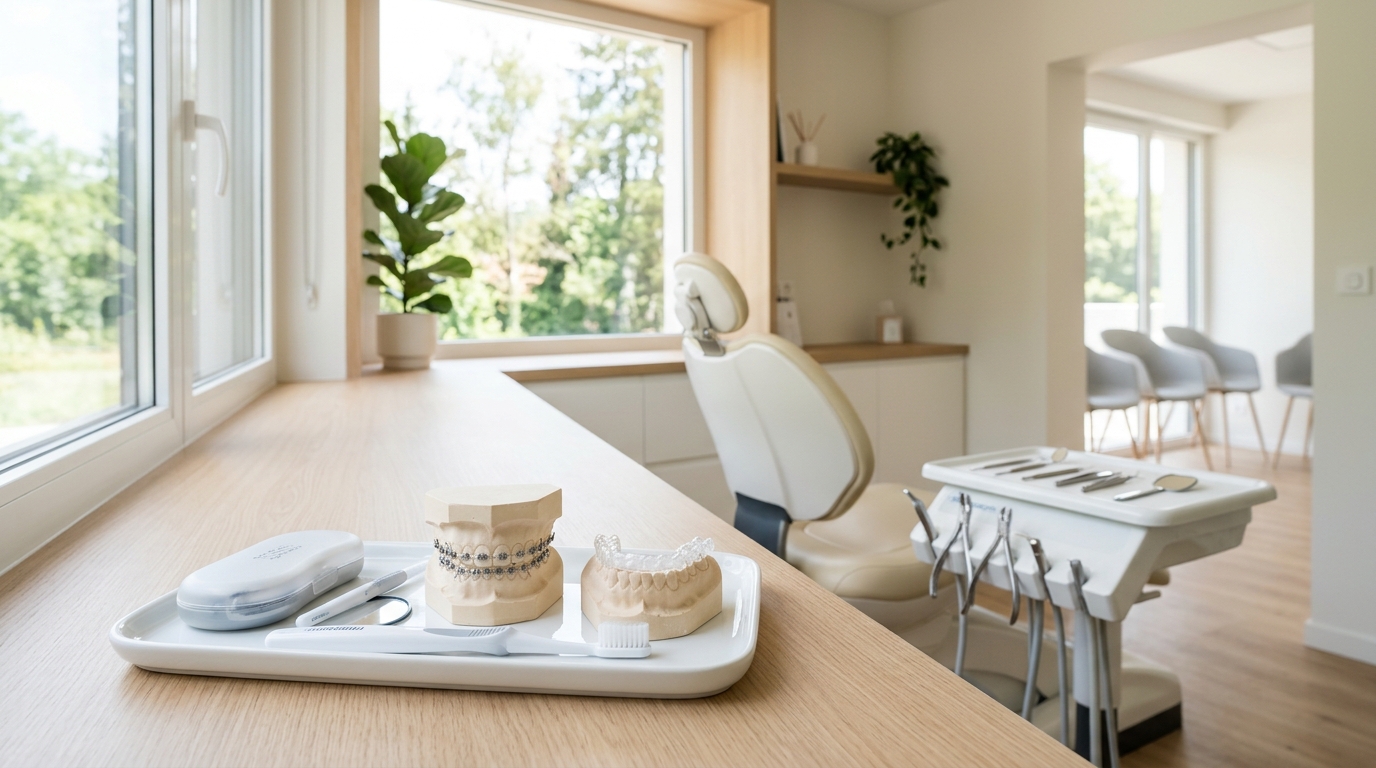
Choosing an orthodontist in Divonne-les-Bains to get braces is a common question for families in the Pays de Gex region. The answer depends on the type of practitioner qualified to conduct a complete orthodontic treatment.
- The fitting of braces (multi-bracket appliance) is a specialized procedure, performed by a qualified orthodontist in dentofacial orthopedics.
- The Divonne-les-Bains practice welcomes patients from Gex, Saint-Genis-Pouilly, Thoiry, Ferney-Voltaire and the municipalities of Greater Geneva, about 15 minutes away by car.
- The fitting appointment lasts between 45 and 60 minutes; Health Insurance reimburses 193.50 euros per semester if treatment starts before age 16.
For braces, it is recommended to consult an orthodontist, a Qualified Specialist in Dentofacial Orthopedics, rather than a general dentist. The practice in Divonne-les-Bains welcomes patients without a prior referral from Gex, Saint-Genis-Pouilly, Thoiry, and Ferney-Voltaire, with appointments scheduled to accommodate school and cross-border commuters. Families benefit from specialized orthodontic care and convenient parking nearby.
Is it necessary to go through a dentist to consult an orthodontist?
No, a patient can make an appointment directly with an orthodontist without a referral from their treating dentist. Direct access to a qualified specialist in dentofacial orthopedics is permitted in France, for both children and adults. Therefore, you can contact the practice in Divonne-les-Bains without a prior consultation with your dentist.
That said, joint care remains invaluable. The general dentist manages overall oral health (cavities, scaling, restorative treatments), while the orthodontist focuses exclusively on aligning teeth and correcting the relationship between the jaws. In practice, we recommend that routine dental care be up-to-date before starting braces: an untreated cavity under an orthodontic bracket complicates follow-up.
Orthodontist A dental surgeon holding a supplementary diploma in dentofacial orthopedics (DES ODF or CECSMO), the only one authorized to call himself a "Qualified Specialist in Dentofacial Orthopedics" (code 36 of the nomenclature). He dedicates his practice to the diagnosis and treatment of dental malpositions and jaw disharmonies.
Dental surgeon A general practitioner of oral health, trained in routine care (cavities, root canals, extractions, prostheses). They can perform some simple orthodontic procedures, but generally refer patients to a qualified orthodontist for complex multi-bracket treatments.
The difference lies in the training. After obtaining their state diploma as a Doctor of Dental Surgery, orthodontists complete four additional years of qualifying internship in dentofacial orthopedics, according to the criteria defined by the High Authority for Health. This process explains why the fitting and monitoring of a multi-bracket appliance are, in practice, entrusted to a specialist.
Important point to note: Only a clinical consultation can establish a personalized diagnosis. The information in this article is general and does not replace a thorough examination in a doctor's office. For any questions about your situation, make an appointment at the office.
What geographical area does the Divonne office serve for families in the Pays de Gex?
Dr. Barrière's office in Divonne-les-Bains welcomes families residing within a radius of approximately 20 kilometers, coming from Gex, Saint-Genis-Pouilly, Thoiry, Ferney-Voltaire and the municipalities of Greater Geneva. Divonne's geographical position, on the edge of the Swiss border and at the foot of the Jura, makes it a natural access point for border families as well as for the inhabitants of the Gex basin.
Divonne-les-Bains and Gex belong to the same intercommunality, the Pays de Gex Agglomeration Community, itself a stakeholder in Greater Geneva, a Franco-Valdo-Genevan cross-border agglomeration. This territorial integration is reflected concretely: families who work in Geneva, send their children to school in Gex or Ferney, and live in Divonne, Thoiry or Saint-Genis, form a coherent living area.
To help you visualize travel times to the office from the main towns in the area, here are the usual distances.
| Municipality of departure | Distance | Driving time | Public transport |
|---|---|---|---|
| Gex | ≈ 11 km | 15 to 20 minutes | Pays de Gex Agglo bus line |
| Saint-Genis-Pouilly | ≈ 17 km | 20 to 25 min | Correspondence via Gex |
| Thoiry | ≈ 20 km | 25 to 30 minutes | Connection via Saint-Genis |
| Ferney-Voltaire | ≈ 15 km | 20 min | Regional line |
| Prévessin-Moëns | ≈ 12 km | 15 min | Local line |
| Nyon (CH) | ≈ 10 km | 15 min | Regional train |
For more information on local logistics and office hours, please consult our guide on the organization of orthodontic care in the Pays de Gex, which details consultation slots and parking options.
How do the timetables adapt to the needs of border families?
Families in this area often combine schooling in France with work in Geneva. Longer appointments (initial assessment, fitting, removal) are offered during extended time slots to avoid frequent school absences. Shorter follow-up appointments (approximately 15 to 20 minutes) can often be scheduled during lunch breaks or at the end of the day, minimizing the impact on school and work.
🅿️
Parking
Parking spaces in the immediate vicinity, making it easy to come with young children.
🏫
School timetables
Time slots designed for students from the Pays de Gex Agglomeration, including Wednesdays.
🇨🇭
Border workers
Management of Franco-Swiss files (LAMal, supplementary health insurance) by the secretariat.
👨👩👧
Siblings
Possibility of grouping siblings' appointments on the same beach.
How long does it take to get braces fitted?
Fitting a multi-bracket appliance takes on average between 45 minutes and 1 hour, for both arches. This is the longest appointment in orthodontic treatment, after the initial assessment. For families coming from Gex, Thoiry, or Saint-Genis-Pouilly, a full morning or early afternoon trip is necessary.
60 minFull set (2 arches)
20 minfollow-up appointment
6 weeks.interval between two adjustments
18 monthsaverage duration of treatment
The procedure unfolds in several stages: cleaning and preparation of the tooth surface, individual bonding of each bracket with a light-cured resin, placement and ligation of the metal archwire. Each step must be performed in a precise order to guarantee adhesion and correct positioning of the brackets.
What are the steps in the installation process?
-
First consultation
Clinical examination, radiographs, discussion of objectives. Duration: 30 to 45 minutes.
-
Complete assessment and treatment plan
Digital fingerprinting, cephalometric analysis, presentation of the quote and the request for prior agreement.
-
Preparation (if necessary)
Prior dental care at the treating dentist, scaling, possible extractions.
-
Fitting the rings
45-60 minute appointment at the office, bonding of brackets and placement of the first archwire.
-
Regular monitoring
Follow-up visits every 4 to 8 weeks for device adjustments. Duration: 15 to 20 minutes.
-
Removal and restraint
Removal of the braces (approximately 30 minutes) followed by immediate placement of a retainer (bonded wire or splint).
«"Organizing braces treatment requires rigorous planning. Families who schedule long appointments during school holidays or on Wednesdays have a better experience of the 18 to 24 months of follow-up."»
What is the average cost of orthodontic treatment and what financial assistance is available?
The cost of treatment with braces depends primarily on the clinical diagnosis and the complexity of the case, established by the orthodontist during the initial assessment. Social Security covers part of the orthodontic care if treatment begins before the child's 16th birthday, provided that prior agreement has been accepted.
Reminder of ethical principles: In accordance with the code of ethics for dental surgeons, fees are not a selling point. The clinical diagnosis and the practitioner's expertise determine the appropriate technique for each case. A personalized estimate is always provided following the initial assessment.
How does health insurance reimbursement work?
For a child under 16, each six-month period of active treatment is covered on a flat-rate basis. According to the’Health Insurance, This base amount is set at €193.50, reimbursed at 100% per semester (%), up to a maximum of six consecutive semesters. The first year of retention following removal also benefits from specific coverage.
| Situation | Social Security coverage | Terms |
|---|---|---|
| Child under 16 years old | €193.50/semester | Prior agreement accepted before the start of treatment |
| 1st year of retention | €161.25 then €107.50 | Continuing the active treatment |
| Adult (over 16 years old) | No coverage by Social Security | Except in specific cases (surgical preparation) |
| Orthognathic surgery | Coverage subject to agreement | Reimbursable pre- and post-surgical semester |
Supplemental health insurance (mutuelle) often covers the remaining costs, depending on the chosen level of coverage. For cross-border families affiliated with the Swiss LAMal (Swiss health insurance) or with Franco-Swiss supplemental insurance, the firm's administrative staff assists with the paperwork.
Need a personalized orthodontic assessment?
Each clinical situation is unique. A thorough examination in the office allows us to establish a treatment plan and a quote tailored to your child or yourself.
What types of rings are offered to families in the sector?
The practice offers three main types of fixed braces: classic metal braces, aesthetic ceramic brackets and lingual orthodontics (braces glued to the back of the teeth). The choice depends on the patient's age, the complexity of the case, and aesthetic preferences. The orthodontist, responsible for the diagnosis, determines the appropriate technique (visible braces, lingual braces, or clear aligners).
🦷
Metal rings
A leading solution, particularly suited to adolescents. High mechanical resistance, simple maintenance, extensive clinical experience.
Ceramic fasteners
Enhanced visual discretion, often chosen by upper secondary school students and adults.
Lingual orthodontics
Attachments bonded to the inner surface of the teeth, completely invisible. Specialized technique reserved for certain indications.
Transparent gutters
An alternative to braces in some cases, in the form of transparent removable aligners.
At what age should a child consult a doctor?
An initial orthodontic consultation is recommended around the age of 7, when the first permanent teeth erupt. This early consultation does not necessarily lead to treatment; its main purpose is to identify situations that benefit from early intervention (thumb sucking, jaw misalignment, severe crowding) and those that can wait until adolescence.
For interceptive treatments in children, please consult the information dedicated to...’Orthodontics for different ages. To understand how a child in the area is referred to a specialist, please refer to our article on the organisation of monitoring for children and adolescents in the Gex-Ferney-Divonne area.
How are the removal of braces and the retention process organized?
Removing the braces is a painless procedure lasting approximately 30 minutes, followed immediately by the placement of a retainer to stabilize the teeth in their new position. This step must be carried out by the orthodontist who designed the treatment, and not by a general dentist.
Why the orthodontist for the removal
- Specialized tools for removing resin without scratching the enamel
- Immediate application of the retainer (bonded wire or splint)
- Post-treatment follow-up planned immediately after removal
- Final evaluation of the result and photographs at the end of treatment
Risks of an inappropriate withdrawal
- Scratches or cracks in the tooth enamel
- Lack of restraint: rapid recurrence of the initial positions
- Resin residue not properly removed
- Loss of orthodontic follow-up file
Retention is an essential step, too often underestimated. Teeth retain a "memory" of their initial position and tend to return to their original alignment if nothing holds them in place. A thin metal wire, bonded to the inside of the incisors, or a night guard, allows the result to be maintained in the long term.
Health alert point: Never attempt to remove a loose bracket or cut an orthodontic wire yourself at home. In case of emergency (a hurting wire, a broken bracket), contact the office. For after-hours emergencies, please see our dedicated page. orthodontic emergency.
«"Retention is an integral part of the treatment. We observe that patients who follow the instructions for wearing the night guard maintain the alignment achieved over the long term."»
Why is the practice structured for cross-border patients?
Divonne-les-Bains is located less than 15 minutes from the Swiss border and Nyon, in a catchment area where one in two residents works in Geneva or in the canton of Vaud. This demographic reality has shaped the organization of the firm since its creation.
LAMal
Swiss federal law on health insurance, which concerns cross-border workers who have opted for Swiss rather than French coverage.
Greater Geneva
Franco-Valdo-Genevan cross-border agglomeration encompassing Geneva, the canton of Vaud and the French departments of Ain and Haute-Savoie.
Prior agreement
Form submitted to the Health Insurance before the start of orthodontic treatment, condition for its reimbursement.
Multi-fasteners
Fixed appliance consisting of brackets glued onto each tooth and connected by a metal arch which exerts the forces of displacement.
The office manages insurance files in French and assists with administrative procedures for both French social security and cross-border supplemental health insurance. Families with mixed coverage (parents on LAMal, children on French coverage, or vice versa) will find at the office a contact person experienced in these situations.
Divonne-les-Bains
Gex
Saint-Genis-Pouilly
Thoiry
Ferney-Voltaire
Prévessin-Moëns
Greater Geneva
Pays de Gex
How is a patient from Gex or Saint-Genis referred to Divonne?
Three referral pathways are common in this sector. First, a referral from the patient's dentist, who then refers them to the orthodontist for a specialized assessment. Second, a direct consultation by the family, after online research or word-of-mouth. Third, a referral from a general practitioner or pediatrician, particularly for very young children with a sucking habit or a functional disorder.
To better understand the career paths chosen by practitioners in the sector, see our detailed article on referral to a specialist in the Ain region. Families in Geneva and on the French side of the lake will find additional points of reference in our analysis of differences in sector between Divonne and Ferney.
What practical considerations should be anticipated for treatment with braces?
Brace treatment temporarily alters daily hygiene, diet, and oral comfort. Anticipating these changes makes the first few weeks much easier, especially for teenagers starting their treatment.
📝 The first 48 hours after placement may cause tooth sensitivity, which will subside spontaneously. This is a sign that the teeth are starting to move.
Is it possible to play sports and an instrument while wearing braces?
Sports activities remain possible, including team and contact sports, provided that a mouthguard compatible with orthodontic appliances is worn. For musicians, wind instruments (flute, trumpet, saxophone) require a short period of adjustment, after which practice resumes normally. String and percussion instruments present no problems.
Good to know: At the start of treatment, the practice systematically provides an information booklet detailing daily routines, foods to avoid, and what to do in case of an incident. This documentation is particularly useful for families undergoing their first orthodontic treatment.
FAQs about orthodontics and braces in the Pays de Gex
Is it necessary to go through a dentist to consult an orthodontist?
No. In France, access to an orthodontist is through direct consultation, without a prior referral from a general dentist. A patient from Gex, Divonne, or Saint-Genis-Pouilly can make an appointment directly with the orthodontic practice. However, it is still recommended to maintain regular dental checkups for cavities, teeth cleaning, and restorative treatments.
What is the average price of orthodontic treatment?
The cost of braces depends on the clinical diagnosis, the type of appliance determined by the practitioner (metal, ceramic, or lingual), and the complexity of the case. A personalized quote is provided after the initial assessment, in accordance with professional ethics. French National Health Insurance (Assurance Maladie) reimburses €193.50 per semester for children under 16, subject to prior approval.
Can a dentist remove braces?
Technically, a dentist could do it, but this is strongly discouraged. The removal of the braces must be performed by the orthodontist who designed the treatment: they have the specific instruments to detach the brackets without damaging the enamel and immediately place the necessary retainer. Removal without a retainer risks a rapid relapse of the malocclusions.
Does removing the rings hurt?
No, removing braces is a painless and quick procedure, taking approximately 30 minutes in total, including the time spent in place. The dentist uses a special tool that gently detaches the bracket from the tooth. The patient may feel a small click as the bracket is removed, but there is no pain. The subsequent polishing to remove any resin residue is also comfortable.
How long does it take to get braces fitted?
The fitting of multi-bracket appliances on both arches lasts on average between 45 minutes and 1 hour. This is the longest appointment of the treatment, excluding the initial assessment. Subsequent follow-up visits are much shorter, approximately 15 to 20 minutes every 4 to 8 weeks, making them easier to fit into school or work schedules.
How much does it cost to remove a dental brace?
The removal of braces is not usually billed as a separate procedure. Its cost is included in the six-month or overall orthodontic treatment package agreed upon at the start of treatment. The first year of retention following this removal is subject to a specific fee, partially covered by health insurance if treatment began before the age of 16.
How often should I return to the office during treatment?
Adjustment appointments are typically held every 4 to 8 weeks, depending on the phase of treatment and the type of appliance. For families living in Gex, Thoiry, or Saint-Genis-Pouilly, the practice strives to schedule appointments that are compatible with school hours and cross-border work schedules.
Can an adult wear rings?
Yes, there is no age limit for starting orthodontic treatment, provided that periodontal health (gums and supporting bone) allows it. Adults represent a growing proportion of patients. In cases where discretion is a priority, ceramic brackets, lingual orthodontics, or clear aligners are alternatives to traditional metal braces.
📌 Key points to remember
- The fitting of braces is a specialized procedure, performed by a qualified orthodontist in dentofacial orthopedics, and not by a general dentist.
- The Divonne-les-Bains practice welcomes patients without a prescription from Gex, Saint-Genis-Pouilly, Thoiry, Ferney-Voltaire and Greater Geneva.
- The initial fitting appointment lasts 45 to 60 minutes; subsequent follow-up appointments are 15 to 20 minutes every 4 to 8 weeks.
- Health insurance reimburses 193.50 euros per semester for children under 16 years of age, subject to prior agreement.
- The removal of the braces must always be carried out by the orthodontist who designed the treatment, with immediate placement of a retainer.
- Border families benefit from a secretariat accustomed to handling LAMal and Franco-Swiss supplementary insurance files.
- Only a clinical consultation allows for a personalized opinion and an appropriate treatment plan.
An orthodontic project in the Pays de Gex?
An in-office assessment remains the only way to accurately evaluate your situation or that of your child. Schedule an initial consultation.
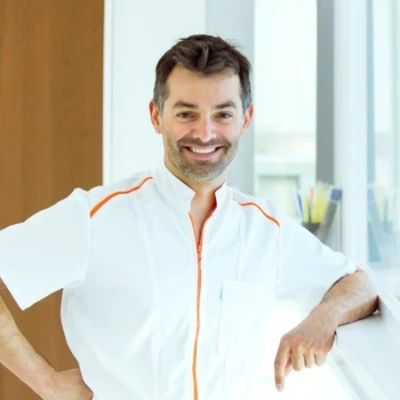
About the author: Nicolas Barrière
Dr. Nicolas Barrière is an orthodontist, a qualified specialist in dentofacial orthopedics, a former hospital intern, and the founder of his practice in Divonne-les-Bains. He treats children, adolescents, and adults with orthodontic treatments (clear aligners, lingual braces), paying particular attention to the care of patients living near the French-Swiss border.
Areas of expertise: dentofacial orthopedics, preventive and interceptive orthodontics for children, orthodontics for adolescents and adults, clear aligners, lingual orthodontics, multi-bracket appliances, orthognathic surgery, functional disorders and TMJ, sleep apnea, retention and relapses.
📚 Sources and references
Official and institutional sources:
- French National Authority for Health: Indications for dentofacial orthopedics in children and adolescents
- Health Insurance (Ameli): reimbursement for orthodontic treatments
- Ameli: Prior authorization request and billing for orthodontics
- Pays de Gex Agglomeration Community
- HAS: Criteria for the successful completion of dentofacial orthopedic treatment
Encyclopedic and scientific sources:
- Wikipedia: Orthodontics
- Wikipedia: Greater Geneva
- Wikipedia: Divonne-les-Bains
- INSEE: municipality of Divonne-les-Bains
📖 Also read:
- Practice organization and accessibility for patients in the Pays de Gex region
- Orthodontics in the Ain region: referral to a specialist in the Gex / Saint-Genis-Pouilly area
- Orthodontist on the French side near Geneva: differences between Divonne and Ferney
- Orthodontist specializing in children and adolescents in the Gex-Ferney-Divonne area
- Orthodontic emergency: what to do
 French
 English