
The treating dentist identifies a malocclusion or dentofacial anomaly and refers the patient to a specialist in dentofacial orthopedics (ODF). The free choice of practitioner is guaranteed by the Kouchner Law of March 4, 2002: requesting a second opinion in Divonne-les-Bains or elsewhere in the region is permitted.

Being referred to an orthodontist by your dentist: what this step in the treatment process entails
Written by Nicolas Barrière : Orthodontist, Qualified Specialist in Dentofacial Orthopedics, founder of the practice at nicolasbarriere.fr. Updated on . Estimated reading time: approximately 12 minutes.
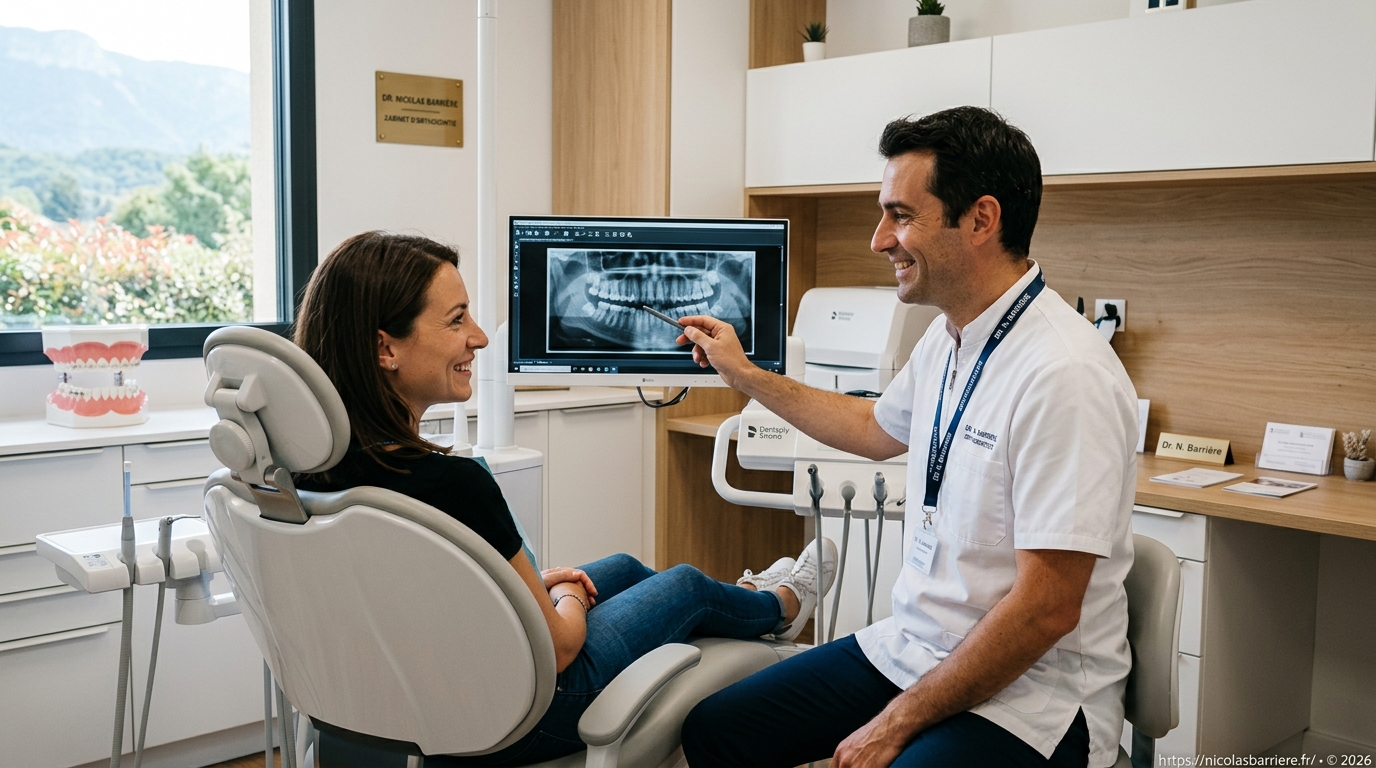
Your dentist has referred you to an orthodontist, and you would like a second opinion. This is part of a structured treatment plan, and seeking a second clinical opinion remains a fundamental right.
- The treating dentist identifies a malocclusion or dentofacial anomaly and refers the patient to a specialist in dentofacial orthopedics (ODF).
- The free choice of practitioner is guaranteed by the Kouchner law of March 4, 2002: requesting a second opinion in Divonne-les-Bains is a right.
- Any treatment costing more than €70 must be subject to a mandatory written quote according to the rules of the Health Insurance.
When a dentist refers a patient to an orthodontist, they provide a preliminary clinical diagnosis justifying a specialized assessment. The patient retains the absolute right to consult the practitioner of their choice and can request a second opinion in Divonne-les-Bains before making any commitment. This process allows for comparison of treatment plans and estimates within a strictly legal framework.
Health alert point. This article is for informational purposes only. It does not replace a clinical consultation: only a thorough examination by a qualified specialist can establish a personalized diagnosis and propose an appropriate treatment plan.
The topic of referring to a specialist falls within a broader framework, developed in our guide on the complete process of referral by the dentist to a specialist consultation. The article you are reading, however, focuses on what actually happens in Divonne-les-Bains when you want another clinical perspective before committing.
What exactly happens during the transition to the specialist?
The treating dentist transmits an initial clinical assessment to the specialist, but the complete orthodontic diagnosis remains carried out by the orthodontist himself. The transition combines information transmission, specialist examination, and therapeutic proposal.
Dentofacial orthopedics (ODF) Dentofacial orthopedics is the dental specialty that diagnoses and treats abnormalities in the position of the teeth and jaws. It is recognized in France by the decree of November 19, 1980, and practiced by dentists. SQODF holders of the CECSMO or DES in dentofacial orthopedics.
What the dentist transmits
During a routine examination, a general dentist may identify an abnormality: dental crowding, misalignment of the jaws, lack of space, impacted teeth, mouth breathing, or chewing dysfunction. They will then write a referral letter (sometimes called a referral letter) outlining the clinical reason. This document typically includes the patient's name, the observed abnormality, recent dental history, and, if available, any previously taken X-rays.
According to the Code of Ethics for Dental Surgeons (articles R4127-201 to R4127-284 of the Public Health Code), the treating practitioner has an obligation to facilitate access to specialist care when the situation requires it. They also cannot impose a specific colleague: the patient's free choice takes precedence.
What the orthodontist does next
The specialist is never satisfied with the preliminary diagnosis provided. They conduct their own examination, which includes:
- An in-depth clinical interview (reason for consultation, history, expectations).
- An intraoral and facial examination (occlusion, palpation of the temporomandibular joints, analysis of functions).
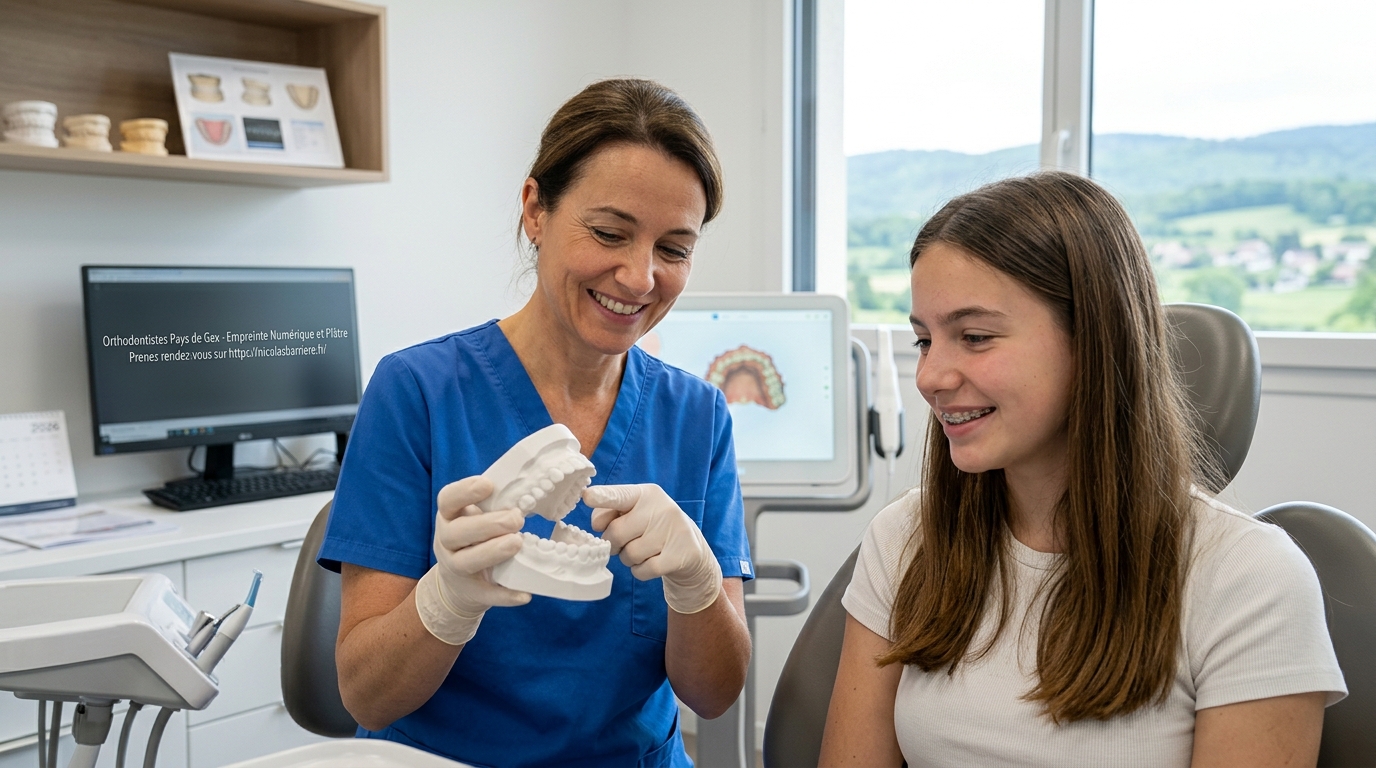
- Additional examinations: panoramic radiography, lateral cephalometric radiography, digital impressions or plaster casts.
- A cephalometric analysis to assess skeletal relationships.
- A written summary with a therapeutic proposal and a compliant quote.
-
Step 1: Reading the guidance letter
The specialist reviews the reason for referral and the documents provided by the referring dentist. This guides the examination but does not replace it.
-
Step 2: Complete clinical examination
Analysis of occlusion, jaws, soft tissues and orofacial functions. This examination usually lasts 30 to 45 minutes.
-
Step 3: Radiological examinations and impressions
Panoramic dental X-ray, cephalometric radiography, digital or physical impressions. These elements provide objective diagnosis.
-
Step 4: Diagnostic summary
The practitioner makes a reasoned diagnosis and proposes one or more therapeutic strategies.
-
Step 5: Delivery of the treatment plan and quote
The patient receives a written document detailing the phases of care, the expected duration, the fees and the estimated out-of-pocket expenses.
Good to know. You can ask your dentist for a copy of your dental records (including X-rays). These records belong to you, as stipulated by the French National Authority for Health (HAS) and the general framework of the right of access to medical information.
Why this dual perspective is useful
The distinction between a general dentist and an orthodontist lies in their scope of practice. A general dentist treats all common oral and dental conditions. qualified orthodontic specialist (code 36 of the Order's nomenclature) holds a supplementary university training of 3 to 4 years, dedicated exclusively to orthodontics. These are two complementary professions, not competing ones.
«"The initial diagnosis by the treating dentist is invaluable: it guides the patient at the right time. However, the final treatment plan can only be established after a complete orthodontic examination, including X-rays and cephalometric analysis."»
Why and how to seek a second opinion in Divonne-les-Bains?
Seeking a second opinion before orthodontic treatment is a right recognized by the Kouchner law of March 4, 2002 and an approach encouraged before any long and demanding treatment. Divonne-les-Bains and its surroundings offer several specialist practices, which makes comparison possible.
Legitimate reasons for requesting a second opinion
💰
Compare quotes
Orthodontic fees are unregulated for adults and for certain procedures not covered by the national health insurance system. A second quote allows you to verify the consistency of the proposed prices.
🔍
Confirm a diagnosis
In complex cases (extractions, orthognathic surgery, impacted teeth), a second opinion helps to secure the decision.
⚙️
Explore other techniques
Clear aligners, lingual orthodontics, ceramic braces: not all practices offer all techniques, and it is the practitioner who remains responsible for choosing the appliance best suited to your case.
🤝
Finding the right feeling
Treatment lasts 18 to 30 months on average. The quality of the relationship with the team is important.
The orthodontic quote: a mandatory document
According to Health insurance billing rules, Any dental treatment exceeding a certain cost threshold must be subject to a written estimate provided before the patient commits to the treatment. For orthodontics, a compliant estimate must include:
| Element | Expected content |
|---|---|
| Practitioner's identity | Name, professional address, RPPS number, qualification (specialist or not) |
| Description of the acts | Details of care per treatment semester, with CCAM code or clear description |
| Fees | Amount per procedure, distinction between reimbursement base and overruns |
| Estimated duration | Estimated number of active semesters and containment phase |
| Estimated refund | Social Security portion and estimated out-of-pocket expenses |
| Signature and date | From the practitioner and the patient (or legal representative if a minor) |
Point of vigilance. A quote lacking a detailed breakdown of services, a clear estimated duration, or a cost estimate is not compliant. If the document provided resembles a simple purchase order, request that it be corrected before signing.
Local healthcare provision
The Divonne-les-Bains catchment area has a reasonable density of practitioners, but significant demographic pressure linked to the cross-border hub of Geneva. Patients often come from the Pays de Gex, the Ain department, or neighboring Switzerland. According to the local health assessment published by the’Auvergne-Rhône-Alpes Regional Health Observatory, The medical demographics of the Pays de Gex remain under pressure, particularly for specialties.
6 monthsAverage waiting time for a first specialist appointment (source: field observations 2026)
100 000Active cross-border workers on the Geneva side (source: Cross-border statistical observatory)
2Main categories of structures: specialized private practices and multidisciplinary dental centers
How to organize your search for a second opinion
-
Check the practitioner's qualifications
Consult the official Health Directory or the directory of the National Order of Dental Surgeons. A qualified orthodontic specialist appears with the code 36.
-
Schedule an appointment for a check-up
You can contact the practice by phone or via an online appointment booking platform. Specify that you are seeking a second opinion: the practitioner will be able to adjust the consultation time accordingly.
-
Bring your file
X-rays, letters from the treating dentist, any initial estimate, recent prescriptions. These documents prevent unnecessary repetition of certain examinations.
-
Ask your questions
Nature of diagnosis, therapeutic alternatives, duration, available techniques, follow-up methods, management of unforeseen events, insurance file (LAMal or French supplementary).
-
Compare objectively
Don't stop at the cost: first assess the consistency of the diagnosis, the clarity of the plan, the qualifications, the availability of the practitioner and the organization of the practice.
Would you like a personalized orthodontic assessment?
A clinical assessment requires a thorough examination. Schedule an appointment for a consultation tailored to your specific situation.
How does a medical file circulate from one practitioner to another?
The dental medical file belongs to the patient: its transmission between colleagues is a right regulated by the Kouchner law of March 4, 2002. This transfer facilitates continuity of care without requiring all examinations to be repeated.
The contents of the orthodontic file
📁
Clinical documents
Observation sheet, anamnesis, intra- and extra-oral examinations, occlusal analysis, clinical photographs.
Imaging
Panoramic radiography, cephalometric radiography, possibly cone beam.
Footprints
Plaster casts or STL digital files.
Quotes and correspondence
Signed quotes, correspondence with colleagues, surgical reports.
How to retrieve it
Submit a written request (letter, email) to the practice in question, stating your identity and attaching a copy of your ID. The practitioner has a reasonable timeframe (usually 8 days, up to 2 months for older records) to provide you with the file. They may charge for reproduction and postage, but not for the consultation itself.
The transfer of the file does not commit you to anything: it does not constitute a break in the care pathway or a rejection of the initial practitioner. It is simply the exercise of a right guaranteed by the Public Health Code.
Compare two therapeutic proposals
Signs of a solid treatment plan
- A well-supported diagnosis with cephalometric analysis
- Therapeutic alternatives presented and justified
- Realistic estimated duration (18 to 30 months for a standard case)
- Containment phase explicitly planned
- Detailed quote, compliant with Ameli rules
- Time spent on patient questions
Signals to investigate
- Diagnosis made in minutes without additional tests
- Only one option was proposed, without any discussion of alternatives.
- Pressure to sign quickly
- Vague or incomplete quote
- Refusal to hand over the file or the X-rays
- Promises of spectacular results
What is the legal framework for the free choice of practitioner?
The Kouchner law of March 4, 2002 relating to patients' rights enshrines the free choice of healthcare professional as a fundamental principle of the French healthcare system. This right applies at all stages of the care pathway, including after treatment has begun.
Kouchner Law Law No. 2002-303 of March 4, 2002, concerning patients' rights and the quality of the healthcare system. It enshrines in the Public Health Code the right to information, informed consent, access to medical records, and the free choice of practitioner.
What exactly does the law say?
Article 11 of the Kouchner Law It states that "the patient's right to freely choose their practitioner and healthcare facility is a fundamental principle of health legislation." This principle is enshrined in several articles of the Public Health Code and the Code of Ethics for Dental Surgeons.
Specifically. You can consult as many specialists as you like, change practitioners at any time, refuse a proposed treatment, request a reflection period, and demand access to your medical records. None of these actions will result in any penalty for orthodontic reimbursement.
The special case of cross-border patients
The Divonne-les-Bains office receives many cross-border workers covered by Swiss health insurance (LAMal) or specific supplementary insurance. The rationale for a second opinion remains the same, but two points of attention stand out:
- Coverage varies depending on the scheme (French or Swiss): ask the firm for a simulation tailored to your coverage.
- Firms experienced in cross-border cases know how to produce the documents required by both systems, which simplifies administrative procedures.
Can you interrupt or resume ongoing treatment with another orthodontist?
Yes, changing practitioners during treatment is legally possible, but it requires a complete assessment by the new specialist before any resumption. This precaution ensures clinical safety and continuity of care.
The steps involved in resuming treatment
Initial assessmentComplete review and evaluation of work already completed
File recoveryX-rays, impressions, previous treatment plan
Feasibility analysisThe practitioner decides whether he can take over the case
New plan and quoteDeveloping a plan adapted to the current situation
Active monitoring phaseRegular follow-up appointments and device adjustments until the set objectives are met.
Effective resumptionTreatment continued in the new office
📝 An orthodontist is not obligated to accept a case. They may refuse if the case exceeds their expertise, if the materials used are incompatible with their practice, or if the clinical conditions do not allow for a safe continuation of treatment.
Removal of a dental appliance by another practitioner
A patient can legitimately ask another orthodontist to remove their appliance (braces, aligners, removable appliance). The right to choose applies. In practice, the new specialist first conducts a thorough clinical examination: they check the periodontal condition, the stability of the occlusion, and the absence of complications before any removal. This step ensures the procedure is safe and allows, if necessary, for a suitable retention phase to be recommended to prevent relapse.
How to verify the reliability of an orthodontic practice?
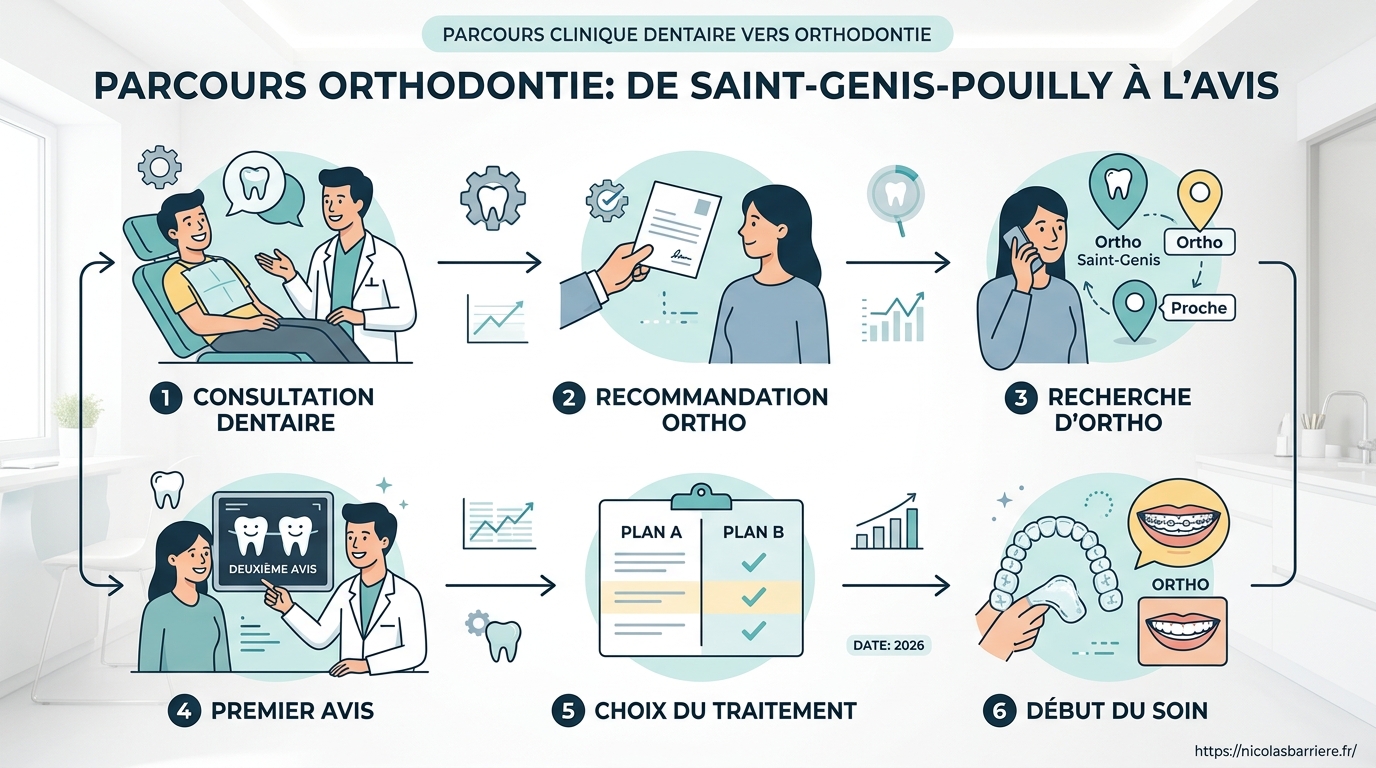
The reliability of an orthodontic practice is based on the official qualification of the practitioner, the transparency of the information provided, and the ethical compliance of their practice. Several public sources allow for simple verification.
Simple checks to perform
-
Consult the official directories
The Digital Health Agency's Health Directory and the directory of the National Order verify the registration and qualifications of the practitioner.
-
Locate code 36
The qualification of specialist in dentofacial orthopedics corresponds to code 36 in the professional nomenclature. Its mention signifies dedicated university training.
-
Analyze the quality of the first consultation
A reliable practitioner takes the time to explain, provides a clear quote, does not push for immediate signing, and answers all questions.
-
Verify ethical compliance
Absence of aggressive sales tactics, respect for professional secrecy, refusal to compare a colleague by name: all these are markers of seriousness.
«"A qualified specialist never seeks to belittle a colleague. If your first practitioner has proposed a coherent plan, a second opinion can simply confirm it: there is nothing shocking about this, it is even reassuring for the patient."»
Code 36
SQODF
CECSMO
ODF
National Order
Health Directory
Kouchner Law
Quote required
SQODF
CECSMO
ODF
National Order
Health Directory
Kouchner Law
Quote required
What types of treatments might warrant a second opinion?
Certain clinical situations particularly warrant a second look, especially complex cases or long and costly treatments. Seeking a second opinion is not systematic, but it becomes strategic in several situations.
In children, A second opinion may be warranted when interceptive treatment is proposed very early (before age 7) without a clear functional reason, or when extractions of permanent teeth are being considered. The indications for dentofacial orthopedics in children are outlined in recommendations from the French National Authority for Health (HAS), which are available for consultation. To learn more about this step, see our article on welcoming and supporting the apprehensive child during orthodontic consultations.
In adolescence, The question often revolves around the choice between traditional braces, aesthetic braces, and clear aligners. A second opinion helps to understand the available techniques and assess the expected level of cooperation, with the understanding that the practitioner remains responsible for choosing the appliance best suited to the individual case. The process of the first adolescent consultation is detailed in our dedicated article on... first orthodontic assessment in adolescence.
In adults, The second opinion is particularly relevant before any combined treatment (orthodontics plus orthognathic surgery), before extractions of healthy teeth, or to understand the different possible techniques, from transparent aligners to lingual orthodontics, the final choice of appliance being left to the practitioner depending on your clinical situation.
The way the practice functions is just as important as the technique
Beyond the therapeutic approach, the practice's organizational structure influences the quality of care. Continuity of practitioner, emergency management, frequency of follow-up appointments, and team availability are all criteria you can assess beforehand. Our article on the organization of follow-up care in orthodontic practice details these concrete aspects.
Note. A specialized private practice and a multidisciplinary dental center do not operate in the same way. The IGAS (General Inspectorate of Social Affairs) recommendations of 2024 on the regulation of dental health centers emphasize the importance of verifying the stability of the healthcare team before initiating long-term treatment.
What are your rights in case of disagreement or difficulty?
The Code of Ethics and the Kouchner Law offer several avenues of recourse in case of disagreement with a practitioner, with conciliation by the professional body remaining the preferred amicable solution.
Possible avenues of appeal
1. Direct dialogueRequest a meeting with the practitioner to clarify the point of disagreement
2. Ordinal ConciliationContact the Departmental Council of the Order of Dental Surgeons
3. MediationRecourse to an independent third party if conciliation fails
4. Legal recourseCivil or criminal action, or referral to the Conciliation and Compensation Commission (CCI)
Referral to the National Order of Dental Surgeons This is done by mail to the departmental council in whose jurisdiction the practitioner resides. This process is free of charge and prioritizes mediation over any legal proceedings.
Do you have any doubts about your healthcare journey?
A dedicated consultation allows us to examine your situation in detail and provide the necessary explanations.
Frequently asked questions about your rights and the dental process
What are the possible legal options in case of a problem with a dentist?
In the event of a disagreement with a dentist, the first step is to request a direct dialogue with the practitioner. If the dispute persists, the patient can contact the Departmental Council of the National Order of Dental Surgeons, which prioritizes mediation. As a last resort, legal action before the Conciliation and Compensation Commission (CCI) or litigation remains an option.
How can you tell if a dentist is reputable?
A reliable practitioner takes the time to explain the treatment plan, provides a clear and detailed quote, and answers questions without rushing. Verification of their registration with the National Medical Council and their qualifications via the official Health Directory managed by the Digital Health Agency guarantees the validity of their diplomas and their right to practice.
Is it possible to have my braces removed by another orthodontist?
Yes, the freedom to choose one's practitioner is a fundamental right recognized by the Kouchner Law. However, the new specialist must first conduct a complete clinical examination before accepting the patient's case. This step ensures continuity of care under safe conditions, particularly to assess the need for restraint.
What happens if a dental quote is not respected?
The signed estimate constitutes a contractual agreement between the patient and the practitioner. Any additional charges not medically justified or not validated by a written amendment may be contested. The patient may refer the matter to the Dental Association for mediation or, depending on the nature of the dispute, initiate civil proceedings. The Code of Ethics for Dental Surgeons strictly governs these obligations.
Is it possible to cancel a signed dental quote?
If treatment has not yet begun, cancellation is generally still possible under certain conditions. A specific legal cooling-off period applies if the treatment is financed by a consumer credit agreement. In all cases, it is recommended to inform the practitioner in writing and keep a record of the cancellation.
Is it possible to change dentists at any time?
French law guarantees the free choice of healthcare professional, a principle enshrined in the Kouchner Law of March 4, 2002. A patient can therefore change practices at any point in their care, including during treatment. They can request that their medical records be transferred to the new practitioner, and this transfer must be made within a reasonable timeframe.
Is the treating dentist's agreement required to consult another orthodontist?
No, no prior agreement is required to consult another practitioner. The patient can directly schedule an appointment with the orthodontist of their choice for a second opinion. A referral letter from the treating dentist, if available, facilitates the consultation but is not mandatory for a personal comparison.
Is a second opinion in orthodontics covered by insurance?
The initial consultation with an orthodontist is partially reimbursed by the French National Health Insurance (Assurance Maladie) according to the current fee schedule. The specific details depend on the type of service provided (consultation, orthodontic assessment) and the practitioner's sector of agreement with the national health insurance system. A detailed estimate provided before the consultation will clearly indicate the estimated out-of-pocket expenses.
📌 Key points to remember
- Referral to an orthodontist by the treating dentist is part of a coordinated care pathway, but the final diagnosis remains made by the specialist after a complete examination.
- The free choice of practitioner is a fundamental right guaranteed by the Kouchner law of March 4, 2002: requesting a second opinion is perfectly legitimate.
- All orthodontic treatment must be the subject of a detailed written estimate provided before the patient commits, in accordance with the rules of the Health Insurance.
- The dental medical file belongs to the patient: it can be transmitted at any time to another practitioner, without penalty or justification.
- The verification of the practitioner's qualifications is done through the official Health Directory and the directory of the National Order of Dental Surgeons (code 36 for specialists).
- In Divonne-les-Bains, specialist services exist but are subject to waiting times: book an appointment for a second opinion in advance.
- A personalized clinical opinion always requires a thorough examination: general information never replaces a consultation.

About the author: Nicolas Barrière
Dr. Nicolas Barrière is an orthodontist, a qualified specialist in dentofacial orthopedics, a former hospital intern, and the founder of his practice in Divonne-les-Bains, a few minutes from Nyon and the Swiss border. He treats children (from age 4), adolescents, and adults with orthodontic treatments (clear aligners, lingual orthodontics, dentofacial orthopedics), with particular attention paid to the care of Franco-Swiss border patients.
Areas of expertise: Dentofacial orthopedics, pediatric and adult orthodontics, clear aligners, lingual orthodontics, orthognathic surgery, management of complex malocclusions, sleep apnea.
LinkedIn profile of Dr. Nicolas Barrière · Meet the firm's team
📚 Sources and references
Official and legal sources
- Article 11 of Law No. 2002-303 of March 4, 2002 relating to patients' rights and the quality of the healthcare system (Legifrance)
- Code of ethics for dental surgeons (Legifrance)
- Decree of 19 November 1980 approving the regulations relating to the qualification of dental surgeons in dentofacial orthopedics (Legifrance)
- Mandatory quote for dental surgery (Ameli.fr)
- Orthodontic treatment: prior authorization request and billing (Ameli.fr)
- Official Health Directory (Digital Health Agency)
- Contact the National Order of Dental Surgeons
- Find a dentist (National Order)
Institutional and scientific sources
- Indications for dentofacial orthopedics in children and adolescents (French National Authority for Health)
- Criteria for successful completion of dentofacial orthopedic treatment (HAS)
- IGAS report on dental health centers (2024)
- Local health assessment in the Pays de Gex region (ORS Auvergne-Rhône-Alpes)
📖 Also read
- Orthodontic consultation: how does a referral from your dentist and a second opinion work?
- How an orthodontic practice operates: organizing follow-up and continuity of care
- Orthodontic consultation for children: welcoming and addressing their apprehension
- First orthodontic consultation in adolescence: procedure and objectives of the first assessment


 French
 English