
The digital impression uses a 3D intraoral scanner with an accuracy of a few microns, without paste in the mouth. The plaster cast rests on an impression tray filled with alginate, held in place for 30 to 60 seconds. The comfort, speed of transmission to the laboratory, and absence of a gag reflex...

Digital impression or plaster cast: two methods of taking impressions in orthodontics
Written by Nicolas Barrière : Orthodontist, Qualified Specialist in Dentofacial Orthopedics, founder of the practice at nicolasbarriere.fr. Updated on . Reading time: approximately 11 minutes.
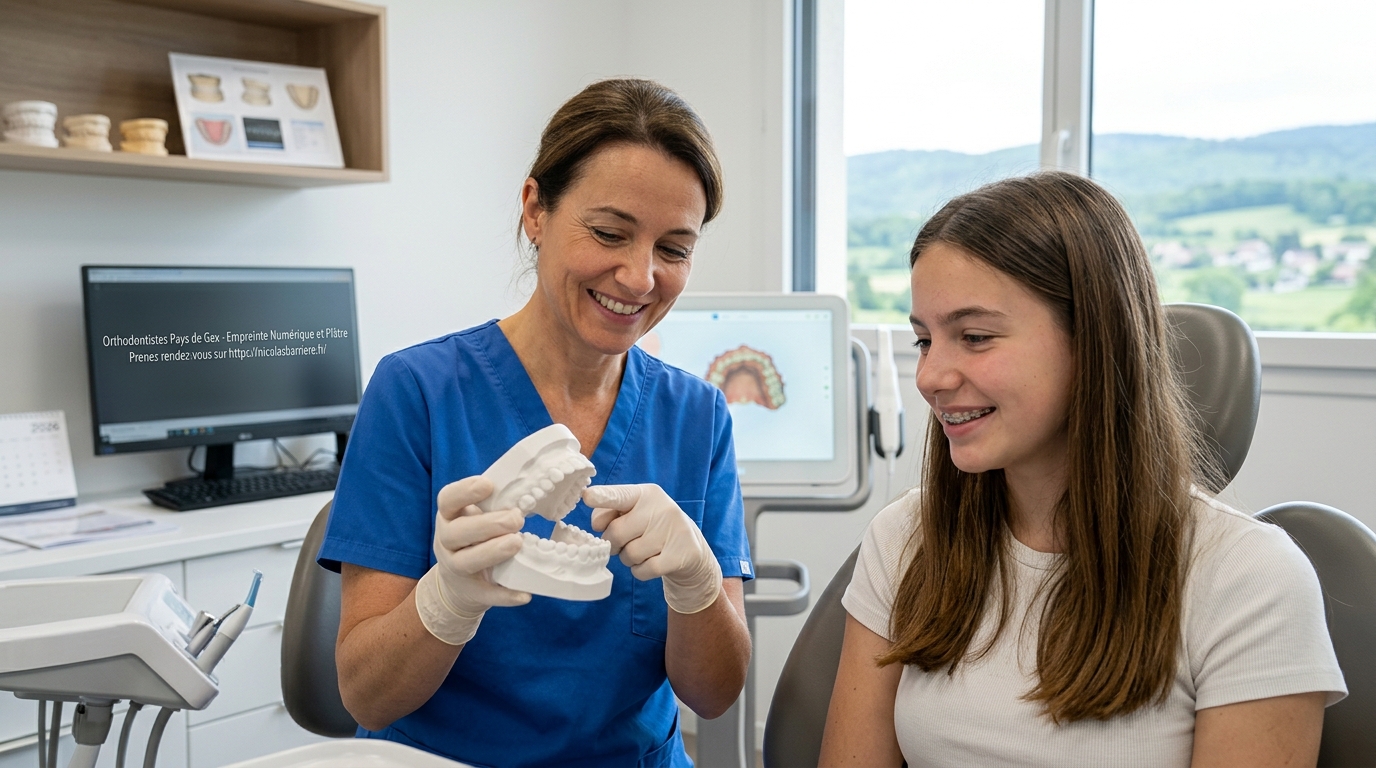
Digital impressions and plaster casts are the two methods used in orthodontics in Divonne-les-Bains to capture the precise shape of teeth. They lead to the same diagnostic objective but offer a very different experience for the patient.
- The digital impression uses a 3D intraoral scanner with an accuracy of a few microns, without paste in the mouth.
- The plaster cast rests on an impression tray filled with alginate, which is held in place for 30 to 60 seconds.
- Comfort, speed of transmission to the laboratory and the absence of a gag reflex clearly distinguish the two techniques.
At the orthodontic practice in Divonne-les-Bains, digital impressions using intraoral scanning are increasingly replacing traditional plaster casts due to their improved comfort and the immediate transmission of 3D files to the laboratory. Alginate casting is still used, however, for certain study models or in specific cases. Both methods allow for a reliable orthodontic diagnosis, provided they are performed correctly.
You are about to begin orthodontic treatment in Divonne-les-Bains, and you are wondering which impression-taking method your practitioner will use in 2026. This detailed article explains how intraoral scanning and alginate molding work, the selection criteria, the step-by-step process, and the specific context of orthodontics in Divonne-les-Bains. For all prior exchange with the firm, A clinical consultation remains essential for a personalized opinion.
Important point to note: The information in this article is general and educational. It is not a substitute for a clinical examination. Only an orthodontist, after a complete oral examination, can determine the most suitable impression method for your situation.
Why is taking an impression essential before orthodontic treatment?
Taking an impression is the step that allows for the creation of an exact model of the dental arches, an essential basis for orthodontic diagnosis. Without this precise replica, no reliable treatment plan can be developed.
The resulting model, whether plaster or digital, serves three essential purposes. First, it allows the orthodontist to analyze the malocclusion in 3D, outside the patient's mouth, with a perspective impossible to obtain in a direct consultation. Second, it enables the virtual or manual planning of the desired tooth movements. Finally, it serves as the basis for fabricating custom-made appliances: clear aligners, bonded brackets, metal archwires, and retention splints.
🔍
Diagnosis
Analysis of malocclusion, measurement of spaces, evaluation of the relationships between the arches.
🗺️
Planning
Step-by-step simulation of tooth movement, projection of the final result.
⚙️
Manufacturing
Custom-made aligners, bonded braces or retention devices.
Orthodontic impression A faithful reproduction of the upper and lower dental arches is obtained either by using a flexible material (alginate, silicone) then cast in plaster, or by using an intraoral scanner to generate a 3D file. It serves as the basis for diagnosis and the manufacture of appliances.
This step usually takes place during the initial orthodontic assessment, before the first appliance is fitted. It can be repeated during treatment to adjust a retainer or fabricate a supplementary device. Depending on the’Health Insurance, The treatment of dental malpositions by dentofacial orthopedics is based on a complete diagnosis systematically including the analysis of study models.
How does traditional plaster casting work?
Plaster casting involves using an alginate paste poured into an impression tray inserted in the mouth for 30 to 60 seconds, then replicating it in plaster in the laboratory. This is the historical method of orthodontics, still used today in certain contexts.
What is alginate?
Alginate An irreversible hydrocolloid made from seaweed, presented as a powder to be mixed with water. In a few dozen seconds, the paste gels and faithfully replicates the contours of the mouth and teeth. It is the most widely used material for preliminary impressions in orthodontics.
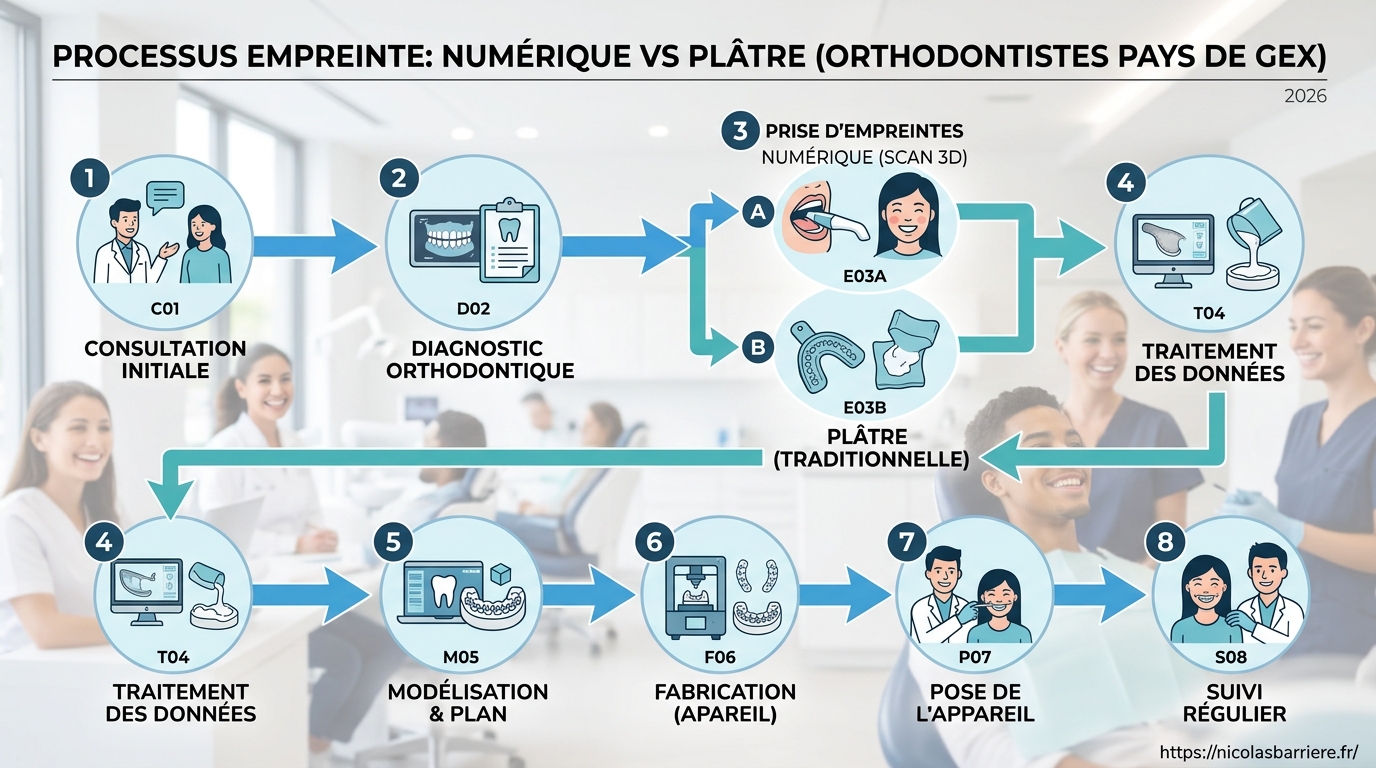
The process in 5 steps
-
Choosing the impression tray
The practitioner selects the size appropriate for the upper or lower arch, often a perforated model to retain the paste well.
-
Preparing the dough
Precise dosing of alginate powder with room temperature water. Temperature directly influences setting time.
-
Insertion into the mouth
The filled impression tray is gently inserted, positioned, and then lightly pressed against the teeth and gums.
-
Setting time
The material remains in the mouth for 30 to 60 seconds, until it hardens completely. The patient breathes calmly through their nose.
-
Withdrawal and pouring
Extraction with a quick, sharp movement, quality check, then pouring of the plaster within 10 to 15 minutes to avoid any deformation.
Important point to note: Alginate is sensitive to drying. An impression left exposed to air for too long will deform, compromising the accuracy of the final model. Immediate pouring is therefore essential to guarantee the reliability of the diagnosis.
Plaster casting remains a simple and proven tool. It provides a good reproduction of oral contours, more than sufficient for many orthodontic indications: study models, removable appliances, and traditional retainers. Its limitations lie in its sensitivity to time and humidity, as well as the discomfort experienced by some patients, particularly those with a pronounced gag reflex.
How does the 3D digital impression taking process work?
3D digital impressions use a small intraoral camera (optical scanner) that films the teeth in a few minutes, generating a virtual model displayed live on the computer screen. No paste, no impression trays: just a sterile tip passed over the tooth surfaces.
What is an intraoral scanner?
Intraoral scanner A medical device consisting of a miniaturized 3D camera that the practitioner moves inside the patient's mouth. It continuously captures thousands of images per second and assembles them into a three-dimensional digital model of the dental arches, with micron-level precision.
The step-by-step process
PreparationSterile tip mounted on the scanner, patient comfortably positioned.
ScanningThe camera passes over the occlusal, vestibular and lingual surfaces of each tooth.
ModelingThe software reconstructs a 3D model displayed on the screen in real time.
VerificationThe practitioner checks the quality and fills in any missing areas if necessary.
SendingThe digital file is immediately sent to the prosthesis laboratory.
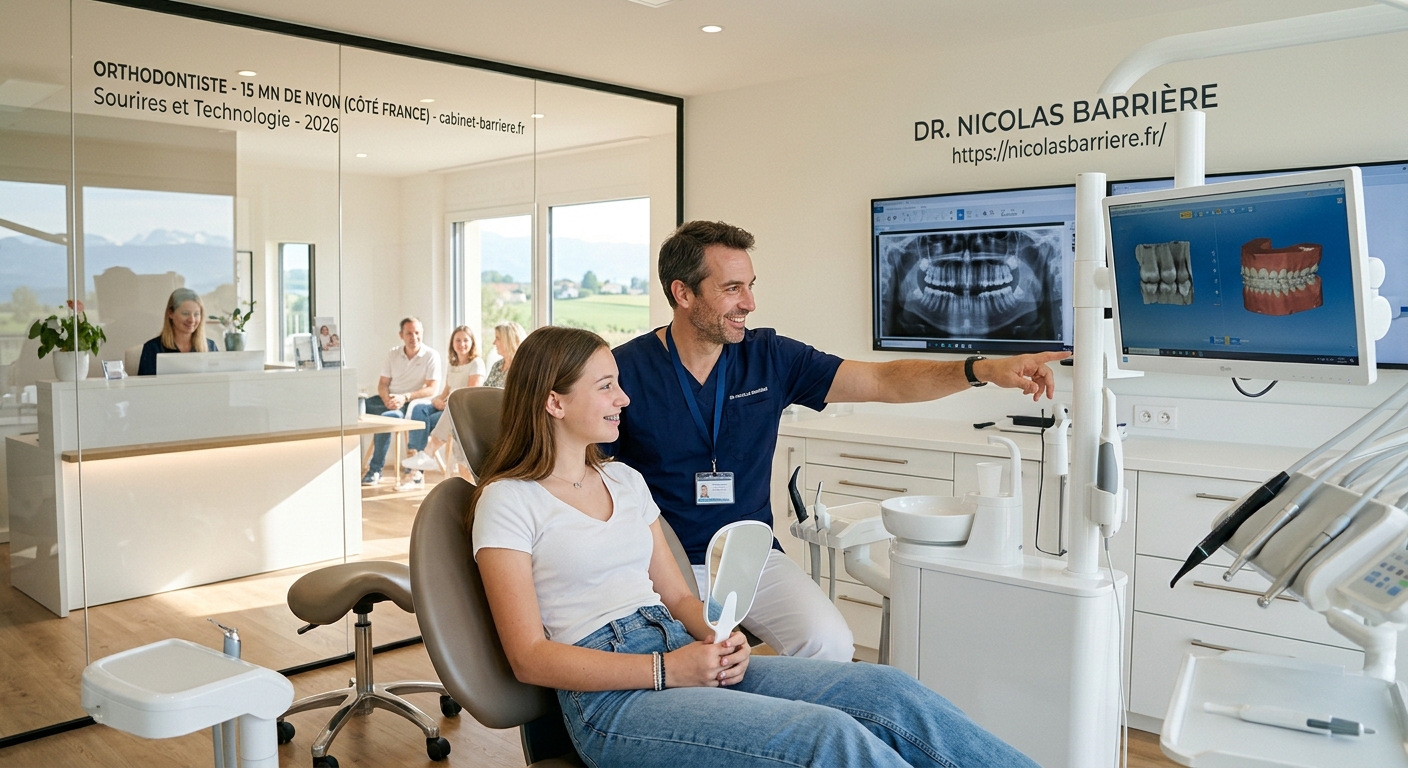
The patient sees their dental arches gradually appear in 3D on the screen, often with a colorful or photorealistic rendering. This visual aspect has significant educational value: the orthodontist can immediately point out areas of crowding, tooth rotations, or occlusion problems. In children and adolescents, this interactive dimension contributes to treatment adherence.
«"During consultations, we regularly observe that immediate 3D visualization reassures patients and helps them better understand their dental situation. Children often find the experience almost playful, which completely changes their perception of this step."»
What is optical fingerprinting?
Optical fingerprint Synonym for digital dental impression. It refers to the 3D capture of teeth and gums by an intraoral scanner, producing a digital file (STL, PLY or proprietary format) directly usable for computer-aided design of orthodontic appliances.
What are the differences in comfort and accuracy for the patient?
Digital impressions eliminate the need for paste in the mouth, significantly reduce the gag reflex, and prevent material deformation, with an accuracy of a few microns. Plaster molds remain reliable but are less comfortable and take longer to send to the laboratory.
Advantages of digital footprinting
- No cold paste in the mouth, nor any unpleasant taste.
- Nausea reflex almost completely suppressed, particularly useful in children.
- Micron-level precision, with no risk of bubbles or shrinkage.
- Instant transmission to the laboratory, saving time on manufacturing.
- Immediate 3D visualization with educational value.
- Sustainable digital archiving, no physical casts to store.
Limitations and precautions
- It requires expensive equipment; not all practices are equipped.
- Certain specific indications may still favor plaster.
- Quality depends on the practitioner's technical skill.
- Patients must agree to the digital storage of their data.
Comparison of the two methods
Both techniques share the same diagnostic objective but differ in several respects. Digital impressions require no material in the mouth, only the scanner tip, whereas plaster casting uses alginate paste in an impression tray. Digital scanning is performed progressively, arch by arch, while plaster casting requires uninterrupted exposure for 30 to 60 seconds, which frequently triggers the gag reflex in sensitive patients. Digital accuracy is on the order of microns, while plaster casts remain good but are susceptible to deformation. Finally, the digital file is immediately transmitted to the laboratory and archived permanently, whereas plaster models require physical transport and bulky storage, with increased consumption of single-use materials.
Perceived comfort: digital footprint90
Perceived comfort: plaster cast55
These values illustrate a qualitative trend widely reported in dental literature. They do not replace an individual assessment during a consultation.
The question of accuracy
Precision is a key criterion for successful orthodontic treatment, especially for mass-produced invisible aligners, where each tray must perfectly fit the teeth at a specific stage. Modern intraoral scanners achieve micron-level accuracy across the entire dental arch, which is consistent with the requirements of CAD/CAM (computer-aided design and manufacturing).
Plaster casting remains clinically reliable for most indications, but it has several potential sources of error: bubbles in the alginate, material shrinkage, deformation between shrinkage and pouring, and shrinkage of the plaster itself. Each step can introduce a micro-inaccuracy.
Speed and clinical follow-up
30-60seconds of alginate absorption in the mouth
15maximum minutes to pour the plaster
1Click to send the 3D file to the lab
From a logistical standpoint, digital transmission is a game-changer. A plaster impression requires physical transport to the dental laboratory, often by mail or courier, which can take several days. A digital file is transmitted with a single click, significantly reducing the manufacturing time for aligners or other dental appliances.
Would you like a personalized opinion on your situation?
Only a thorough clinical examination can establish an orthodontic diagnosis and determine the appropriate impression method. Schedule an appointment for a consultation at the office.
How is the orthodontic treatment process organized in Divonne-les-Bains?
Divonne-les-Bains benefits from strong population growth due to its proximity to Geneva, with a mixed French and cross-border patient base that is driving the orthodontic practice to invest in the latest technologies. Digital impression taking is part of this ongoing modernization of the practice.
A territory with a unique demographic profile
According to the’Insee, The Pays de Gex urban area has surpassed 100,000 inhabitants in recent years, driven by the attractiveness of cross-border employment in Switzerland. According to the figures reported by RTS, Geneva had nearly 115,000 cross-border workers in 2024, a significant portion of whom reside in the Ain region.
100 000inhabitants of the Pays de Gex (Insee)
115 000cross-border workers in Geneva in 2024 (RTS)
15 minfrom Divonne-les-Bains to Nyon
This dual French and Swiss cultural heritage has a direct impact on the orthodontic practice: patients expect a level of technology consistent with the standards observed in Geneva or Nyon. The use of an intraoral scanner is part of this requirement.
A healthcare pathway specifically for cross-border workers
For patients who work in Switzerland and reside in France, the healthcare pathway has significant differences regarding health insurance coverage (LAMal, French insurance, supplemental insurance). Our dedicated article details this in detail. the organization of orthodontic follow-up and care for border patients between France and Switzerland, along with the administrative procedures to anticipate before starting treatment.
🌍
Local orthodontics for Geneva
The Divonne-les-Bains office is located 15 to 30 minutes from the main towns of Geneva and Nyon, and welcomes patients from the Pays de Gex, the Ain as well as neighboring Switzerland.
Children and teenagers
A Support available from age 4 for interceptive orthodontics.
Adults
Invisible aligners and lingual orthodontics for discreet treatments.
Ongoing modernization of the office
The shift to digital technology isn't unique to Divonne-les-Bains; it affects the entire orthodontic profession in France. However, it's accelerating in areas where patients are accustomed to high standards. This trend benefits patients of all ages: children find the experience less anxiety-inducing, teenagers are more engaged thanks to 3D visualization, and adults value speed and precision.
Digital impression or plaster cast: which method should you choose depending on your situation?
The choice between digital impressions and plaster casts depends on the type of treatment planned, the equipment available in the dental practice, and the patient's individual preferences. No method is universally superior: each has its indications and limitations.
3D Digital Footprint
- Treatment with invisible aligners
- Patients sensitive to the gag reflex
- Children and teenagers
- Need for rapid manufacturing
- Educational visualization of the treatment plan
Traditional plaster molding
- Preliminary study models
- Some classic removable devices
- Offices not equipped with scanners
- Specific clinical situations
In all cases, the reliability of the diagnosis depends less on the technology used than on the rigor of the practitioner and the quality of the overall clinical analysis.
Some concrete scenarios
Case of a young patient sensitive to the gag reflex: The digital impression is clearly preferred. The absence of paste in the mouth avoids triggering the reflex and makes the experience much more peaceful, both for the child and for their parents.
Case of a teenager undergoing treatment with invisible aligners: Intraoral scanning is the gold standard. The 3D file allows for the mass production of custom-made transparent aligners, with the precision essential for monitoring the treatment plan.
Case of an adult at the end of treatment requiring restraint: Both methods are suitable. The choice depends on the practice's equipment and the specific type of device selected, with or without an integrated digital platform.
What remains unchanged regardless of the method
- A complete clinical examination precedes any impression taking.
- After validation of the treatment plan, an active follow-up phase takes place with regular appointments and adjustments to the device, before the final retention is fitted.
- A detailed treatment estimate is provided to the patient before treatment begins.
- Prior agreement from the Health Insurance remains mandatory for children eligible for reimbursement.
- The retention of patient data complies with the obligations of medical confidentiality and the GDPR.
- Orthodontic treatment is a long-term process, with regular consultations.
Cost, reimbursement and ethical framework: what you need to know
Taking impressions, whether digital or traditional, is generally included in the overall fee for the orthodontic assessment or the six-month treatment period. It is not billed separately in most practices.
Covered by Health Insurance
According to the’Health Insurance, Orthodontic treatments are covered for children under 16 (with the possibility of an exceptional extension until the end of the current semester), based on the agreed-upon rates, provided prior approval is obtained from the health insurance fund. The use of an intraoral scanner rather than a plaster cast does not change the basis for this reimbursement: the covered procedure is the overall orthodontic treatment, not the impression technique.
Key points to remember: In adults, orthodontic treatments are generally not covered by French national health insurance (Sécurité sociale), except in specific cases (preparation for orthognathic surgery). Supplemental health insurance may cover all or part of the remaining costs, depending on the policy.
To delve deeper into the specific issue of finances for adults, our detailed article addresses the budget for adult orthodontic treatment in Ain, near Switzerland, with the rules for reimbursement from Health Insurance and supplementary insurance.
A strict ethical framework
The orthodontic profession is regulated by the National Council of the Order of Dental Surgeons and by the provisions of the Public Health Code. Practices may not present technology as a selling point: it is a tool to aid diagnosis, not a service in itself. Fees are set freely by the practitioner, with a mandatory prior estimate provided as soon as the amount exceeds the regulatory threshold.
NB
«"Choosing modern equipment is never an end in itself. It is integrated because it serves the patient's comfort and the quality of the diagnosis, in strict compliance with the profession's ethical framework."»
Digital data storage and security
3D files generated by an intraoral scan are considered health data under applicable regulations. As such, they are stored securely, in compliance with medical confidentiality and the GDPR, with strictly controlled access. The patient may request access to their file at any time.
Intraoral scanner
Alginate
Optical fingerprint
Dental CAD/CAM
Study model
Orthodontic diagnosis
GDPR health
Aligners
Alginate
Optical fingerprint
Dental CAD/CAM
Study model
Orthodontic diagnosis
GDPR health
Aligners
What to do in case of an emergency during treatment?
Once the impression has been taken and treatment has begun, certain situations may require a prompt consultation: a loose bracket, a wire that is scratching the cheek, a damaged retainer, or unusual pain. The dental office remains the first point of contact.
Outside of office hours, our dedicated article details simple steps to know in case of’discomfort related to orthodontic appliances while waiting for the next appointment. For any situation of’orthodontic emergency, Contact with the firm is preferable.
📌 Key points to remember
- 3D digital impressions and plaster casts pursue the same goal: to accurately capture the anatomy of the dental arches.
- The intraoral scanner offers superior comfort, micron-level accuracy, and immediate transmission to the laboratory.
- Alginate molding remains used for certain indications, with a setting time in the mouth of 30 to 60 seconds.
- The gag reflex is a frequent reason for preferring the numerical method, especially in children.
- The impression taking is included in the overall package for the orthodontic assessment, without separate billing.
- Reimbursement by Health Insurance applies to children under 16 years of age, subject to prior agreement.
- The choice of method is made after clinical examination: a personalized opinion requires a consultation at the office.
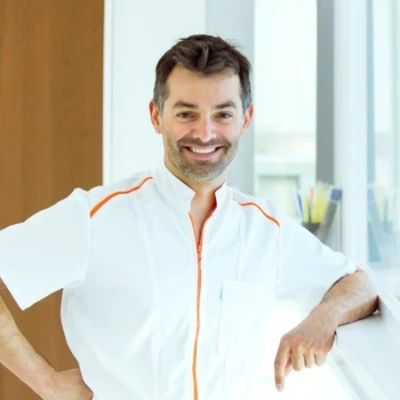
About the author: Nicolas Barrière
Dr. Nicolas Barrière is an orthodontist, a qualified specialist in dentofacial orthopedics, a former hospital intern, and the founder of his practice in Divonne-les-Bains. He treats children, adolescents, and adults with orthodontic treatments (invisible aligners, lingual orthodontics), paying particular attention to the care of patients living near the French-Swiss border.
Areas of expertise: Orthodontics, Dentofacial orthopedics, Invisible aligners, Lingual orthodontics, Children's orthodontics, Adult orthodontics, Orthognathic surgery and medical-surgical orthodontics, Sleep apnea (OSA), Retention and relapse management.
Frequently Asked Questions
What is the price of a digital dental impression?
The cost of the impression, whether digital or traditional, is generally included in the overall fee for the orthodontic assessment or the six-month treatment period. It is not billed separately. The fees are set freely by the practitioner, who will provide a detailed estimate beforehand, which will be presented and explained to the patient.
What are the opinions on digital dental impressions?
Patients consistently highlight the significant improvement in comfort. The absence of paste reduces stress and generally eliminates the gag reflex, which is particularly appreciated by children and adolescents. The immediate 3D visualization on the screen is also cited as a significant educational benefit.
Is digital dental impression taking covered by social security?
Health insurance reimburses diagnostic procedures (including impressions) for children under 16, based on standard rates, after prior approval. The use of digital technology does not change the basis of this reimbursement: it is the entire orthodontic procedure that is covered, not the impression method.
Who is more qualified, a dentist or an orthodontist?
Although a general dentist can take impressions, an orthodontist is a qualified specialist in dentofacial orthopedics. This specialist dedicates their practice exclusively to aligning teeth and modifying jaws, giving them in-depth expertise in this specific field.
Is digital fingerprinting suitable for young children?
Yes, digital impressions are particularly well-suited to children. The absence of paste in the mouth and impression trays significantly reduces anxiety and the gag reflex. The scan is presented in a playful way, and the child can see their own teeth appear in 3D on the screen, which encourages their cooperation.
How long does a digital impression taking in a dental office take?
A complete scan of both dental arches with an intraoral scanner typically takes a few minutes, depending on patient cooperation and anatomical complexity. This duration is comparable to the overall time required for a plaster impression, but it is broken down into small, comfortable sequences rather than a single, time-consuming scan.
Is plaster casting still used today?
Yes, alginate molding remains in use in many practices, either alone or in conjunction with digital methods. It is particularly well-suited for preliminary study models, temporary removable prostheses, or certain specific clinical situations. Its reliability is proven for many classic orthodontic indications.
What happens to my 3D data after the scan?
The 3D files are health data securely stored by the practice, in compliance with medical confidentiality and the GDPR. They are used for monitoring treatment, manufacturing appliances, and archiving the patient's file. The patient may request access to their orthodontic file at any time.
Let's discuss your orthodontic project during a consultation
This article has provided a general overview, but every situation is unique. Only a thorough clinical examination can determine the most appropriate treatment method. Dr. Nicolas Barrière's office in Divonne-les-Bains welcomes you by appointment.
📚 Sources and references
Official and institutional sources:
- Ameli: Reimbursement for orthodontic treatments
- Ameli: Treatment of dental malpositions (dentofacial orthopedics)
- French Society of Dentofacial Orthopedics (SFODF)
- DREES: Children's Oral Health
- National Council of the Order of Dental Surgeons
- Insee: Complete Pays de Gex file
Press and reference articles:
- RTS: Geneva and cross-border workers in 2024
- Dental Information: Optical Impressions in Orthodontics
Academic sources:
- PMC: Trueness and precision of intraoral scanners
- PMC: Personalized dental medicine and intraoral scanning
📖 Also read
- Orthodontic follow-up for patients living on the French-Swiss border: care and organization
- Orthodontic treatment for adults in the Ain region: coverage and reimbursement procedures
- Discomfort related to orthodontic appliances outside of scheduled appointment times: what to do while waiting for the appointment
- Accessibility of an orthodontic practice on the French side for patients from neighboring Switzerland

 French
 English