
The intake of a new patient begins with a diagnostic consultation including clinical and radiographic examinations, and digital impressions. The treatment plan is personalized: the practitioner decides on the technique (aligners, vestibular or lingual braces), never the patient.

Orthodontist in the Divonne-les-Bains area: how does the referral and care of a new patient work?
Written by Nicolas Barrière Orthodontist, Qualified Specialist in Dentofacial Orthopedics, founder of the practice at nicolasbarriere. Updated on . Reading time: approximately 12 minutes.
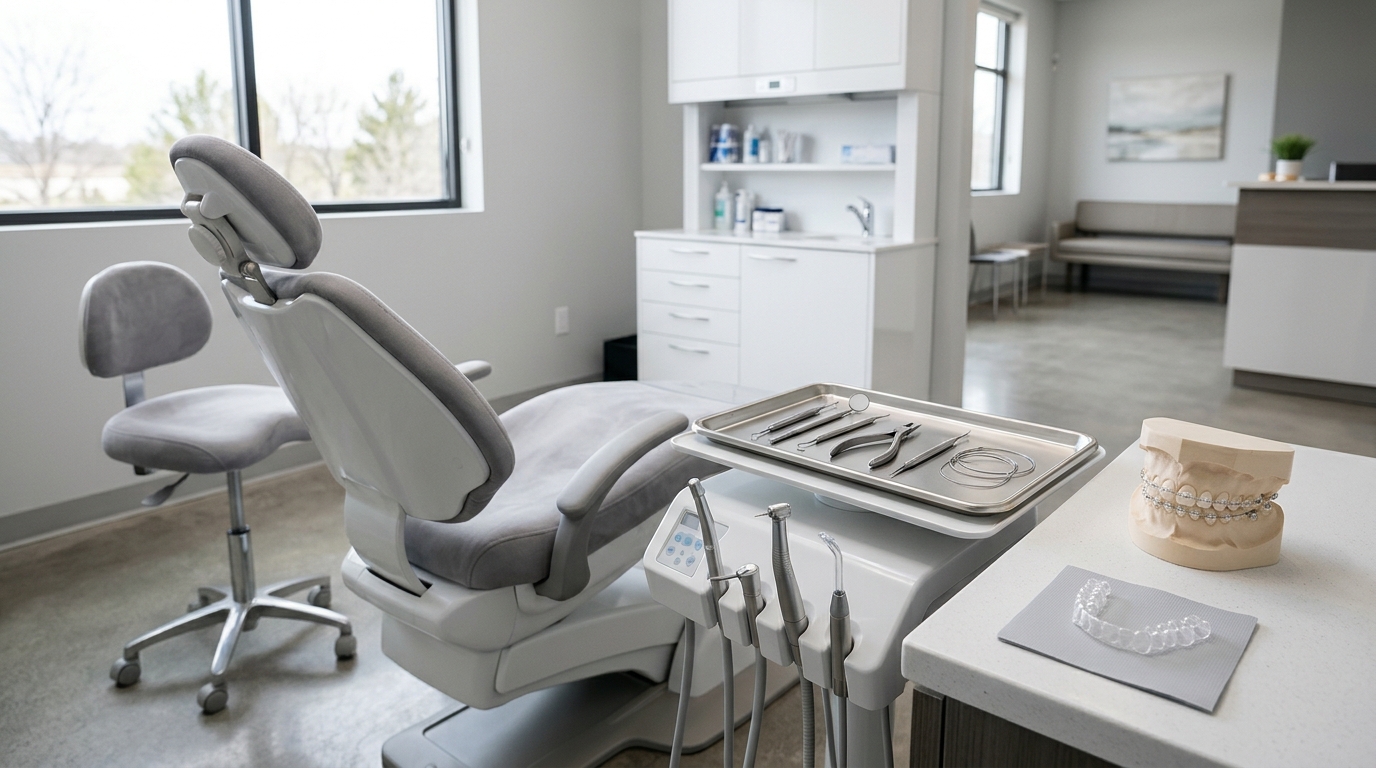
Dr. Nicolas Barrière, a qualified specialist in dentofacial orthopedics, practices in Divonne-les-Bains. His private practice serves patients from the Pays de Gex region and the French-Swiss border. The process begins with a referral from the patient's primary dentist, followed by a diagnostic consultation with clinical and radiographic examinations, and then a personalized treatment plan. Compared to Ferney-Voltaire, the practice in Divonne offers quick access from the northern Pays de Gex and consistent care from the same specialist in private practice, an advantage for long-term treatments that require continuity of clinical attention.
- The management of a new patient begins with a diagnostic consultation including clinical, radiographic and digital impressions examinations.
- The treatment plan is personalized: it is the practitioner who decides on the technique (aligners, vestibular or lingual braces), never the patient who chooses a brand.
- The active phase of treatment lasts on average 1 to 3 years, with follow-up appointments spaced 4 to 8 weeks apart, followed by a retention phase.
A new patient consulting an orthodontist in Divonne-les-Bains follows a four-step process: referral by their primary dentist, in-depth diagnostic consultation, personalized treatment plan validated collaboratively, and then an active phase with regular appointments before retention. The choice of orthodontic technique is based solely on the clinical diagnosis made by the specialist, not on a commercial selection by the patient.
In a context where residents of the Pays de Gex and cross-border workers have access to healthcare services scattered across several municipalities, understanding how the intake of a new patient is organized in practice allows for anticipation of each step. This article details the referral process, the clinical criteria that guide care, and the logistical information useful to families and adults in 2026. For an overview of how a private practice operates, you can consult our guide on...’general organization of a private orthodontic practice and the patient pathway.
Multidisciplinary dental center or exclusive private practice: what are the differences for the patient?
A dental center brings together several professions under centralized management (general practitioners, assistants, sometimes a salaried orthodontist), while a private practice exclusively in orthodontics is run by a qualified specialist in dentofacial orthopedics who practices only this discipline. This structural difference has direct consequences on continuity of care and personalization of follow-up.
In a private practice like the one in Divonne-les-Bains, the patient is followed by the same practitioner from the first consultation until the removal of the appliance, and then during the retention phase. This stability in the therapeutic relationship allows for a detailed assessment of clinical progress from appointment to appointment.
🏥
Multidisciplinary structure
Several professions under one roof, centralized administrative management, practitioners sometimes rotating according to schedules.
🎯
Exclusive private practice
Unique specialty, stable referring practitioner, technical platform dedicated to orthodontics, personalized follow-up throughout the treatment.
🧭
What changes for you
The exclusive practice offers continuity of clinical observation from diagnosis to retention, an advantage for long treatments.
Dentofacial Orthopedics Orthodontics (ODF) is a qualified medical specialty, recognized by the National Order of Dental Surgeons, which encompasses the diagnosis, prevention, and treatment of dental malpositions and jaw growth abnormalities. Only practitioners registered as qualified specialists may use this title.
The title of "qualified specialist in dentofacial orthopedics" is regulated by the«decree of 19 November 1980 published in the Official Journal. It certifies specific university training of several years after the diploma of dental surgeon, and requires an exclusive practice of orthodontics.
How does the treating dentist refer a patient to a specialist in the Pays de Gex?
The treating dentist detects a dental malposition or growth disorder during a routine examination, then writes a referral to a specialist orthodontist for a complete diagnostic evaluation. This initial orientation is not mandatory from a regulatory point of view, but it usefully structures the care pathway.
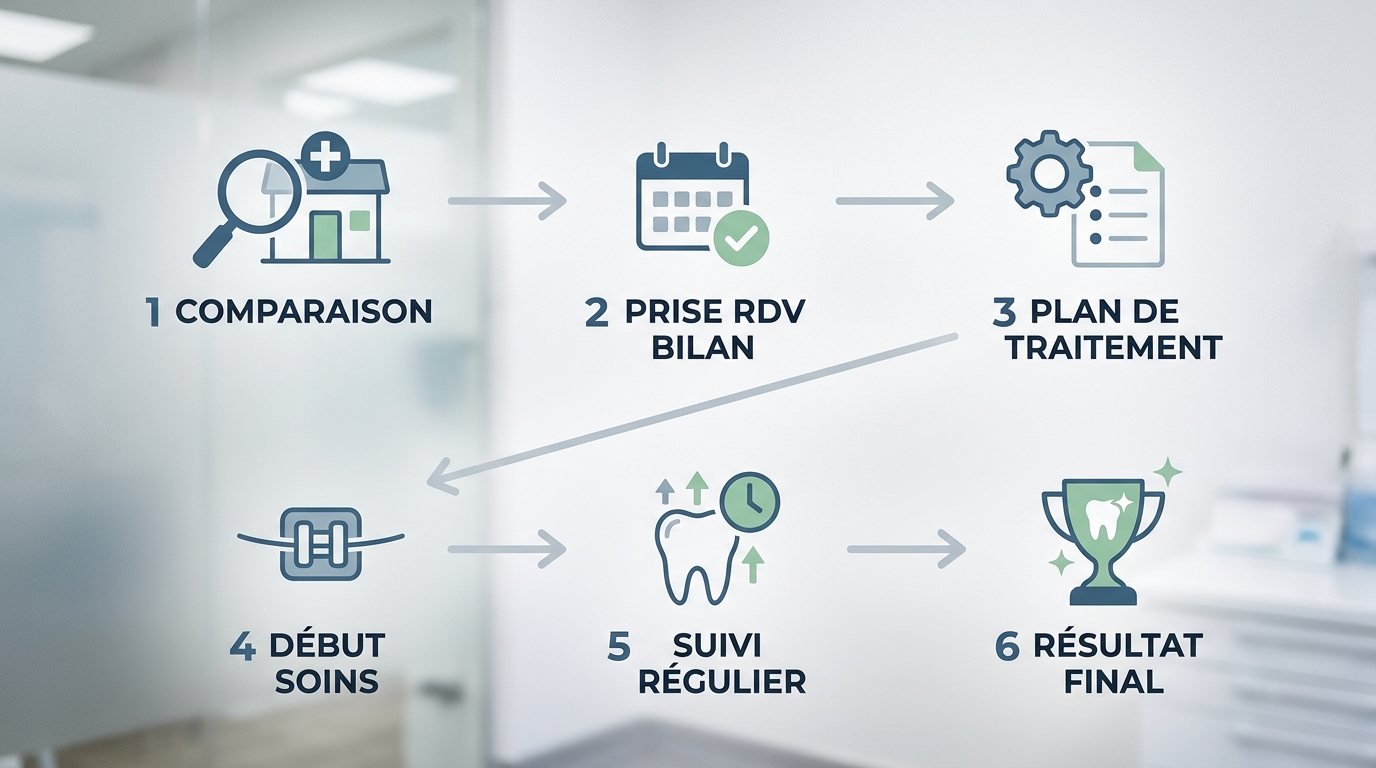
Screening often begins as early as 6 or 7 years of age in children, a period when the first permanent teeth appear and when certain growth abnormalities can be detected early. The French National Authority for Health (HAS) recommends orthodontic screening in the primary and mixed dentition stages., in order to identify situations requiring early intervention.
-
Detection by the treating dentist
During a routine check-up or treatment, the practitioner observes a malocclusion, a blockage, mouth breathing or a growth abnormality.
-
Address letter (recommended but not mandatory)
The dentist writes a letter detailing their clinical findings and sends any recent X-rays. The patient can also contact a specialist directly.
-
Booking an appointment at the office in Divonne-les-Bains
The secretary arranges an initial consultation appointment. Patients can prepare for their visit by gathering any necessary medical documents.
-
In-depth diagnostic consultation
Clinical examination, panoramic and cephalometric radiographs, digital impressions by intraoral scan, photographs. These elements form the basis of the diagnosis.
-
Presentation of the treatment plan
The practitioner explains the diagnosis, the clinically indicated technical options, the expected duration, the follow-up arrangements and a detailed quote in accordance with regulations.
Good to know: A prescription or referral letter from your dentist is not required to consult an orthodontist in Divonne-les-Bains. Direct access is possible, although a referral from your dentist facilitates the transmission of clinical information.
Divonne or Ferney-Voltaire: what geographical and logistical criteria should be considered when choosing a medical practice?
The location of the practice, travel time and the regularity of appointments are essential criteria, as orthodontic treatment involves visits spaced 4 to 8 weeks apart over a period of 1 to 3 years. The repetition of journeys makes logistics as important as clinical choice, and the comparison between Divonne and Ferney-Voltaire deserves to be made along three axes: accessibility, continuity of follow-up and specialization.
Divonne-les-Bains occupies a strategic position in the northern Pays de Gex: approximately 15 minutes from Nyon and the Swiss border, accessible via major roads, with ample parking. From Ferney-Voltaire, located further south, the journey to Divonne remains easily accessible via the roads of the Pays de Gex, and choosing a private practice offers the advantage of consistent care from the same specialist, whereas a more dispersed practice may involve rotating practitioners. The natural patient base includes the municipalities of Gex, Cessy, Grilly, Versonnex, Divonne, as well as the Swiss shore of Lake Geneva on the Nyon and Vaud sides. For a more detailed description of the area, please see our article on the area served and the municipalities concerned.
4-8 weeksbetween two appointments
1-3 yearsduration of the active phase
15 minaccess from Nyon
6 yearsage of first consultation
Franco-Swiss border patients face a double challenge: working hours in Geneva, Meyrin, or Nyon, and heavy traffic during peak hours on cross-border routes. The Court of Auditors has documented the extent of cross-border mobility in the Pays de Gex., This explains the interest in a firm located on the French side, away from the saturated flows.
Health alert point: Repeated absences from follow-up appointments mechanically prolong the treatment duration and can compromise its biomechanical outcome. Before choosing a clinic, honestly assess your ability to attend every 4 to 8 weeks for the entire planned duration.
Do you live in the Pays de Gex or the border region?
To concretely assess the feasibility of orthodontic follow-up, a telephone conversation with the secretariat will help identify time slots that are suitable for your professional or academic constraints.
Why does clinical diagnosis take precedence over the type of dental appliance?
Orthodontics is a medical procedure: the choice of technique (aligners, vestibular brackets, lingual brackets) is decided by the practitioner based on a precise clinical diagnosis, never selected by the patient on a commercial argument or a criterion of brand reputation. This hierarchy protects the quality of the therapeutic outcome.
The diagnosis relies on several combined examinations: cephalometric analysis (measurement of skeletal relationships on a lateral radiograph), study of digital models from intraoral CT scans, functional assessment (swallowing, respiration, masticatory function), and examination of supporting tissues. Each malocclusion has its own biomechanical signature, which dictates the most appropriate technique.
«"What determines the choice of an appliance is not an isolated aesthetic preference, but the precise combination of tooth movements to be produced, the growth pattern, and the biomechanical constraints specific to each patient. The diagnosis always precedes the tool."»
Nicolas Barrière, Orthodontist, Qualified Specialist in Dentofacial Orthopedics, founder of the practice
Transparent gutters
Removable appliance consisting of custom-made aligners, indicated for certain mild to moderate corrections, provided they are worn for at least 22 hours a day.
Vestibular attachments
Bonded brackets on the outer surface of the teeth (metal or ceramic), the reference technique for complex corrections thanks to the three-dimensional control they offer.
Lingual orthodontics
Brackets bonded to the inside of the teeth, completely invisible from the outside. A custom-made technique, particularly suitable for adults requiring maximum discretion.
Malocclusion
An anomaly in the positioning or interlocking of teeth between the two arches. It can be dental, skeletal or mixed, and directly guides the choice of treatment.
The price positioning of an aligner or the reputation of a brand does not constitute a valid medical criterion. HAS has published official recommendations on the indications for dentofacial orthopedics, which place diagnosis and assessment of expected benefit at the center of therapeutic decision-making.
A device is only valuable if it is the correct tool for the diagnosis made. Two patients with visually similar smiles may require two radically different techniques.
How do the treatment steps follow one another from placement to retention?
The active phase begins with the fitting of the chosen appliance, continues with follow-up appointments spaced 4 to 8 weeks apart for biomechanical adjustments, and ends with the removal of the appliance followed by a retention phase intended to stabilize the result. Each step serves a specific clinical purpose.
Between appointments, the patient plays an active role in their treatment: adhering to hygiene guidelines, rigorously wearing elastics or retainers as prescribed, and being vigilant for any emergencies (a loose band, a pricking thread). To ensure proper treatment Understanding the organization of follow-up and continuity of care in private practice, The patient is accompanied at each stage by their dedicated practitioner, who ensures the consistency of the clinical reading from beginning to end.
-
Installation of the equipment
Attachment of brackets or fitting of the first set of aligners. This appointment is longer than subsequent check-ups and includes detailed explanations on maintenance and feeding.
-
Follow-up appointments (every 4 to 8 weeks)
Monitoring progress, changing wires, biomechanical adjustments, fitting the next aligners, hygiene check and answering questions.
-
Refining phase
Final millimeter adjustments at the end of treatment to obtain optimal interlocking and a perfect smile aesthetic.
-
Removal of the device
Removal of brackets, dental polishing, taking final impressions for the fabrication of retention devices.
-
Restraint
Placement of a fixed retainer (wire bonded behind the teeth) and/or fitting of a night guard. Retention follow-up over several years to prevent relapse.
Health alert point: Oral hygiene must be reinforced throughout the treatment, especially with bonded braces. Insufficient brushing can lead to residual stains (demineralization) once the appliance is removed, which may be permanent.
The retention phase is essential: without it, teeth tend to return to their initial position, a natural biological phenomenon called relapse. Successful orthodontic treatment is judged as much by the removal of the retainers as by the stability of the result several years later. To learn more about scheduling between appointments, see our detailed article on... orthodontic follow-up and continuity of care between appointments.
What are the specific care arrangements depending on the patient's profile?
Treatment varies according to age: in children, it often aims to intercept early growth disorders; in adolescents, it corrects permanent dentition; in adults, it responds to functional and aesthetic demands, sometimes in coordination with other treatments. Each profile calls for different guidance and tools.
Main objective: Early detection and intervention are crucial for detecting and intercepting jaw growth abnormalities and dysfunctions (such as sucking or mouth breathing). The first consultation is recommended as early as 6 or 7 years old. Interceptive treatments act on a still-malleable skeleton and can sometimes prevent the need for more intensive treatments during adolescence.
Main objective: Correcting the permanent dentition once all the permanent teeth are present, generally between 11 and 14 years old. The techniques used (aesthetic braces, aligners or lingual braces depending on the clinical indication) are adapted to the adolescent's school and sports lifestyle.
Main objective: Treatment addresses both functional issues (wear and tear, chewing, temporomandibular joint dysfunction, sleep apnea) and aesthetic concerns. Adult treatments often involve coordination with the treating dentist, periodontist, or maxillofacial surgeon in cases of skeletal abnormalities.
🔍
Differentiation through three concrete clinical procedures
Beyond age categories, three elements guide the decision: skeletal maturity (assessed by radiography), the nature of the malocclusion (dental, skeletal, or mixed), and the overall medical context (periodontal disease, sleep apnea, bruxism). These three concrete steps, which no other criterion can replace, form the basis for the personalization of the treatment plan.
How does the administrative and financial support work?
For patients residing in France, the French National Health Insurance (Assurance Maladie) covers orthodontic treatments started before the age of 16, subject to prior approval. Cross-border patients affiliated with the Swiss system are subject to the conditions of their LAMal or supplementary health insurance. The detailed clinical estimate provided by the practice serves as the basis for the procedures.
In France, the reimbursement procedures are specified by Health insurance on the Ameli website Treatment is covered on a six-month flat-rate basis (maximum six semesters) and requires prior authorization before treatment begins. Additional fees are not fixed and vary depending on the technique and complexity of the case.
For cross-border patients: Coverage by Swiss health insurance (LAMal, private supplemental insurance) follows rules specific to each contract. The detailed clinical estimate provided by the practice allows you to contact the insurer to determine the precise amount covered. This step is taken before treatment begins.
The practice in Divonne-les-Bains handles both French and Swiss cases, simplifying the process for patients living near the border. The practice's positioning is not based on low-cost services; it focuses on the quality of clinical diagnosis, personalized treatment plans, and continuity of care by the same specialist.
«"The value of orthodontic treatment lies in the stability of the result five or ten years later, not just in the aesthetics at the time of removal. This requirement justifies the time spent in consultation, comprehensive examinations, and a truly personalized treatment plan."»
Nicolas Barrière, Orthodontist, Qualified Specialist in Dentofacial Orthopedics, founder of the practice
What benchmarks can be used to calmly compare the options in the sector?
Comparing options in this sector requires prioritizing criteria in order of clinical importance: practitioner qualifications, type of equipment, continuity of care, and then logistical criteria (accessibility, opening hours). Price is never the primary decision-making factor in orthodontics.
| Criteria | What you need to check | Why this is important |
|---|---|---|
| Qualification | Title of qualified specialist in orthodontics registered with the Order | Guarantee of specific university training and exclusive practice |
| Technical platform | Intraoral scanning, digital radiography, 3D imaging | Diagnostic accuracy and patient comfort |
| Continuity of monitoring | Same practitioner at each appointment | Consistent clinical reading throughout the treatment period |
| Accessibility | Commute to the office compatible with 4 to 8 weeks | Regular appointments = quality of results |
| Transparency of the quote | Detailed quote, including fees and duration | Administrative clarity and regulatory compliance |
Reassuring signs
- Title of qualified specialist clearly displayed
- In-depth diagnostic consultation before quote
- Treatment plan explained and written
- Followed by the same practitioner throughout
- Clear information on the restraint phase
Warning signs
- Quote issued without a complete clinical examination
- The patient chose the technique without any clinical discussion.
- Promises of very short deadlines without biomechanical justification
- No restraint phase is included in the quote.
- Communication focused on price rather than diagnosis
Frequently asked questions about orthodontic treatment in Divonne-les-Bains
At what age should you consult an orthodontist for the first time?
The first orthodontic consultation is recommended around the age of 6 or 7. This early screening allows for the identification of any jaw growth abnormalities and the interception of certain problems before the permanent teeth have fully erupted. A child may not require immediate treatment, but simply regular monitoring.
Do you need a prescription to make an appointment with an orthodontist?
No, a prescription or referral letter is not required to consult an orthodontist in Divonne-les-Bains. Direct access is possible, although a referral from your treating dentist can greatly facilitate the transmission of available clinical and radiographic information.
What is the average duration of orthodontic treatment?
The active phase of comprehensive treatment typically lasts between one and three years. This duration varies depending on the complexity of the initial clinical diagnosis, the nature of the malocclusion, and the patient's cooperation in wearing the appliances (elastics, splints, and adherence to appointments). A retention phase then follows, lasting several years.
How does reimbursement work for cross-border patients?
Patients residing in France are covered by French national health insurance (Assurance Maladie) for orthodontic treatments started before the age of 16, subject to prior approval. Cross-border workers affiliated with the Swiss healthcare system should consult the terms of their LAMal (Swiss health insurance) or private supplemental insurance based on the detailed clinical estimate provided by the practice.
How long does a first orthodontic consultation last?
The diagnostic consultation typically lasts between 45 minutes and 1 hour. It includes a complete clinical examination, often X-rays and digital impressions, followed by a discussion of possible treatment options. A specific appointment is then scheduled for a detailed presentation of the treatment plan.
How often are appointments required during treatment?
Follow-up appointments are spaced 4 to 8 weeks apart throughout the active phase. This regularity allows the practitioner to adjust the appliance according to biomechanical changes, monitor hygiene, and prevent any complications. Patients must factor this into their daily routine.
Can the patient dictate a specific type of appliance to their orthodontist?
The practitioner is responsible for choosing the appropriate technique, based on the clinical diagnosis established after thorough examinations. The patient does not select a brand of aligners or a type of appliance based on commercial criteria. The patient's preferences (aesthetics, comfort) are included in the discussion, but always within the framework of validated clinical indications.
What steps follow the final removal of the device?
After the appliance is removed, the retention phase begins, which is essential for stabilizing the result. This phase generally involves a fixed retainer (a wire bonded behind the teeth) and sometimes a night guard. Regular follow-up appointments are scheduled over several years to prevent relapse and verify the stability of the treatment.
📌 Key points to remember
- Referral to an orthodontist in Divonne-les-Bains can be made by the treating dentist or directly, without mandatory letter.
- A thorough diagnostic consultation precedes any treatment plan and any quote.
- The qualified specialist practitioner chooses the technique (splints, vestibular or lingual braces) based on the clinical diagnosis, never on a commercial argument.
- The active phase lasts 1 to 3 years with appointments every 4 to 8 weeks.
- The retention phase that follows removal is essential to stabilize the result over time.
- The administrative procedures differ between French Health Insurance and Swiss insurance companies; the detailed quote serves as the basis in both cases.
- Regular follow-up by the same practitioner is a key quality criterion.

About the author: Nicolas Barrière
Dr. Nicolas Barrière is an orthodontist, a qualified specialist in dentofacial orthopedics, a former hospital intern, and the founder of his practice in Divonne-les-Bains. He treats children, adolescents, and adults with orthodontic treatments (invisible aligners, lingual orthodontics, multi-bracket appliances), with particular attention to the care of patients living near the French-Swiss border.
Areas of expertise: Dentofacial orthopedics, preventive and interceptive orthodontics (from age 4), adolescent and adult orthodontics, invisible aligners, lingual orthodontics, multi-bracket orthodontics, associated orthognathic surgery, management of complex cases, functional disorders and TMJ, sleep apnea, retention.
LinkedIn profile of Dr. Nicolas Barrière · Meet the firm's team
An exchange to clarify your situation
Every clinical situation is different: a personalized opinion requires an in-office consultation with a thorough clinical examination. The receptionist will direct you to an appointment time that best suits your needs and travel constraints.
📚 Sources and references
Official and institutional sources:
- French National Authority for Health: indications for dentofacial and dentomaxillofacial orthopedics (official recommendations)
- HAS: Orthodontic screening in primary and mixed dentition
- Ameli: Management and treatment of dental malpositions
- Ameli: Reimbursement for orthodontic treatments
- Légifrance: Decree of 19 November 1980 approving the regulations relating to qualification in dentofacial orthopedics
- Court of Auditors: report on cross-border mobility in Geneva and the Pays de Gex
- ORS Auvergne-Rhône-Alpes: local health assessment of the Pays de Gex region
Academic and scientific sources:
- Epidemiological study on malocclusions in 359 schoolchildren in France (Clinical and Experimental Dental Research)
- Cochrane Review: Orthodontic treatment of dental crowding in children
- Wikipedia: Orthodontics and the practice of orthodontists in France
📖 Also read
 French
 English