
The orthodontic practice, located exclusively in Divonne-les-Bains (01220), receives children from Gex, Ferney-Voltaire, Versonnex, Échenevex, Ségny, and Chevry. An orthodontic assessment starting at age 6 or 7 is recommended by the French National Authority for Health (HAS) for the early detection of malocclusions.

Area served by an orthodontic practice in Divonne-les-Bains: patient catchment area and municipalities concerned
Written by Nicolas Barrière : Orthodontist, Qualified Specialist in Dentofacial Orthopedics, founder of the practice at nicolasbarriere. Updated on . Estimated reading time: 11 minutes.
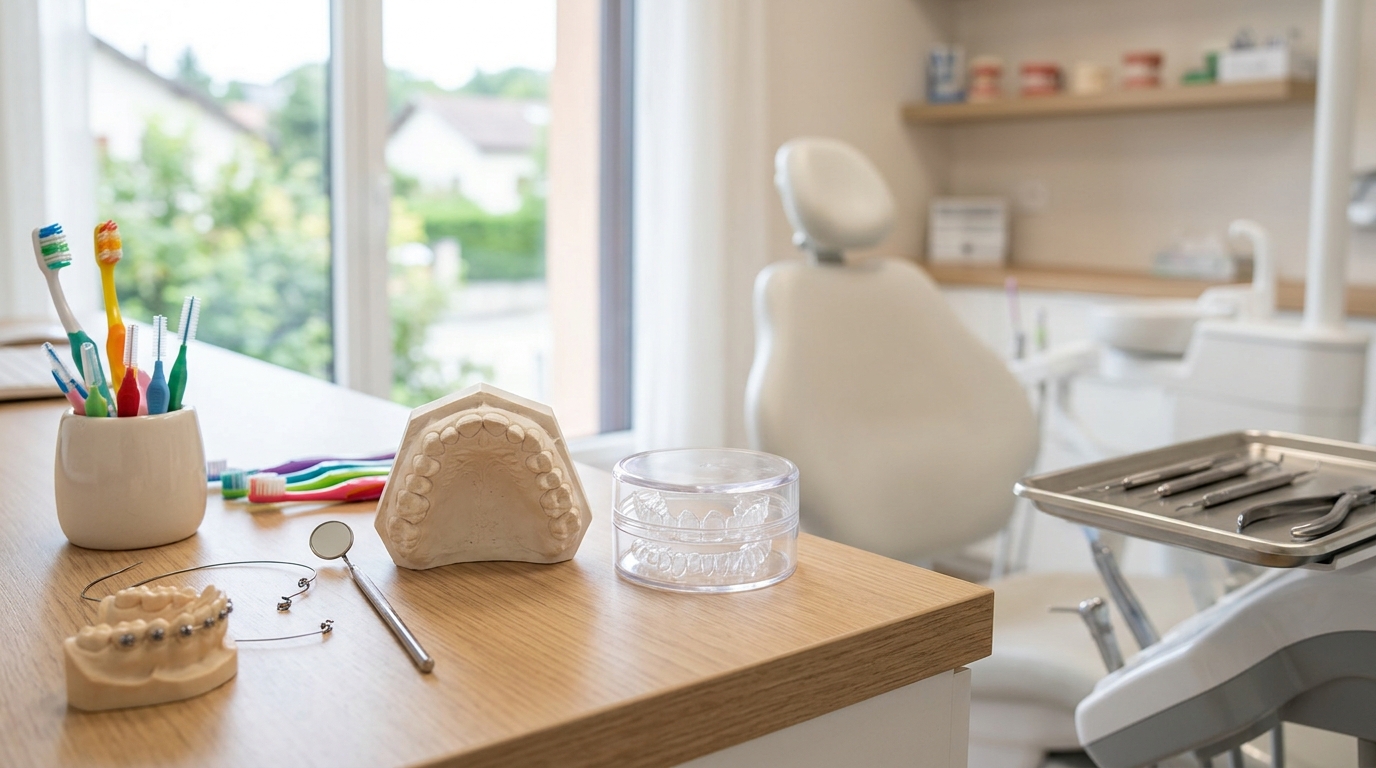
Does your child have crooked teeth? Dr. Nicolas Barrière's orthodontic practice, located in Divonne-les-Bains in the Ain department, welcomes children from the Pays de Gex region for the treatment of crooked teeth and malocclusions. The geographical proximity between the towns of the Pays de Gex and Divonne facilitates the regularity of orthodontic appointments necessary for the successful completion of the active phase of treatment.
- The orthodontic practice, exclusively located in Divonne-les-Bains (01220), receives children from Gex, Ferney-Voltaire, Versonnex, Échenevex, Ségny and Chevry.
- An orthodontic assessment from the age of 6 or 7 is recommended by the High Authority for Health to detect malocclusions early.
- The choice of appliance (interceptive, braces, aligners) is exclusively a matter of clinical diagnosis by the practitioner.
Dr. Nicolas Barrière's exclusive orthodontic practice, located in Divonne-les-Bains, welcomes children from the Pays de Gex region for the treatment of crooked teeth and malocclusions. His patient area covers all the towns and villages in the Pays de Gex, allowing for convenient, local clinical care. Direct access to the practice facilitates the regularity of appointments necessary for the successful completion of the active phase of interceptive treatment.
Which municipalities in the Pays de Gex are served by the practice's patients?
Dr. Nicolas Barrière's orthodontic practice, located exclusively in Divonne-les-Bains, sees children daily from across the Pays de Gex region. The most represented towns in his patient base are Gex, Ferney-Voltaire, Versonnex, Échenevex, Ségny, Chevry, Prévessin-Moëns, and Saint-Genis-Pouilly. This high volume of patients is due to the geographical cohesion of the Pays de Gex, where the daily commute of Franco-Swiss families is particularly high.
According to INSEE, the Ain department is experiencing strong population growth, driven in particular by the Pays de Gex region under the dual influence of Lyon and Geneva. The Gex district comprises around thirty municipalities and has a large, rapidly growing young population, with many families concerned about their children's orthodontic treatment.
Divonne-les-Bains
Gex
Ferney-Voltaire
Versonnex
Echenevex
Ségny
Chevry
Prévessin-Moëns
Saint-Genis-Pouilly
Cessy
📍
The office, a single point of practice
The consultation address is unique: Divonne-les-Bains. The other towns mentioned correspond to the places of residence of the families who travel to the office for follow-up appointments.
Territorial coherence
The Pays de Gex forms a continuous agglomeration, bordered by the Jura to the west and Lake Geneva to the east.
Daily mobility
The home-school and home-work flows in the Gex basin facilitate the integration of pediatric orthodontic appointments.
Regular appointments are crucial for children's orthodontic treatment. Coming from neighboring towns requires careful planning to ensure continuity of care. the smooth running of the patient journey in a private orthodontic practice, particularly when it is necessary to reconcile school schedules, extracurricular activities and the journey to Divonne-les-Bains.
What is the Pays de Gex?
Pays de Gex The Pays de Gex is a territory in the Ain department, located between the Jura mountains and the Swiss border. It comprises around thirty communes around Gex, Ferney-Voltaire, Divonne-les-Bains and Saint-Genis-Pouilly, and is characterized by strong demographic growth linked to its proximity to Geneva.
How many municipalities are included in the patient catchment area?
The practice serves families from about fifteen main towns in the Gex region. The Gex district comprises around thirty towns in total, most of which are located less than 20 minutes by car from Divonne-les-Bains. This geographical arrangement allows parents to integrate orthodontic follow-up appointments into their family routine without excessive travel.
Note: The practice does not open any secondary branches. All consultations, diagnoses, fittings of devices and adjustment appointments take place exclusively at the Divonne-les-Bains practice, under the direct responsibility of the referring practitioner.
Is cross-border patient care also provided?
Divonne-les-Bains is located approximately 15 minutes from Nyon and the Swiss border. The practice therefore also serves families residing in the Lake Geneva region on the Swiss side. The management of LAMal health insurance claims, Swiss supplementary insurance, and French coverage is handled by the practice's administrative team, in coordination with the relevant organizations.
Crooked teeth in children: how is the active phase of treatment organized?
The treatment of misaligned teeth in children is based on a tailored clinical diagnosis, followed by an active phase consisting of regular appointments at the office, and then a retention phase designed to stabilize the result. Each step corresponds to specific indications and a timeframe specific to the growth of the young patient.
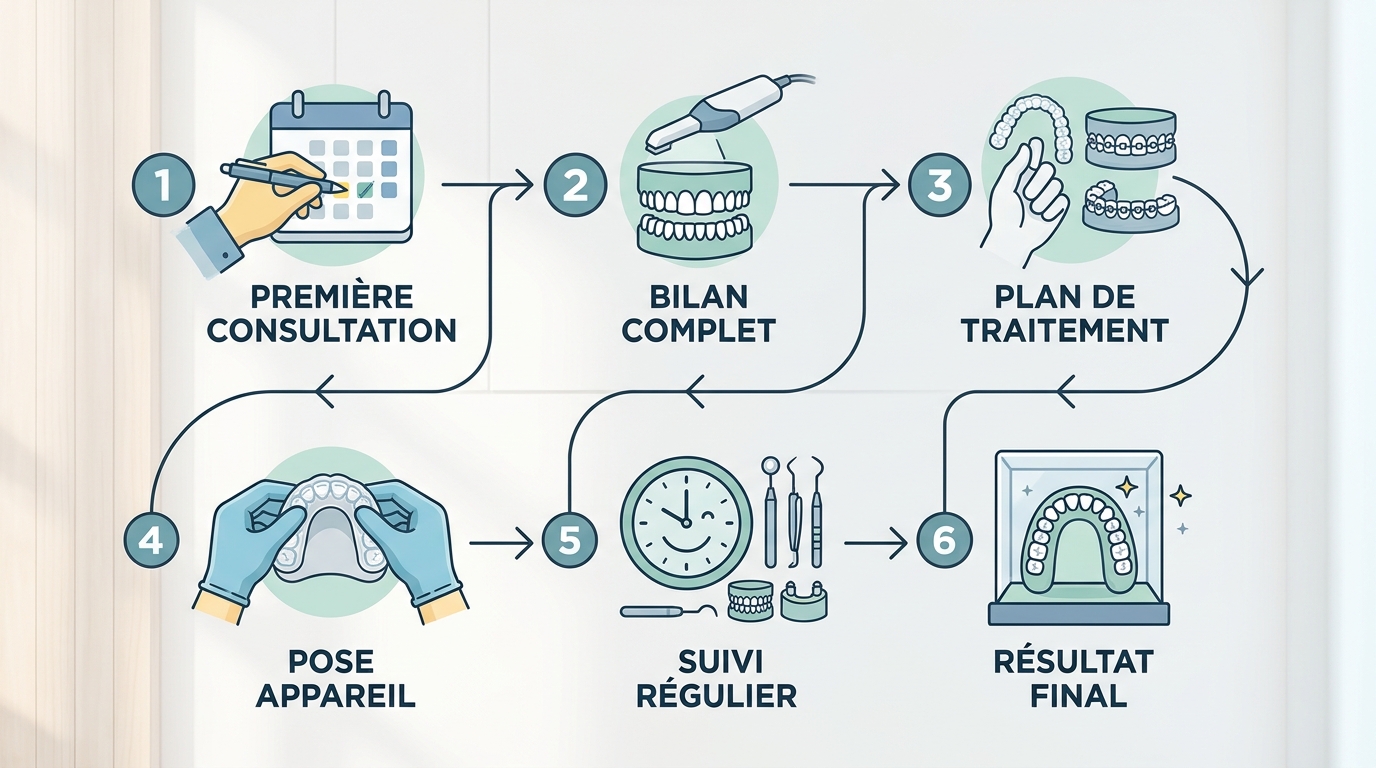
The initial diagnosis remains the most crucial step in the treatment process. It is based on a thorough clinical examination, appropriate X-rays, and, depending on the case, digital impressions. Using these objective elements, the practitioner determines the type of appliance best suited to the situation: an interceptive appliance for young children, multi-bracket metal or ceramic appliances for adolescents, or clear aligners, depending on the clinical indications. The patient and their family do not choose a technique based on personal preference; the practitioner is responsible for the therapeutic choice.
-
Initial clinical assessment
Initial examination of dentition, occlusion and jaw growth. This assessment is recommended from the age of 6 or 7 years according to the French National Authority for Health (HAS).
-
Diagnosis and treatment plan
Radiographic analysis, digital molds or impressions, then development of a personalized treatment plan explained to the family.
-
Fitting of orthodontic appliances
Placement of the device chosen by the practitioner: removable appliance, multi-brackets or splints, according to the clinical indication.
-
Active phase: follow-up appointment
Regular adjustments are made in the office every 4 to 8 weeks, depending on the protocol. This is the core of the treatment, where the alignment of the teeth is gradually achieved.
-
End of active treatment
Removal of the device and verification of the clinical and aesthetic result obtained.
-
Restraint
Placement of a retention device (bonded wire, night guard) to permanently stabilize the teeth in the corrected position.
Health alert point: No online content can replace a clinical consultation. The choice of orthodontic technique, the decision to treat or wait, and the treatment schedule depend strictly on an in-office examination and radiographic assessment.
What is dental malocclusion in children?
Dental malocclusion Malocclusion refers to a misalignment of the teeth or an incorrect relationship between the jaws when the mouth is closed. It encompasses common cases of crooked teeth in children and requires diagnosis by a dentist with a specialist diploma in dentofacial orthopedics.
What is the purpose of the interceptive phase?
Interceptive orthodontics Interceptive orthodontics refers to early intervention, generally between 6 and 10 years of age, intended to guide bone growth and correct the child's functional habits (thumb sucking, mouth breathing) in order to prevent the worsening of a malocclusion.
The benefits of interceptive orthodontics are well-documented: according to the French National Authority for Health (HAS), orthodontic screening during the primary or mixed dentition period allows for the identification of anomalies that, if left untreated, could later require more extensive intervention. The practitioner assesses the appropriateness of early intervention or simple monitoring on a case-by-case basis.
«"In an orthodontic practice, each child presents a unique combination of dental, skeletal, and functional factors. The practitioner's role is to make an accurate diagnosis, then clearly explain the clinically feasible options to the parents before initiating any treatment."»
Nicolas Barrière, Orthodontist, Qualified Specialist in Dentofacial Orthopedics, founder of the practice
Why is regularity of appointments essential?
The active phase of orthodontic treatment relies on the controlled application of mechanical forces to the teeth. Each adjustment appointment allows the practitioner to assess progress, modify the appliance settings, and ensure that tooth movement is proceeding smoothly. A missed appointment or one delayed by several weeks can slow down treatment or even require repeating certain steps.
Orthodontic treatment in children lasts on average 12 to 24 months for the active phase, depending on the complexity of the case, with an adjustment appointment every 4 to 8 weeks.
6Recommended age for the first assessment (years)
8maximum frequency of appointments (weeks)
24average high duration of the active phase (months)
To learn more about scheduling between appointments, you can consult the details of continuity of care between orthodontic sessions.
How can we facilitate regular access to orthodontic follow-up appointments?
Access to the Divonne-les-Bains office from the towns of the Pays de Gex is mainly by car, via a smooth road network which puts most of the towns in the Gex region less than 25 minutes away. This accessibility is a concrete advantage for families who have to schedule regular orthodontic appointments over several months.
What are the approximate travel times?
Travel times vary depending on traffic conditions, particularly during peak hours related to cross-border traffic towards Geneva. For guidance purposes, and outside of peak hours, the road distances from the main towns in the Gex region are as follows.
| Municipality of departure | Approximate distance | Approximate travel time |
|---|---|---|
| Divonne-les-Bains | city center | on site |
| Grilly | approximately 4 km | approximately 8 minutes |
| Versonnex | approximately 8 km | approximately 12 minutes |
| Gex | approximately 10 km | about 15 minutes |
| Echenevex | approximately 12 km | approximately 17 minutes |
| Ségny | approximately 9 km | approximately 13 minutes |
| Ferney-Voltaire | approximately 18 km | approximately 25 minutes |
| Prévessin-Moëns | approximately 16 km | approximately 22 minutes |
| Saint-Genis-Pouilly | approximately 20 km | approximately 25 minutes |
These estimates are provided for guidance purposes only. They may vary significantly during periods of heavy traffic, particularly in the morning and late afternoon.
How to organize appointments around the school schedule?
The practice offers appointments throughout the week to allow families to balance school, extracurricular activities, and orthodontic treatment. Adjustment sessions are generally short, minimizing the child's absence. For longer appointments (braces fitting, comprehensive assessment), it is best to plan ahead and schedule several weeks in advance.
🗓️
Advance planning
Adjustment appointments are scheduled at the end of each session to ensure continuity of treatment.
🚗
Easy road access
Divonne-les-Bains is accessible via a road network that serves all the municipalities of the Pays de Gex.
👨👩👧
Family coordination
The time slots spread throughout the week make family organization easier, especially for working parents.
What habits should you adopt between two appointments?
- Respect the daily wearing time of the removable appliance prescribed by the practitioner.
- Maintain enhanced oral hygiene, adapted to the presence of orthodontic appliances.
- Avoid hard, sticky or very sweet foods that may damage the appliance.
- Note any unusual pain, ring detachment, or persistent discomfort for the next appointment.
- Contact the office immediately in case of breakage or significant inconvenience.
A first orthodontic assessment for your child
A personalized diagnosis is essential to determine whether or not treatment is necessary. Schedule an appointment with the office for an in-office consultation in Divonne-les-Bains.
What anomalies are grouped under the term "crooked teeth"?
The expression "crooked teeth" refers, in common parlance, to a set of dental malpositions and jaw misalignments that practitioners clinically distinguish under the term malocclusions. These anomalies can relate to the position of an isolated tooth, the overall alignment of an arch, or the relationship between the upper and lower jaws.
Overlap
Lack of space on the arch forces some teeth to be positioned in front of or behind others.
Diastema
Abnormal space between two teeth, most often between the upper central incisors.
Cross occlusion
Transverse misalignment between the arches, with the upper teeth passing inside the lower teeth in part of the mouth.
Overclosure
Excessive overlap of the lower incisors by the upper incisors when closing the mouth.
Gap
Lack of contact between the upper and lower teeth when the mouth is closed, often linked to prolonged thumb sucking.
Sagittal shift
Anteroposterior imbalance between the upper and lower jaws.
What signs should alert parents?
Certain clinical signs warrant an immediate orthodontic consultation, even if the child is still in the mixed dentition stage. The French National Health Insurance (Ameli) and the French National Authority for Health (HAS) emphasize the importance of early detection.
- Persistent thumb or pacifier sucking after 4 years.
- Habitual mouth breathing, with the mouth open at rest or during sleep.
- Difficulty biting or chewing symmetrically.
- Visible discrepancy between the upper and lower jaws.
- Marked overlap from the appearance of the first permanent teeth.
- Early or late loss of baby teeth.
Practical tip: If in doubt, speak first to your child's dentist. They will be able to assess whether a referral to a qualified orthodontist for a more thorough evaluation is necessary.
Do functional habits influence dental alignment?
Yes, a child's oral habits play an important role in jaw development and tooth eruption. Prolonged thumb or pacifier sucking can contribute to an anterior open bite. Chronic mouth breathing, often linked to ENT issues (adenoids, allergies), can alter maxillary growth. Atypical swallowing, where the tongue pushes the teeth forward, also contributes to certain malocclusions. These factors are taken into account in the overall orthodontic diagnosis.
How does the referral process for a new patient to the practice work?
Referral of a child to a specialist orthodontic practice is generally made on the advice of the treating dentist, who identifies a need for specific care during follow-up consultations. Parents can also make an appointment directly if they observe warning signs.
Locationby the treating dentist or the parents
Initial contactwith the Divonne-les-Bains office
First consultationclinical assessment of the child
Diagnosistreatment plan explained to the family
Implementationfitting of the device and regular follow-up
To delve deeper into this key step, see our article dedicated to the orientation and care of a new patient in the Divonne-les-Bains area.
Is it always necessary to go through your regular dentist?
No, access to an orthodontist does not require a referral: parents can make an appointment directly. However, communication with the child's regular dentist remains valuable, as it ensures the overall consistency of the child's oral health care (cavities, hygiene, tooth eruption). The practice in Divonne-les-Bains regularly works in coordination with other practitioners in the Pays de Gex region to share information relevant to treatment.
«"Coordination between the treating dentist and the orthodontist significantly improves the quality of care. Each professional brings their expertise at different stages of the child's treatment, in a complementary rather than competitive way."»
Nicolas Barrière, Orthodontist, Qualified Specialist in Dentofacial Orthopedics, founder of the practice
What training does an orthodontist undergo to treat children?
Orthodontist training The orthodontist who treats a child's crooked teeth is a dental surgeon who has completed several years of additional university training, culminating in a diploma recognized by the National Order of Dental Surgeons, and is authorized to use the qualification of’ODF.
And after the active phase: what is the purpose of restraint?
Retention refers to the phase of orthodontic treatment that follows the removal of the appliance and aims to permanently stabilize the teeth in their new position. This step is essential to limit the risk of relapse, that is, the partial or total return of the teeth to their initial position.
Orthodontic retention Orthodontic retention is the device, fixed or removable, put in place at the end of active treatment to maintain the teeth in corrected position during the bone and periodontal stabilization phase.
Fixed restraint
- thin metal wire glued behind the front teeth.
- Invisible from the outside.
- Wear it at all times, no risk of forgetting.
- Requires rigorous maintenance and regular checks.
Removable restraint
- A transparent gutter, usually worn at night.
- Easy to remove for brushing.
- It relies on the patient's discipline.
- Increased risk of recurrence in case of irregular wear.
The choice of retention appliance is made by the practitioner, depending on the type of treatment performed, the patient's age, and the desired stability. Retention checkups are scheduled over several years, often until the end of growth and sometimes beyond. In children, this vigilance is even more important because the jaws continue to grow after the correction of crooked teeth. Consistent wear of the appliance, combined with regular checkups at the Divonne-les-Bains office, helps to preserve the benefits achieved during the active phase and avoid the need for further treatment.
What role does reimbursement play in the decision to treat?
Orthodontic treatment for children is covered by Health Insurance, subject to age and prior agreement conditions, when treatment is started before the 16th birthday. This information is available on the official Ameli.fr website and should be discussed with the practitioner and the family's health insurance provider.
Basic information: In accordance with current regulations, dentofacial orthodontic treatments require prior authorization from the French National Health Insurance (Assurance Maladie). Reimbursement details depend on the procedures performed, the treatment start date, and the coverage provided by supplemental health insurance. Franco-Swiss cross-border workers are subject to a specific framework (LAMal, Swiss supplemental insurance).
The question of cost should never precede the clinical diagnosis. It is the medical indication, determined after a thorough examination, that dictates the nature of the treatment proposed to correct the child's crooked teeth. The practice provides the family with a detailed estimate, compliant with professional ethics, which then allows them to submit the necessary paperwork to insurance providers. Parents thus have clear information about the out-of-pocket expenses before making any commitment, but it is the medical relevance and the practitioner's expertise that guide the decision to treat, never the financial criterion alone.
Frequently asked questions about children's orthodontics in Divonne-les-Bains
When should you consult a doctor for misaligned teeth in children?
An initial orthodontic assessment is recommended as early as age 6 or 7, according to the recommendations of the French National Authority for Health (HAS), even if all permanent teeth are not yet present. This early screening allows for the identification of potential malocclusions or jaw growth disorders and, if necessary, the consideration of interceptive treatment.
Is interceptive orthodontics different from full orthodontic treatment?
Yes. Interceptive orthodontics intervenes early in a child's bone growth and functional habits to prevent the worsening of abnormalities. Complete treatment, on the other hand, generally takes place during adolescence on the permanent teeth, to perfect tooth alignment and occlusion, using more elaborate appliances over a longer period.
What device is used to correct a child's crooked teeth?
The choice of technique (removable appliances, vestibular bands, or clear aligners) is solely based on the practitioner's clinical diagnosis. Following a thorough examination and radiographic assessments, the practitioner selects the method best suited to the young patient's anatomy, age, and specific pathology.
From which towns in the Pays de Gex does the practice's patient base come?
The practice, located exclusively in Divonne-les-Bains, welcomes children from Gex, Ferney-Voltaire, Versonnex, Échenevex, Ségny, Chevry, Prévessin-Moëns, and Saint-Genis-Pouilly, among others. The entire Gex region is served, thanks to the geographical proximity of these towns and the efficient road network.
Is it mandatory to go through a dentist to consult an orthodontist?
No. Access to an orthodontist does not require a referral: parents can make an appointment directly. However, the information is shared with the treating dentist to ensure consistency in the child's overall oral health care throughout the treatment.
At what age does treatment for crooked teeth usually begin?
The timing of treatment depends on the nature of the anomaly, the child's age, and the type of appliance being considered. An interceptive phase can begin as early as 6 to 10 years old, while complete treatment often occurs during adolescence on the permanent teeth. The practitioner determines the appropriate schedule after examination.
Can patients living near the French-Swiss border be treated?
Yes. Divonne-les-Bains is about 15 minutes from the Swiss border. The practice team handles cases involving French national health insurance (LAMal) and Swiss supplemental insurance, in coordination with the relevant organizations. The specific procedures are explained to the family during the initial consultation.
What should I do if my device breaks between appointments?
If a bracket comes loose, a wire breaks, or you experience unusual pain, it is recommended that you contact the office immediately, without waiting for your next scheduled appointment. A prompt appointment is usually offered to assess the situation, repair the appliance if necessary, and avoid any interruption to your ongoing treatment.
📌 Key points to remember
- Dr. Nicolas Barrière's orthodontic practice is located exclusively in Divonne-les-Bains and welcomes children from all over the Pays de Gex region.
- The patient base includes Gex, Ferney-Voltaire, Versonnex, Échenevex, Ségny, Chevry, Prévessin-Moëns and Saint-Genis-Pouilly.
- An initial orthodontic assessment at 6 or 7 years of age allows for the early detection of malocclusions and functional disorders.
- The care pathway includes diagnosis, fitting of the appliance, the active phase with regular appointments, and then retention.
- The choice of orthodontic technique is solely a matter of clinical diagnosis by the practitioner.
- The regularity of adjustment appointments directly influences the quality of the result obtained.
- No online content can replace a thorough in-office clinical consultation and examination.
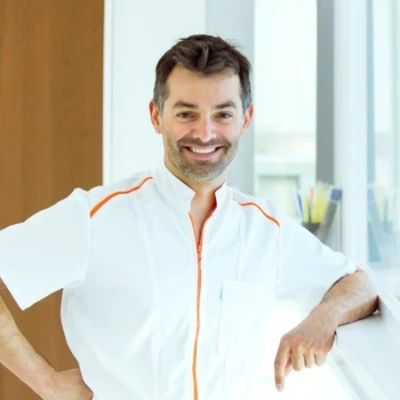
About the author: Dr. Nicolas Barrière
Dr. Nicolas Barrière is an orthodontist, a qualified specialist in dentofacial orthopedics, a former hospital intern, and the founder of his practice in Divonne-les-Bains. He treats children, adolescents, and adults with orthodontic treatments (invisible aligners, lingual orthodontics), paying particular attention to the care of patients living near the French-Swiss border.
Areas of expertise: Dentofacial orthopedics, preventive and interceptive orthodontics (children from 4 years old), adolescent and adult orthodontics, aligners, lingual orthodontics, multi-bracket treatments, complex and multidisciplinary cases, functional disorders and TMJ, sleep apnea, retention and relapse management, orthodontic emergencies.
LinkedIn profile of Dr. Nicolas Barrière · Meet the firm's team
📚 Sources and references
Official and institutional sources:
- Ameli: Understanding dental malpositions
- Ameli: treatment of dental malpositions (orthodontics and dental malposition)
- Ameli: Reimbursement for orthodontic treatments
- HAS: Orthodontic screening in primary and/or mixed dentition
- HAS: indications for dentofacial and dentomaxillofacial orthopedics
- Public Service: Free oral and dental examinations (M'T Dents)
Academic and scientific sources:
- Epidemiological study on malocclusions and oral dysfunctions in 359 school-aged children in France
- Systematic review on the prevalence of malocclusions in primary dentition (2010-2024)
- Cochrane: Orthodontic treatment of dental crowding in children
Geographic and territorial sources:
- Insee: Ain, strong growth under the dual influence of Lyon and Geneva
- ORS Auvergne-Rhône-Alpes: local health assessment of the Pays de Gex region
- Wikipedia: Divonne-les-Bains
- Wikipedia: Gex district
📖 Also read:
- How a private orthodontic practice operates: organization of follow-up and patient pathway
- Orthodontic follow-up in private practice: continuity of care between appointments
- Orthodontist in the Divonne-les-Bains area: referral and care of a new patient
- Orthodontic emergency: what to do if your appliance breaks?
- Assess in 2 minutes if your child could benefit from an orthodontic assessment
 French
 English