
The qualification of "specialist in dentofacial orthopedics" (code 36) can be verified with the National Order of Dental Surgeons. For adolescents, an initial assessment is recommended from age 7 by the French National Authority for Health (HAS); coverage by the French National Health Insurance (Assurance Maladie) is possible before this age.

Adult orthodontics: when veneers are considered and when orthodontics is indicated
Written by Nicolas Barrière : Orthodontist, Qualified Specialist in Dentofacial Orthopedics, founder of the practice at nicolasbarriere.fr. Updated on . Reading time: approximately 12 minutes.
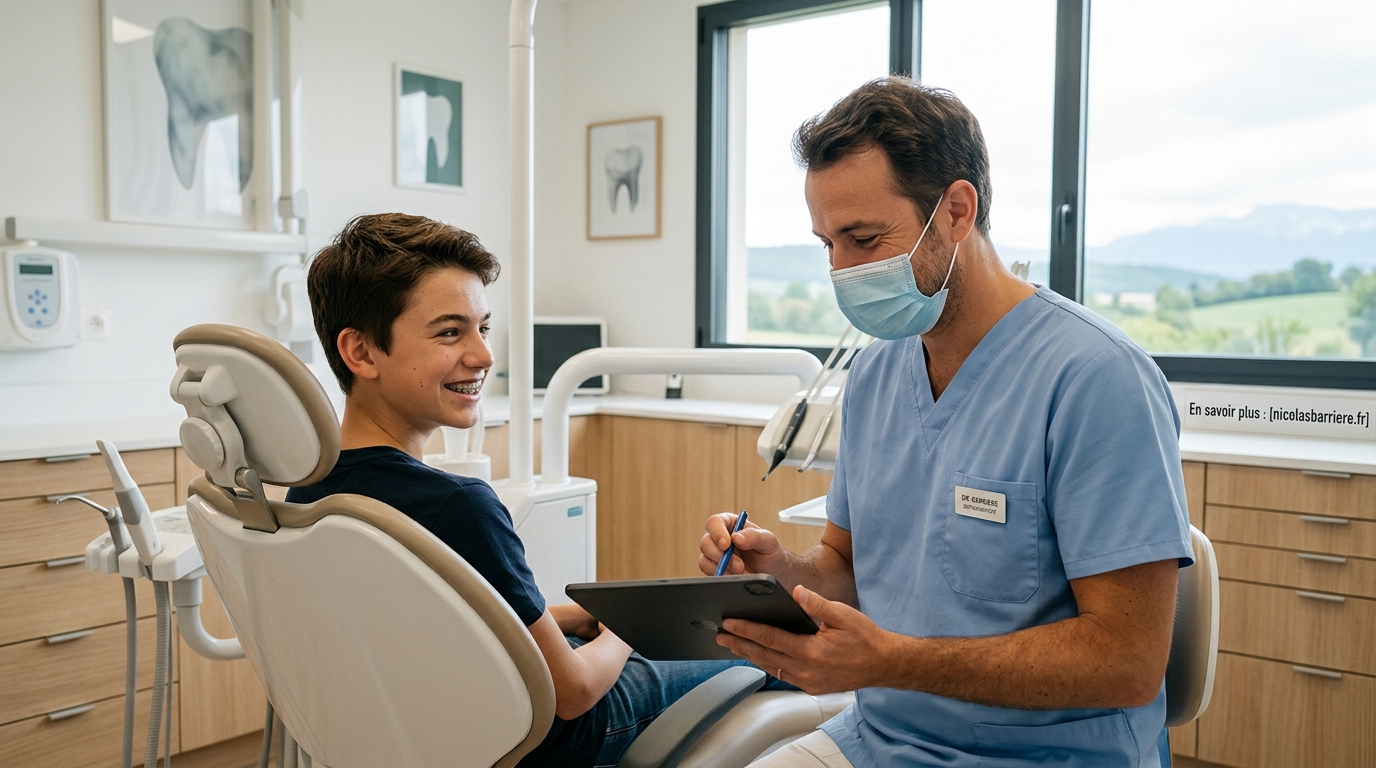
Finding the best orthodontist for a teenager starts with a simple check: the practitioner's qualifications in dentofacial orthopedics. During family consultations, many parents discover that they too face a question: orthodontics or dental veneers?
- The qualification of "specialist in dentofacial orthopedics" (code 36) can be verified with the National Order of Dental Surgeons.
- For adolescents, a first assessment is recommended from the age of 7 by the High Authority for Health; coverage by Health Insurance is possible before the age of 16 under prior agreement.
- Orthodontics moves the tooth and its root; veneers cover the visible surface of the enamel: two approaches with different clinical indications.
To choose the best orthodontist for a teenager, prioritize a qualified practitioner specializing in dentofacial orthopedics (code 36, National Order of Dental Surgeons), at the Divonne-les-Bains practice, who is accustomed to explaining their diagnosis. During these family appointments, the practitioner can guide parents between orthodontics (moving the tooth and its root to correct a malocclusion) and dental veneers (prosthetic covering of the enamel to correct color and shape without moving the tooth).
How to choose the best orthodontist in Divonne-les-Bains for a teenager?
Choosing an orthodontist for a teenager rests on three verifiable pillars: the professional qualification, there proximity of the office and the quality of the dialogue during the initial assessment. Border families, between France and Switzerland, often add a fourth criterion: the simultaneous management of French and Swiss insurance (LAMal, supplementary).
There qualification in dentofacial orthopedics (ODFThis is the primary reference point. In France, only dentists who have completed specialized university training (CECSMO or DES in Orthodontics) and are registered under code 36 with the National Order of Dentists can use the title of "qualified specialist in dentofacial orthopedics." This information is public and can be consulted free of charge in the Order's official directory.
Dentofacial orthopedics (ODF) : dental medical and surgical specialty recognized by the National Order of Dental Surgeons, which includes the diagnosis and treatment of dental malpositions and jaw growth abnormalities in children, adolescents and adults.
The 5 steps to selecting an orthodontist for your teenager
-
Check the qualification in the Order's directory
Go to the website of the National Order of Dental Surgeons and search for the practitioner by name or city. The mention "qualified specialist in orthodontics" (code 36) confirms specialized university training.
-
Assess proximity and accessibility
Orthodontic treatment typically lasts 18 to 24 months, with check-ups every 4 to 8 weeks. Choosing a practice close to the teenager's school reduces absences and improves attendance.
-
Request an initial comprehensive assessment
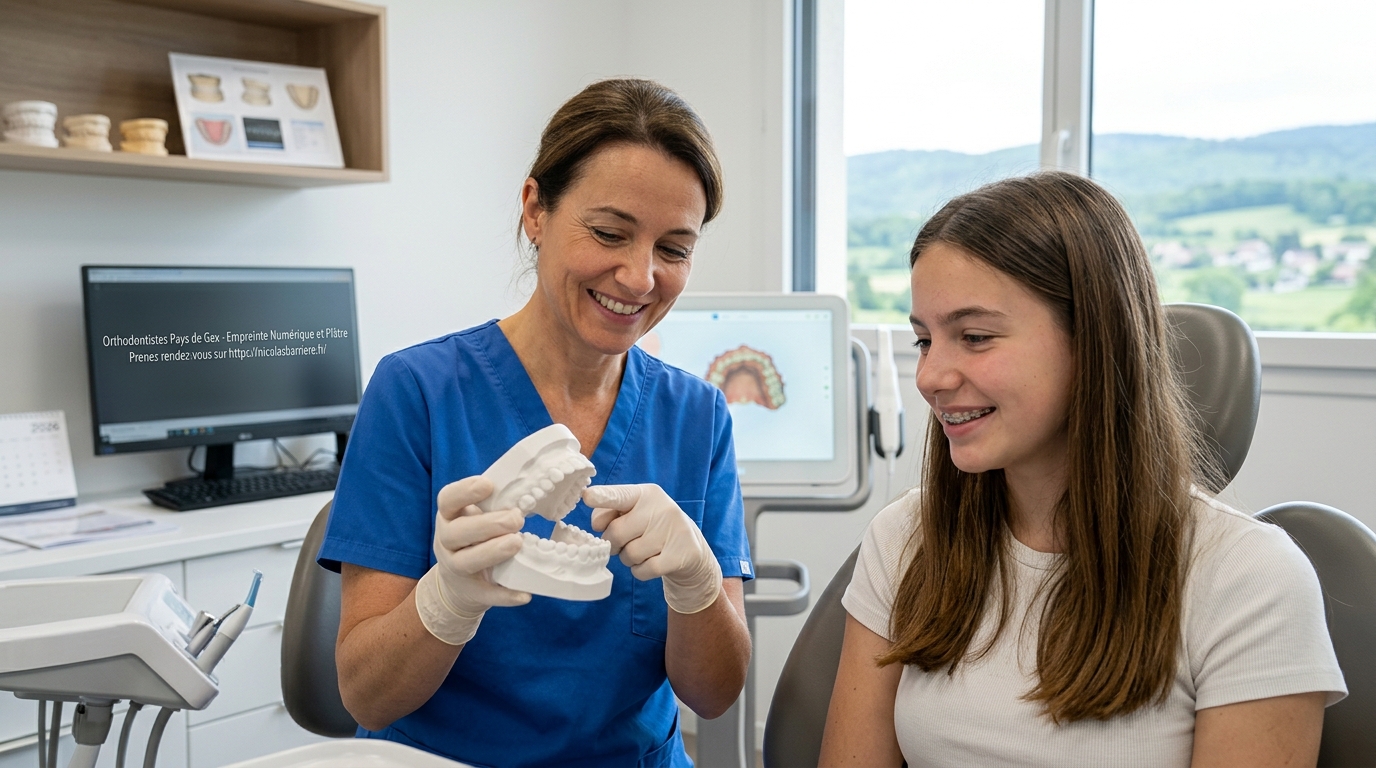
This assessment must include a clinical examination, photographs, X-rays, and impressions (traditional or digital). A clear diagnosis and a personalized treatment plan must be presented to you, along with a detailed estimate that complies with dental standards.
-
Check insurance coverage
For cross-border families, confirming that the firm handles prior agreement files (France) and Swiss LAMal or supplementary reimbursements avoids complex administrative procedures.
-
Take into account the teenager's opinion
A good practitioner speaks directly to the young patient, explains the steps involved, and answers their questions. This relationship of trust is essential for adherence to treatment, especially for removable aligners, which require daily discipline.
Divonne-les-Bains: what local options are available?
The orthodontic practice is located in Divonne-les-Bains and receives patients from the Pays de Gex region as well as from neighboring Switzerland. Patients frequently cross-reference their practices, consult reviews of regional practitioners, or seek treatment in Geneva. Registration with the professional order and local word-of-mouth remain the strongest indicators of trust.
Point of vigilance. Beware of unverifiable superlatives («the best,» «renowned expert»): the code of ethics for dental surgeons (article R.4127-215-1 of the Public Health Code) prohibits any comparative or exaggerated advertising. Rely on the facts: qualifications, continuing education, and transparency of the estimate.
7age recommended by the HAS for a first assessment (years)
16age limit for coverage by Health Insurance
6maximum semesters reimbursed for orthodontic treatment
193,50 €reimbursement basis per semester (Ameli)
According to the DREES, data as of January 1, 2024, The demographics of orthodontic dentists remain unevenly distributed across the country. In dynamic border areas like the Pays de Gex, booking appointments well in advance is often necessary: some practices have waiting lists of several months for an initial assessment.
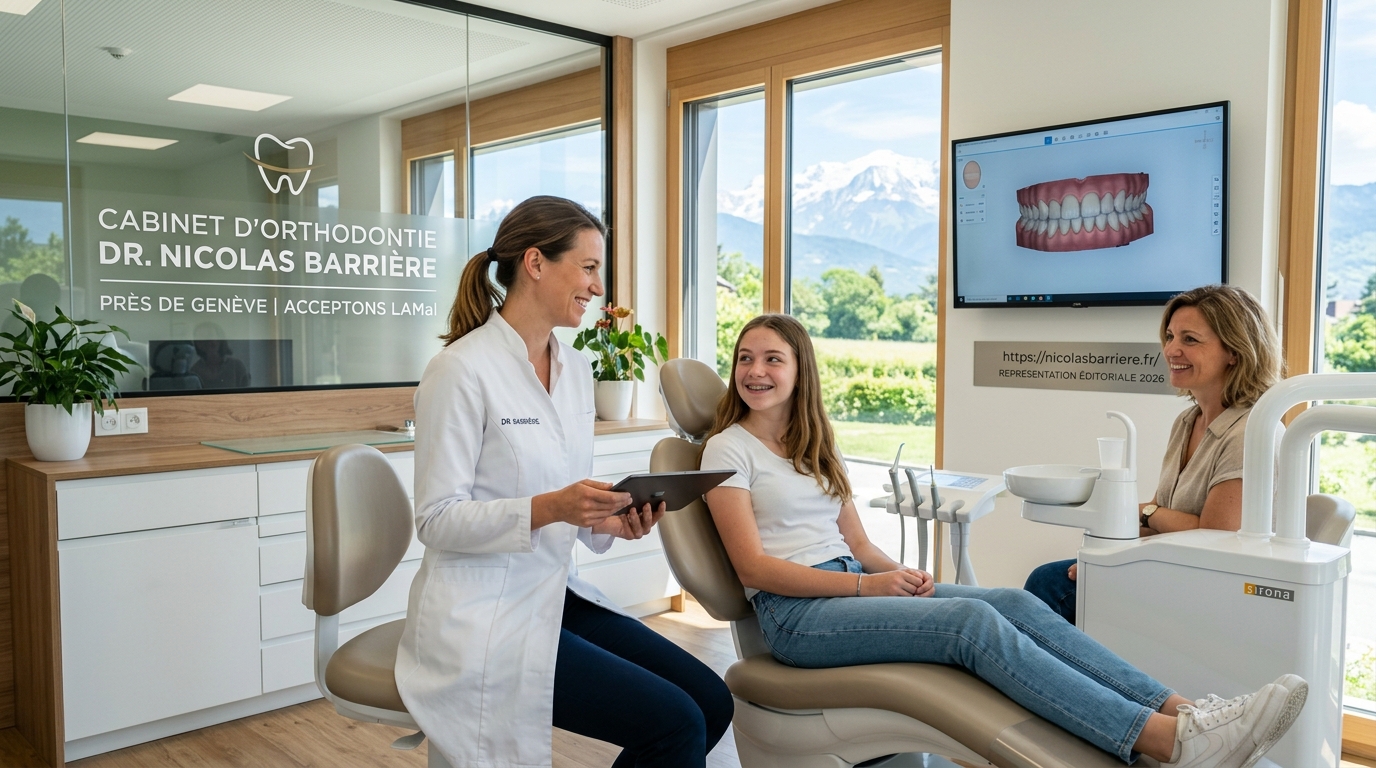
An orthodontic assessment for your teenager
A personalized opinion requires a clinical consultation and a thorough examination. To make an appointment at the Divonne-les-Bains office:
What are the clinical situations that warrant adult orthodontic treatment?
Adult orthodontics treats malocclusions by moving teeth and their roots within the alveolar bone., in order to restore a lasting functional alignment. It is indicated when the problem lies in the position of the teeth, the fit of the jaws or the chewing function, and not only in the surface aesthetics.
Many parents who accompany their teenager to the orthodontist realize that they themselves are living with an untreated malocclusion. Adult orthodontics is suitable for all age groups: there is no upper age limit, provided that the periodontium (bone and gums) is healthy.
The main medical and functional indications
🦷
Overlaps and congestion
Overlapping teeth due to lack of space, leading to cleaning difficulties and an increased risk of interproximal caries and periodontal disease.
↔️
Open bites
Lack of contact between the upper and lower teeth, which compromises chewing and can lead to speech disorders.
⬇️
Overbites
Excessive overlap of the upper incisors by the lower incisors, which can cause abnormal wear of the teeth and gum trauma.
⟷
Bone base displacements
Class II (receding mandible) or class III (advanced mandible) which may require a combined orthodontic-surgical approach.
Why orthodontics works deep down, unlike veneers
Orthodontics modifies the three-dimensional position of the tooth within its bony environment. The movement occurs through gentle, continuous forces that cause remodeling of the alveolar bone: bone resorption on one side, apposition on the other. This biological mechanism takes time (on average 12 to 24 months for an adult) but corrects the anatomical cause of the problem, not just its appearance.
⚡ Orthodontics modifies the position of the root, thus altering the functional balance of the jaw. Veneers only modify the visible surface of the tooth.
For an adult seeking a discreet solution during their professional life, several techniques exist. To delve deeper into the subject of invisible treatments, it is helpful to understand The clinical differences between lingual braces and clear aligners, in order to identify the method best suited to the malocclusion and lifestyle.
«"In adults, aesthetic concerns are often the initial reason for consultation. However, upon examination, functional components (wear and tear, joint disorders, cleaning difficulties) are frequently identified which, on their own, justify orthodontic treatment, regardless of aesthetic desires."»
Techniques available for adults
Several techniques exist for adults: clear aligners (custom-made and removable, suitable for mild to moderate malocclusions with good patient compliance), lingual braces (braces bonded to the inside of the teeth for maximum discretion), translucent ceramic brackets bonded to the outside, and a combined approach involving orthodontic preparation and orthognathic surgery for significant skeletal discrepancies. The practitioner remains responsible for choosing the appliance (visible braces, lingual braces, or clear aligners): this choice stems from the clinical diagnosis and not from brand preference, which the patient does not select.
In what cases is a prosthetic solution (veneers) more suitable?
Dental veneers are indicated when the problem concerns the visible surface of the enamel and not the position of the tooth in the arch. They consist of gluing a thin layer of ceramic or composite onto the outer surface of the front teeth to correct color, shape or slight irregularities.
Dental veneer A thin layer of ceramic or composite (0.3 to 0.7 mm thick) bonded to the visible surface of an anterior tooth to modify its color, shape, or size. This is a prosthetic procedure performed by a dentist, not an orthodontic treatment.
Clinical situations favorable to facets
🎨
Severe dyschromia
Deep stains resistant to whitening, teeth greyed by old endodontic treatment or by trauma: veneers permanently cover the abnormal colouring.
◻️
Shape anomalies
Conical teeth, microdontia, lateral incisors too small.
⚒️
Enamel wear
Edges worn by bruxism or erosion, when the function is stabilized.
↺
Very slight rotations
In a context of already balanced global occlusion, only.
Contraindications to veneers: when orthodontics remains essential
Differential diagnosis is essential. An experienced practitioner refuses to place veneers in several specific situations, because the prosthesis would mask a problem without solving it, or even worsen the situation in the medium term.
Health alert point. Placing veneers on an untreated malocclusion exposes the patient to several risks: repeated fracture of the ceramic due to unevenly distributed forces, the development of temporomandibular joint pain, and accelerated wear of opposing teeth. A prior occlusal assessment is essential.
- Significant dental overlap that would alter the thickness and fragility of the veneer.
- Occlusal imbalance (marked class II or III) generating excessive mechanical stress on the ceramic.
- Uncontrolled bruxism, which shortens the lifespan of the veneers.
- Fragile periodontal disease or active, unstable periodontal disease.
- Young patient at the end of growth, where the position of the teeth may still change.
Orthodontics followed by veneers: a common combined approach
In many cases, the two approaches are complementary, not competitive. An adult with a slight overlap combined with severe discoloration will first benefit from orthodontic alignment (often using clear aligners, over 6 to 12 months for cases limited to anterior aesthetics), followed by veneers to correct the shade. This sequence preserves the tooth structure as much as possible: unlike veneers, orthodontics does not involve any preparation (grinding) of the enamel.
Orthodontics, in summary
- Moves the tooth and its root: causal correction.
- Preserves tooth enamel (no grinding).
- Treats malocclusion and function.
- Duration: usually 12 to 24 months.
- Lasting results if compression garment worn correctly.
The facets, in summary
- They cover the visible surface: aesthetic surface correction.
- Often require partial preparation of the enamel.
- They do not treat malocclusion or dysfunction.
- Installation in a few sessions.
- Renewal to be expected in the long term (10 to 20 years on average).
«"The indications for dentofacial orthopedics are based on the combined analysis of morphological, functional, and aesthetic criteria, and not on any one of these criteria in isolation."»
How does the practitioner decide between orthodontics and veneers?
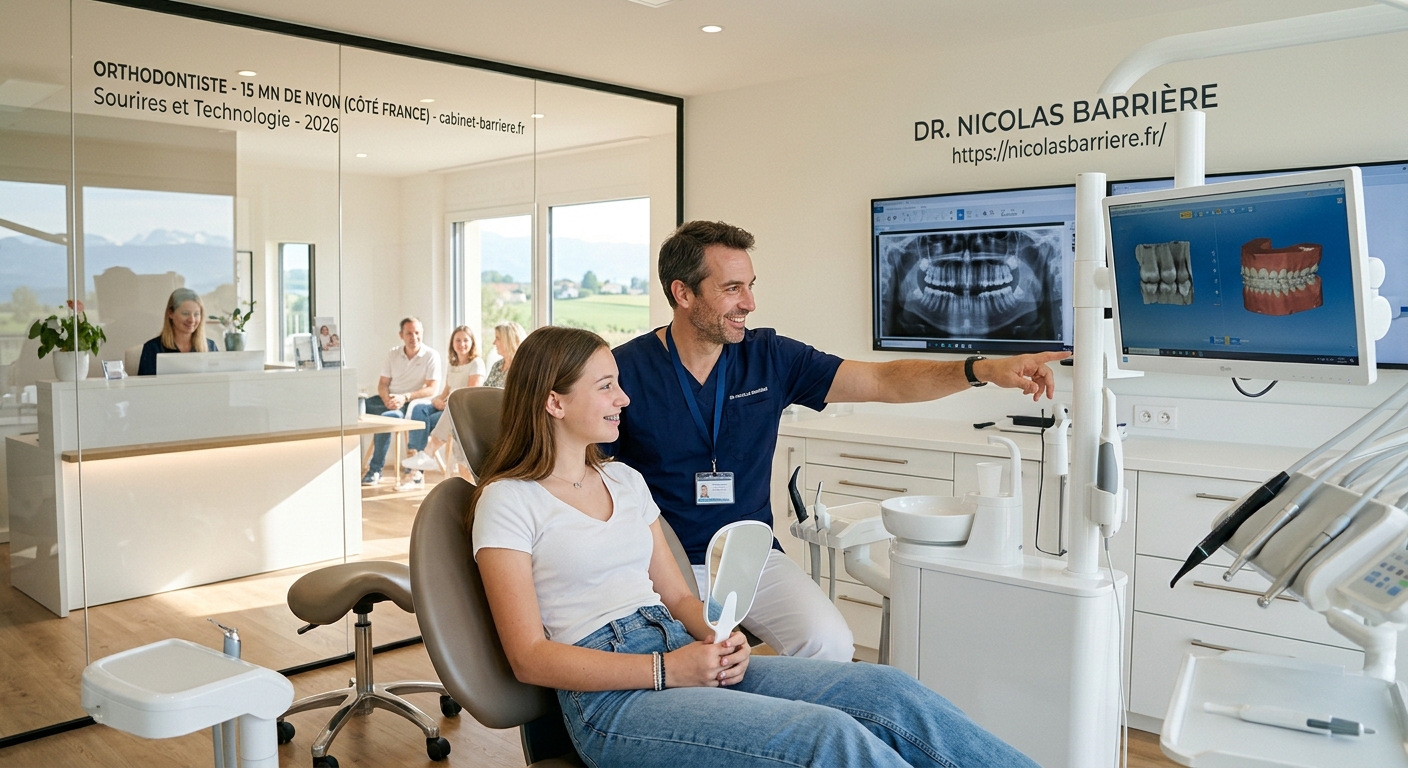
The practitioner bases their diagnosis on a complete clinical examination, photographs, X-rays, and sometimes a digital impression., This involves analyzing three dimensions: tooth morphology, chewing function, and the overall aesthetics of the smile. No treatment plan can be recommended without these examinations.
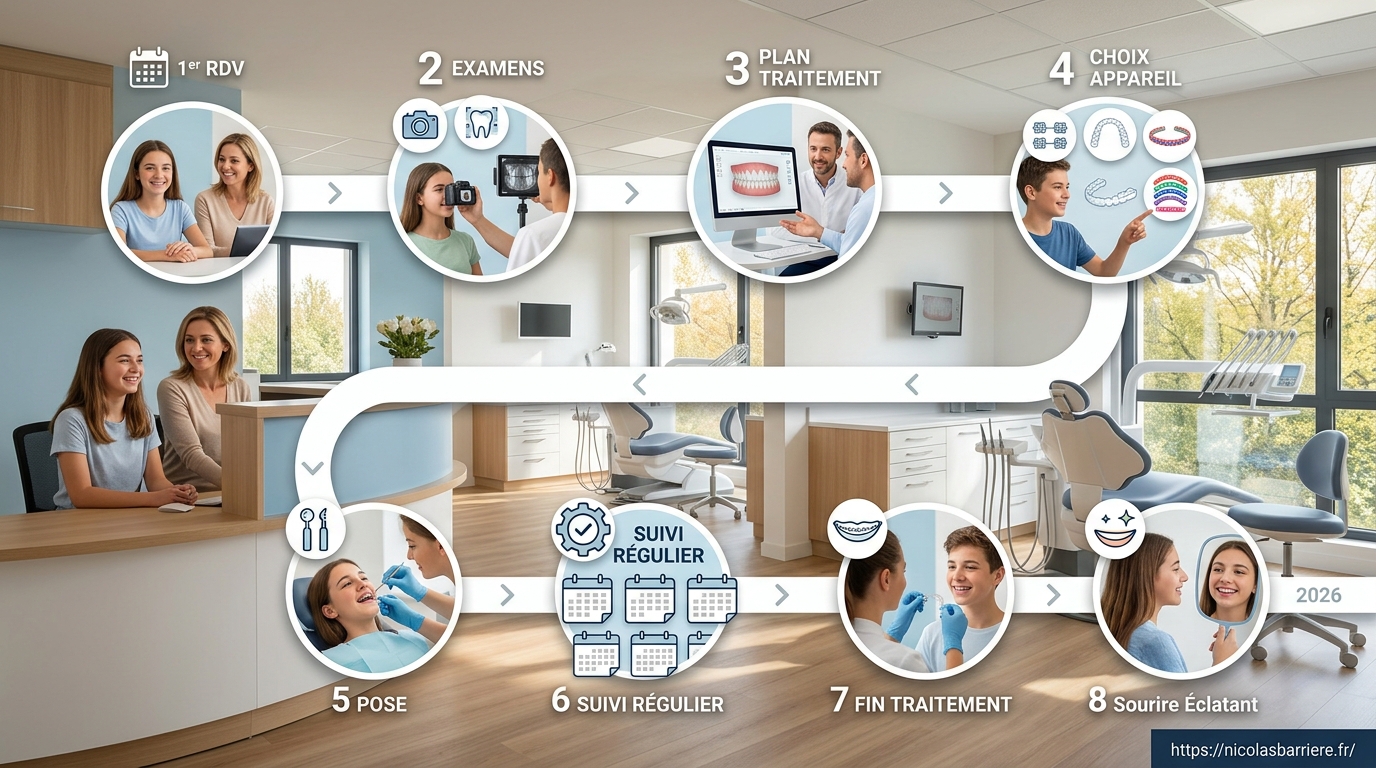
The steps of differential diagnosis
Initial InterviewPatient expectations, medical and dental history, habits (bruxism, breathing)
Clinical examinationanalysis of occlusion, periodontal health and enamel condition
Imagingpanoramic radiography, cephalometric radiography, sometimes cone beam for complex cases
Footprintstraditional or digital models for studying
Synthesispersonalized treatment plan presented to the patient with a detailed quote
The criteria that guide the decision
| Clinical situation | Orthodontics | Facets |
|---|---|---|
| Significant overlap | ✓ | ✗ |
| Tooth discolored after root canal treatment | ✗ | ✓ |
| Functional malocclusion (open bite, overbite) | ✓ | ✗ |
| Conical lateral incisor | ~ | ✓ |
| Severe wear and tear due to uncontrolled bruxism | ~ | ✗ |
| Slight diastema with otherwise correct alignment | ✓ | ✓ |
| Generalized dyschromia resistant to lightening | ✗ | ✓ |
📝 The symbol "~" indicates that the technique can be considered within a comprehensive plan, but rarely in isolation. This table is for guidance only: each clinical situation is unique and requires a thorough examination in a clinical setting.
How much does adult orthodontic treatment cost and what are the reimbursements?
Adult orthodontic treatments are not covered by Social Security, except in the context of preparation for orthognathic surgery. Before discussing the cost, it is important to remember that the clinical diagnosis and the expertise of the practitioner determine the technique best suited to each case; however, supplementary health insurance plans offer varying packages, which it is useful to check before starting treatment.
Key figures on costs in 2026
The cost of orthodontic treatment for adults depends primarily on the clinical diagnosis and the technique best suited to the individual case, followed by the complexity of the case, the duration of treatment, and the region. The estimate provided by the practitioner details the total cost, the estimated number of semesters of treatment, and the payment terms. In border areas, patients can also consult their Swiss health insurance (LAMal) or supplemental insurance policy to check for potential coverage.
For adolescents, a specific reimbursement framework
Health insurance covers orthodontic treatment started before a child's 16th birthday, provided a prior authorization request is approved. The reimbursement rate is €193.50 per semester, for a maximum of six consecutive semesters. Post-treatment retention is also eligible for a fixed reimbursement over two years.
Something for parents to remember. The prior agreement must be sent to the Health Insurance fund. Before The child's 16th birthday. Treatment started after this date cannot be retroactively resumed, except in the case of validated surgical preparation.
Anonymized account: from the adolescent's assessment to the parent's question
To illustrate the approach concretely, here is a situation frequently encountered in practice, described anonymously.
-
Initial consultation for the adolescent
A family from the Pays de Gex region consulted a doctor about their 13-year-old daughter, seeking treatment with clear aligners. The assessment revealed moderate crowding and a slight Class II malocclusion. An 18-month treatment plan was proposed, with prior authorization submitted to the national health insurance.
-
Parent's Questioning
During the second consultation, the mother mentioned her own smile: slight overlap of the lower incisors and discoloration on an upper central incisor that had been devitalized ten years earlier. She had seen advertisements for veneers and wondered if that was the right solution.
-
Complete examination and differential diagnosis
A thorough clinical examination is carried out: photographs, radiographs, digital impressions. The practitioner identifies a dual problem: an orthodontic component (incisor overlap) and a prosthetic component (isolated discoloration on a devitalized tooth).
-
Combined treatment plan
A two-stage plan is proposed: first, short orthodontic treatment with aligners (6 to 9 months) to correct the overlap, with regular follow-up appointments to adjust the appliance during the active phase, then a single veneer on the dyschromic incisor, placed in collaboration with the treating dentist.
-
Qualitative result
Following treatment, the enamel of the other incisors was preserved (no unnecessary grinding), and the veneer only covers the discolored tooth. The patient benefited from a conservative approach, tailored to her clinical situation.
This type of treatment illustrates the difference between a comprehensive approach (orthodontics + targeted prosthesis) and a purely prosthetic approach (multiple veneers without addressing the underlying malposition). Each case remains unique and requires a personalized diagnosis.
«"The rule we apply is simple: preserve as much of the dental capital as possible. When orthodontics can suffice or usefully precede prosthetic intervention, it is the preferred approach. Veneers still have their place, but for specific indications, not as a universal solution."»
Specifics of the Pays de Gex: border, insurance and accessibility
Residents of the Pays de Gex region (Divonne-les-Bains, Gex, Ferney-Voltaire, Saint-Genis-Pouilly, Ornex) live in a cross-border area that influences their healthcare journey. Many families are covered by Swiss basic health insurance (LAMal) or have supplemental Swiss insurance, either in addition to or instead of French national health insurance. The practice is located in Divonne-les-Bains and serves patients from across this border region.
Three common profiles in the Pays de Gex
Classic French family: Coverage by Health Insurance for treatments started before age 16, French supplementary health insurance for out-of-pocket expenses.
Border family (working in Switzerland): LAMal contribution, often with supplementary dental care; coverage varies depending on the contract.
Binational family: coordination between the two systems, sometimes complex, which benefits from a firm accustomed to these administrative procedures.
Choosing a firm that handles this dual administration considerably simplifies the process. The Pays de Gex inter-municipal authority has, according to the most recent public data, over 100,000 inhabitants, with a growing population and a high demand for specialized care.
Need advice on your situation?A personalized opinion requires a clinical consultation and a thorough examination.
Key points to consider before choosing a solution
Before starting any treatment, whether orthodontic or prosthetic, several factors deserve careful consideration. These points help distinguish a genuine proposal from a purely commercial approach.
⚠️ Warning signs to watch out for.
- Lack of a complete clinical examination before proposing treatment.
- A promise of "guaranteed" results in a few weeks.
- Quote without line-by-line breakdown, without mention of the number of semesters.
- Commercial pressure to sign quickly or take advantage of a "limited offer".
- Veneers were offered without any assessment of occlusion.
- No mention was made of post-orthodontic retention (which is essential).
Restraint: an often underestimated step
All orthodontic treatment must be followed by a phase of restraint, This phase aims to stabilize the results achieved. It can be removable (night retainer) or fixed (wire bonded behind the front teeth). This phase is generally extended over several years, or even indefinitely for fixed retainers, because teeth always retain a tendency to relapse. A good practitioner will always explain this step from the initial treatment plan.
FAQ: Answers to frequently asked questions
What is the average cost of orthodontic treatment for a teenager?
The cost depends first on the clinical diagnosis and the recommended technique (metal braces, ceramic braces, or clear aligners), and then on the complexity of the case. Health insurance reimburses a fixed amount (€193.50 per semester) if the prior authorization request is approved before the child's 16th birthday, for a maximum of six semesters.
How can you tell if an orthodontist is good?
The main indicator is the title of "qualified specialist in dentofacial orthopedics" (code 36), which can be verified in the directory of the National Order of Dental Surgeons. A good practitioner takes the time to explain the complete diagnosis, proposes a personalized and transparent treatment plan, and answers questions without sales pressure.
Are orthodontic treatments covered by insurance after age 16?
No, Social Security no longer covers orthodontic treatment semesters started after age 16, except in specific cases for preparation for orthognathic surgery. Adults then rely exclusively on their supplemental health insurance, the coverage of which varies considerably from one policy to another.
At what age is it recommended to consult an orthodontist?
The French National Authority for Health (HAS) and the French Federation of Orthodontics recommend an initial assessment as early as age 7. This early visit allows for the detection of jaw growth problems and, if necessary, the planning of interceptive treatment before the complete loss of baby teeth.
Does orthodontics change the shape of the face?
Yes, by correcting the alignment of the jaws and the projection of the teeth, comprehensive treatment can soften a receding profile, modify the position of the lips, and harmonize the lower third of the face. These changes are more pronounced in growing children and adolescents, and can be significant in adults in cases combining orthodontics and surgery.
Is it necessary to go through a dentist to consult an orthodontist?
No, a prescription or referral letter from your dentist is not required. Patients can schedule an initial consultation directly with the orthodontist of their choice. However, regular follow-up appointments with your dentist remain essential throughout orthodontic treatment.
Veneers or orthodontics: which to choose for a straighter smile?
If teeth are misaligned (overlapping, significant rotation, misalignment), orthodontics is the first-line treatment: it addresses the underlying cause and preserves the enamel. Veneers are adapted to correct surface imperfections (color, shape, wear) on an already aligned dental arch. A clinical examination is essential to determine the best course of action.
How long does orthodontic treatment last for adults?
The average duration is between 12 and 24 months for common cases, and can extend up to 36 months for complex cases requiring surgical preparation. It depends on the initial malocclusion, the chosen technique, the patient's discipline (especially for removable aligners), and the individual biological response.
📌 Key points to remember
- A qualified orthodontist is registered under code 36 with the National Order of Dental Surgeons (which can be verified free of charge online).
- The first orthodontic assessment is recommended from the age of 7 by the High Authority for Health, in order to anticipate interceptive treatments.
- Coverage by Health Insurance is possible for treatments started before age 16, with prior agreement.
- Orthodontics moves the tooth and its root; veneers cover the surface of the enamel: the indications are different.
- The two approaches are often complementary: orthodontics first to align, then veneers to correct targeted color or shape.
- A serious differential diagnosis is based on clinical examination, imaging and impressions: it cannot be made remotely.
- A personalized opinion requires a clinical consultation and a thorough examination in the office.
About the author: Nicolas Barrière

Dr. Nicolas Barrière is an orthodontist, a qualified specialist in dentofacial orthopedics, a former hospital intern, and the founder of his practice in Divonne-les-Bains. He treats children, adolescents, and adults with orthodontic treatments (clear aligners, lingual braces), paying particular attention to the care of patients living near the French-Swiss border.
Areas of expertise: dentofacial orthopedics, interceptive orthodontics for children, orthodontics for adolescents and adults, clear aligners, lingual orthodontics, orthognathic surgery, functional disorders and sleep apnea, retention and relapse management.
An exchange to clarify your situation
Each clinical situation is unique. For a personalized diagnosis and a treatment plan tailored to your teenager or yourself, an appointment at the Divonne-les-Bains office allows for a complete clinical examination.
📚 Sources and references
Official and institutional sources:
- French National Authority for Health, Indications for dentofacial orthopedics in children and adolescents
- HAS, Report on the indications for orthodontic treatment (PDF)
- Ameli.fr, Treatment of dental malpositions
- Ameli.fr, Reimbursement for orthodontic treatments
- DREES, Demographics of healthcare professionals as of January 1, 2024
- National Order of Dental Surgeons, Specialties in Dentistry
- Légifrance, Decree approving the regulations concerning qualification in dentofacial orthopedics
Learned societies and the professional press:
- French Society of Dentofacial Orthopedics (SFODF)
- National Professional Council for Orthodontists and Dental Marrow Dentists, Presentation of the specialty
- Dental Information, Orthodontics in France and Europe
Encyclopedic sources:
📖 Also read about the firm:
- Discreet orthodontics for adults: lingual braces and clear aligners, two techniques with different indications
- Lingual braces in adults: principle, indications and daily wear
- Clear aligners for adults: how they work, indications, and follow-up care
- Digital impressions in orthodontics: procedure and benefits in adult treatment planning
- Orthodontic emergency: what to do if you have a problem with your braces


 French
 English