
Clear aligners correct most mild to moderate malocclusions in adults with approximately 22 hours of wear per day. Follow-up appointments are scheduled every 6 to 8 weeks, a schedule convenient for active adults in the area. The average duration

Clear aligners for adults: how they work, indications, and follow-up care
Written by Nicolas Barrière : Orthodontist, Qualified Specialist in Dentofacial Orthopedics, founder of the practice, at nicolasbarriere.fr. Updated on . Reading time: approximately 12 minutes.
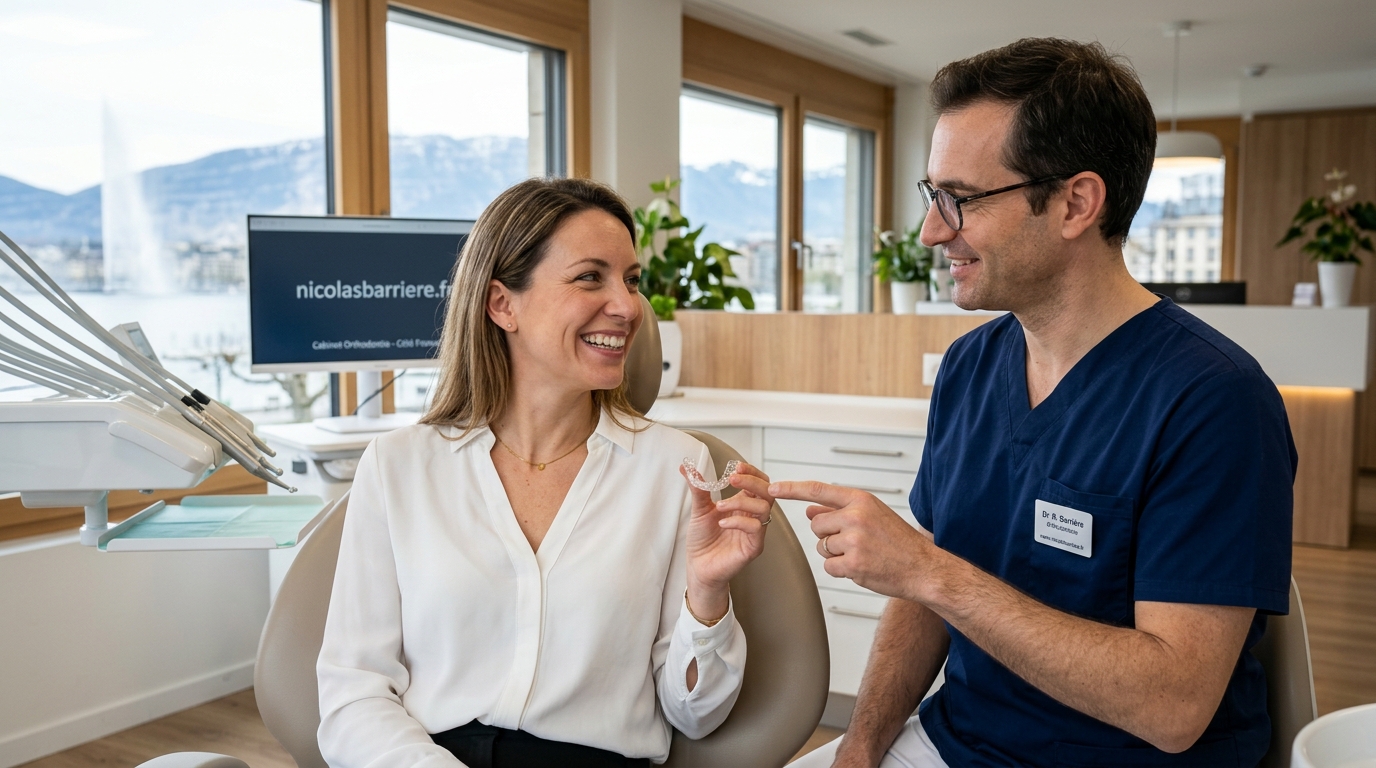
Clear aligners for adults have become the go-to solution for discreetly correcting a smile, including for cross-border patients who work in Geneva and consult on the French side. The treatment combines digital planning, daily wear of custom-made trays, and spaced-out follow-up appointments.
- Clear aligners correct most mild to moderate adult malocclusions with approximately 22 hours of wear per day.
- In-office follow-up appointments are scheduled every 6 to 8 weeks, a pace suitable for active adults who come from the Pays de Gex and the Geneva region.
- The average duration of a complete treatment is between 12 and 24 months, followed by a retention phase which is essential to stabilize the result.
An orthodontist offering discreet braces near Geneva, on the French side, primarily uses clear aligners, custom-made removable trays worn for approximately 22 hours a day. Dr. Nicolas Barrière's practice, located in Divonne-les-Bains, 15 minutes from the Swiss border, schedules follow-up appointments every 6 to 8 weeks, particularly suited to the lifestyles of cross-border patients.
By 2026, a growing number of adults in the Pays de Gex region and on the French shore of Lake Geneva are seeking a dental alignment solution compatible with their professional lives. Clear aligners are currently the most popular option because they combine discretion, comfort, and compatibility with demanding careers. To better understand the choice between the two main types of invisible orthodontics, it is helpful to Compare clear aligners with lingual braces, each approach having its own specific indications.
Clear aligners
Adult Orthodontics
Pays de Gex
Divonne-les-Bains
Border patients
Restraint
Adult Orthodontics
Pays de Gex
Divonne-les-Bains
Border patients
Restraint
How do clear aligners for adults work?
Clear aligners are removable trays made of medical-grade polymer, custom-made from a digital optical impression. Each tray applies calibrated forces to targeted teeth, and the patient changes them every 7 to 14 days according to a treatment plan designed in 3D by the orthodontist.
The principle is based on progressive orthodontic movement: each aligner (Custom-made clear aligners) are slightly different from the previous method and exert controlled pressure on a few teeth at a time. Over the weeks, this series of micro-movements leads to the desired alignment. A complete treatment typically includes between 20 and 60 aligners, sometimes more for more complex cases.
Clear aligner Removable tray made of medical plastic material, custom-made by CAD/CAM (computer-aided design and manufacturing) from an optical impression, and intended to gradually move teeth according to a digital orthodontic treatment plan.
From optical impression to the first aligner
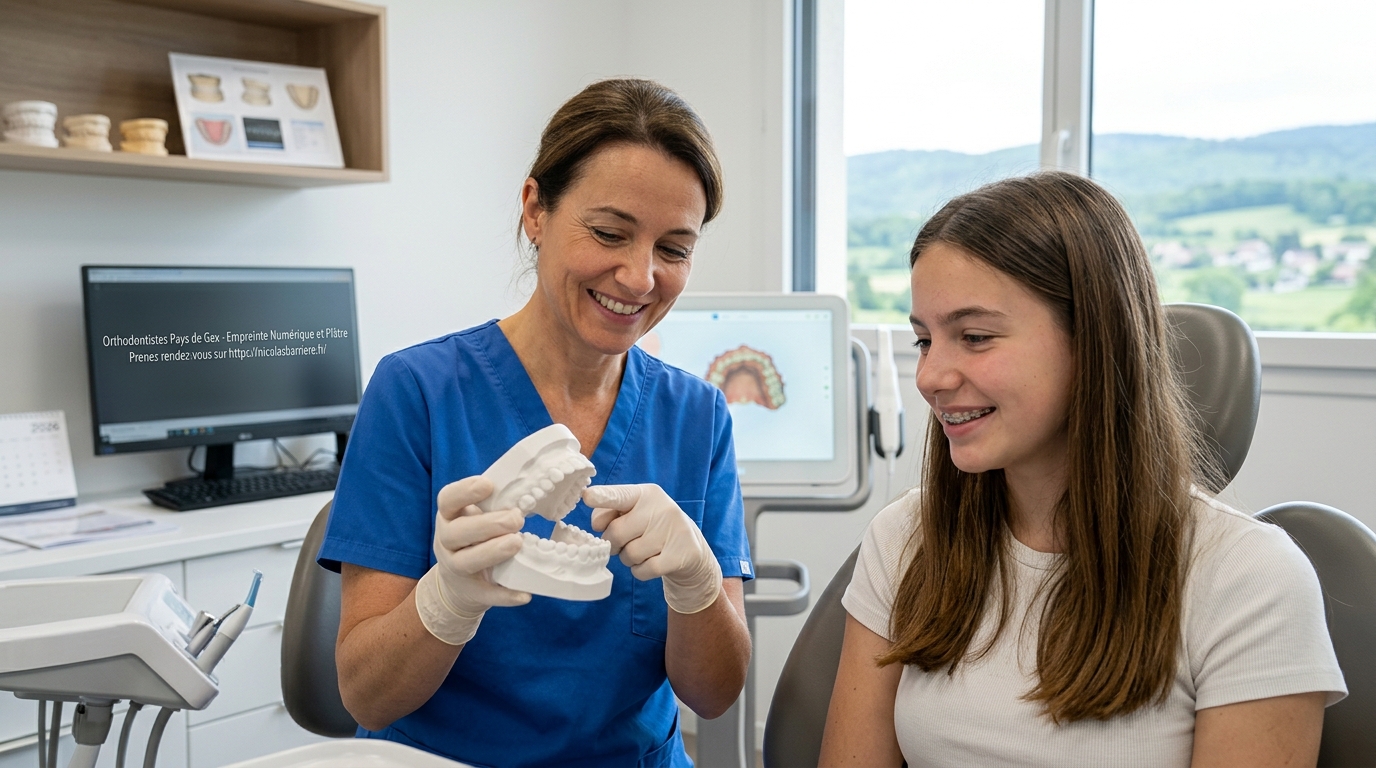
The production line always starts with a optical imprint This procedure is performed using an intraoral scanner. No more unpleasant impression paste: the practitioner inserts a small camera into the patient's mouth, and a complete 3D model of the dental arches is obtained in minutes. This digital file is then used to plan each step of the treatment on screen.
-
Initial clinical assessment
Clinical examination, panoramic radiographs and cephalometric radiography, intra- and extra-oral photos, discussion of aesthetic and functional expectations.
-
3D Digital Footprint
Complete intraoral scan of both arches and occlusion, without impression paste, in just a few minutes.
-
Simulation and treatment plan
Digital planning movement by movement, preview of the final result and validation by the patient.
-
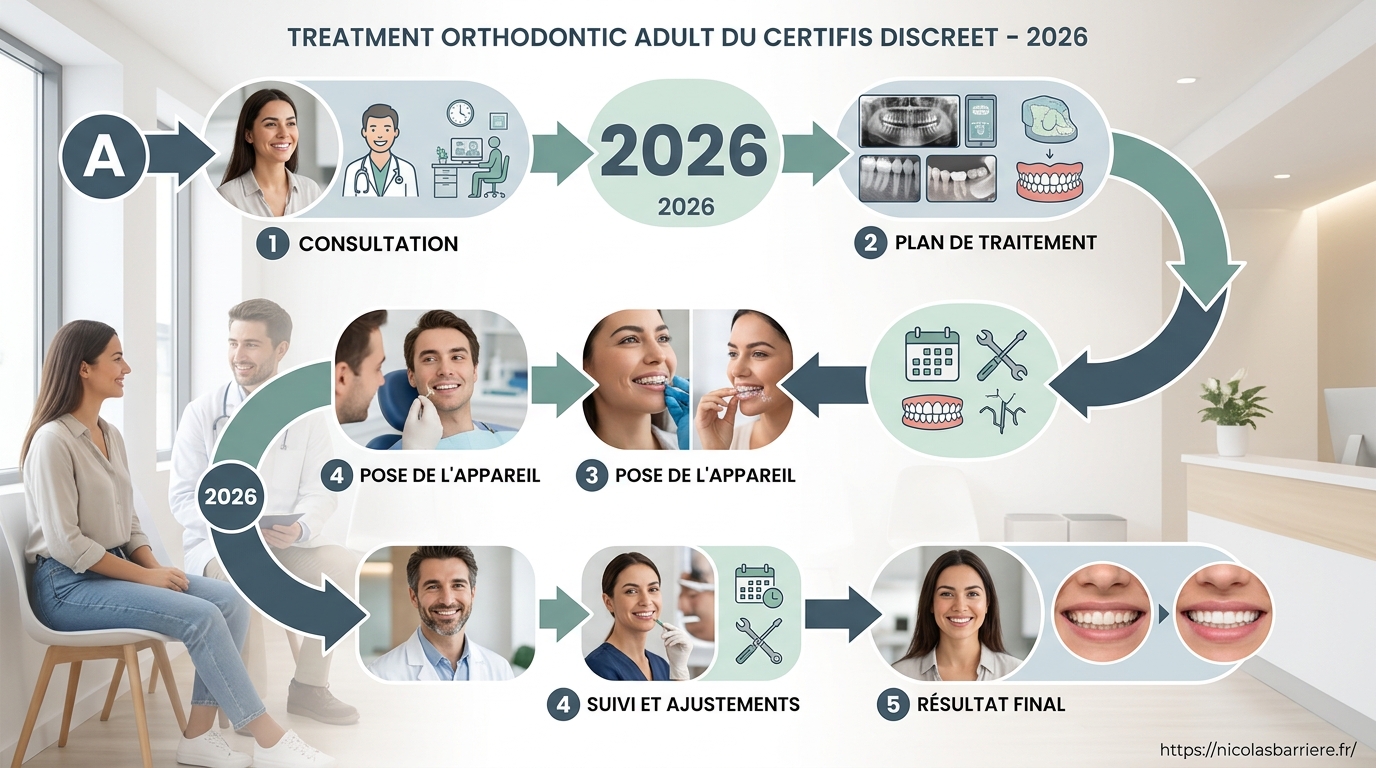
Manufacturing and installation
Laboratory fabrication of the series of custom-made gutters, possible placement of small composite pads (attachments) to guide movements.
-
Active wearing of aligners
Wear for 22 hours a day, removal only for meals and brushing, tray change every 7 to 14 days at home.
-
Controls and restraints
Check-ups every 6 to 8 weeks, then placement of a restraint at the end of active treatment.
Why 22 hours of wear per day?
Clinical studies published on PubMed Central regarding the clinical effectiveness of aligners Studies confirm that wearing the appliance for less than 20 hours per day significantly slows down the intended tooth movements and can compromise the outcome. The 22-hour threshold therefore allows a reasonable margin for meals and hygiene, while ensuring the biomechanical effectiveness of the device.
Health alert point: Aligners only work when they are in the mouth. Irregular wear (for example, frequent removal at work or forgetting to put them in at night) can lengthen the treatment time, create a misalignment with the next aligner, or even require taking new impressions. Consistent wear is one of the main criteria for success.
The role of 3D digital planning
Digital planning is what distinguishes modern aligners from simple removable appliances. The practitioner doesn't just "order" trays; they design a complete treatment plan, tooth by tooth, step by step. This planning also allows the practitioner to show the patient a simulation of their final smile during the initial consultation, even before treatment begins.
«"The strength of the modern clear aligner lies not in the tray itself, but in the clinical planning behind it. A well-thought-out treatment plan accounts for 80% of the result."»
What dental malocclusions can this discreet device correct?
Clear aligners for adults effectively treat moderate crowding, gaps between teeth (diastemas), many cases of overbite, some crossbites, and post-orthodontic relapse. Complex cases involving significant tooth movement or associated surgery require a specialist evaluation to determine the most appropriate technique.
Aligners are not a universal solution: they have a specific clinical indication, defined by the nature and extent of the required tooth movements. A thorough orthodontic assessment remains essential to determine if this technique is suitable for each patient.
The most frequent indications in adults
🦷
Dental congestion
Overlapping teeth due to lack of space, often in the lower incisors. A classic indication for aligners when the crowding is moderate.
↔️
Spacing (diastemas)
Unsightly gaps between teeth, particularly between the central incisors. Aligners allow for gradual and controlled closure.
⬇️
Overclosure
Excessive vertical overlap of the lower teeth by the upper teeth. Many cases are treatable with aligners in adults.
🔄
Partial cross-occlusion
Reverse articulation of one or more teeth. Moderate cases respond well to aligners, sometimes with additional devices.
🔁
Post-orthodontic relapse
Secondary tooth displacement following previous treatment without adequate retention. A very common indication in adults.
✨
Pre-prosthetic preparation
Prior alignment before the placement of veneers, crowns or implants, to optimize the overall result.
Situations that require further evaluation
Some malocclusions are beyond the scope of aligners alone. Significant skeletal discrepancies between the jaws, multiple extractions associated with large displacements, or cases requiring orthognathic surgery call for either a combined approach (aligners plus auxiliary devices) or another orthodontic technique. In these situations, the practitioner guides the patient toward the most appropriate solution, which may involve a multidisciplinary approach.
Advantages of aligners in adults
- Virtually invisible aesthetics, compatible with professional life
- Removable: normal brushing and feeding
- Superior comfort (no irritation from brackets)
- Appointments spaced out, convenient for working people
- Simulation of the final result before the start of treatment
Limitations to be aware of
- Requires strict adherence to wearing rules (22 hours/day)
- Does not handle all complex cases
- May require the use of composite attachments
- A restraint phase is then essential
- No coverage by health insurance after age 16
What the scientific literature says
A systematic review published in Progress in Orthodontics on the clinical effectiveness of aligners The study concludes that clear aligners are effective for treating mild to moderate malocclusions in adults, with good results in alignment and leveling, and more variable performance in cases of significant rotations and complex root movements. It is precisely for this reason that the choice of technique always relies on an individual clinical evaluation.
Do you want to know if aligners are suitable for your case?
A personalized assessment requires a clinical consultation and a thorough examination. Schedule an appointment at the Divonne-les-Bains office for a complete orthodontic evaluation.
How is orthodontic follow-up organized near Geneva on the French side?
Follow-up treatment with clear aligners near Geneva, on the French side, involves in-office checkups every 6 to 8 weeks. During these appointments, the practitioner monitors progress, provides the patient with the next set of aligners, and adjusts the treatment plan if necessary. Between appointments, the patient changes their aligners at home according to a specific schedule.
For an adult who works in Geneva, Nyon, or Lausanne and lives on the French side of the border, the practical organization of follow-up care is often as important a factor as the technique itself. The practice in Divonne-les-Bains is located 15 minutes from Nyon and the border crossings, making it easy to schedule appointments early in the morning, in the evening, or during the lunch break.
How often should you see your orthodontist?
On average, check-ups take place every 6 to 8 weeks throughout the duration of active treatment. This frequency is one of the major advantages of aligners: it is two to three times less frequent than with traditional braces, which require monthly adjustments. For an adult living near the border, this represents approximately 8 to 15 appointments over the entire treatment, depending on its total duration.
7 to 14 daysFrequency of changing home gutter systems
6 to 8 weeksFrequency of in-office checkups
12 to 24 monthsAverage duration of adult treatment
For lifeWearing a compression garment (nighttime and/or glued suture)
Between appointments, the patient follows their home wearing schedule. At each consultation, the practitioner clinically assesses the correct expression of the planned movements (i.e., ensures that the teeth follow the trajectory predicted in the software), checks the attachments, hygiene, and dispenses the next set of aligners.
Practical tip for border patients: The practitioner usually provides several weeks' worth of aligners in advance. If you will be away for an extended period on business, please notify the office to schedule appointments in advance and avoid any interruption in your treatment.
What happens at the end of active treatment?
At the end of active treatment, a containment phase begins immediately and continues over the long term. This phase is what guarantees the stability of the results obtained. Without proper retention, the risk of relapse (secondary movement of the teeth back to their initial position) is high, regardless of the type of appliance used previously.
Retention wire
A small, twisted metal wire is bonded to the inner (lingual) surface of the front teeth. Invisible, it maintains alignment over the long term without any intervention from the patient.
Retention splint
A transparent tray resembling the last aligner, worn only at night, which stabilizes the entire new alignment.
Mixed restraint
Combination of a bonded wire at the bottom and a night guard at the top (or vice versa). A protocol frequently used in adults.
THE Recommendations of the French Society of Dentofacial Orthopedics (SFODF) on retention, The study, published in May 2023, emphasizes the need for prolonged, even indefinite, retention to effectively prevent relapse in adults. Periodontal tissues and ligaments retain a "memory" that causes teeth to return to their original position: retention is therefore an integral component of treatment, not simply an adjunct.
Retention is not optional: it is what transforms a beautiful temporary alignment into a stable long-term result.
A monitoring system designed for cross-border patients
The firm handles Swiss (LAMal and supplementary) and French insurance claims on a daily basis. For cross-border workers, this means a single point of contact for quotes, supporting documents, and claims, as well as in-depth knowledge of the specifics of each insurance system. The firm's coordinators assist patients in compiling their claims, thus avoiding unnecessary administrative back-and-forth.
Clear aligners, ceramic or lingual braces: how to choose?
The choice between clear aligners, ceramic braces, and lingual braces depends on the complexity of the case, the patient's lifestyle, and their aesthetic priorities. Aligners offer the best compromise between discretion and comfort for most adult indications, while lingual braces are suitable for more complex cases requiring complete invisibility.
The choice of technique is primarily based on clinical diagnosis: it is the practitioner who, after a thorough examination, determines the most suitable appliance for the patient's case, whether it be visible braces, lingual braces, or clear aligners. Each technique has its specific indications, and the patient does not choose a solution based on commercial criteria but on what truly suits their situation. Aligners are distinguished by their removability and discretion, lingual braces by their complete invisibility for more complex cases, and ceramic braces by their versatility.
To delve deeper into this strategic choice, the dedicated pillar article allows you to Understanding the principle and indications of lingual braces in adults, particularly for professions with high exposure where total invisibility is a determining factor.
In what cases should lingual braces be considered rather than aligners? When wearing the device can be problematic, when absolute invisibility is required (never a visible removal phase), or when certain complex movements are better suited to a fixed device, the assessment remains personalized.
How has digital planning transformed adult orthodontics?
Digital planning has transformed adult orthodontics by allowing visualization of the final result even before treatment begins, simulation of each step movement by movement, and the mass production of custom-made aligners. This evolution has largely contributed to the widespread adoption of clear aligners for adults.
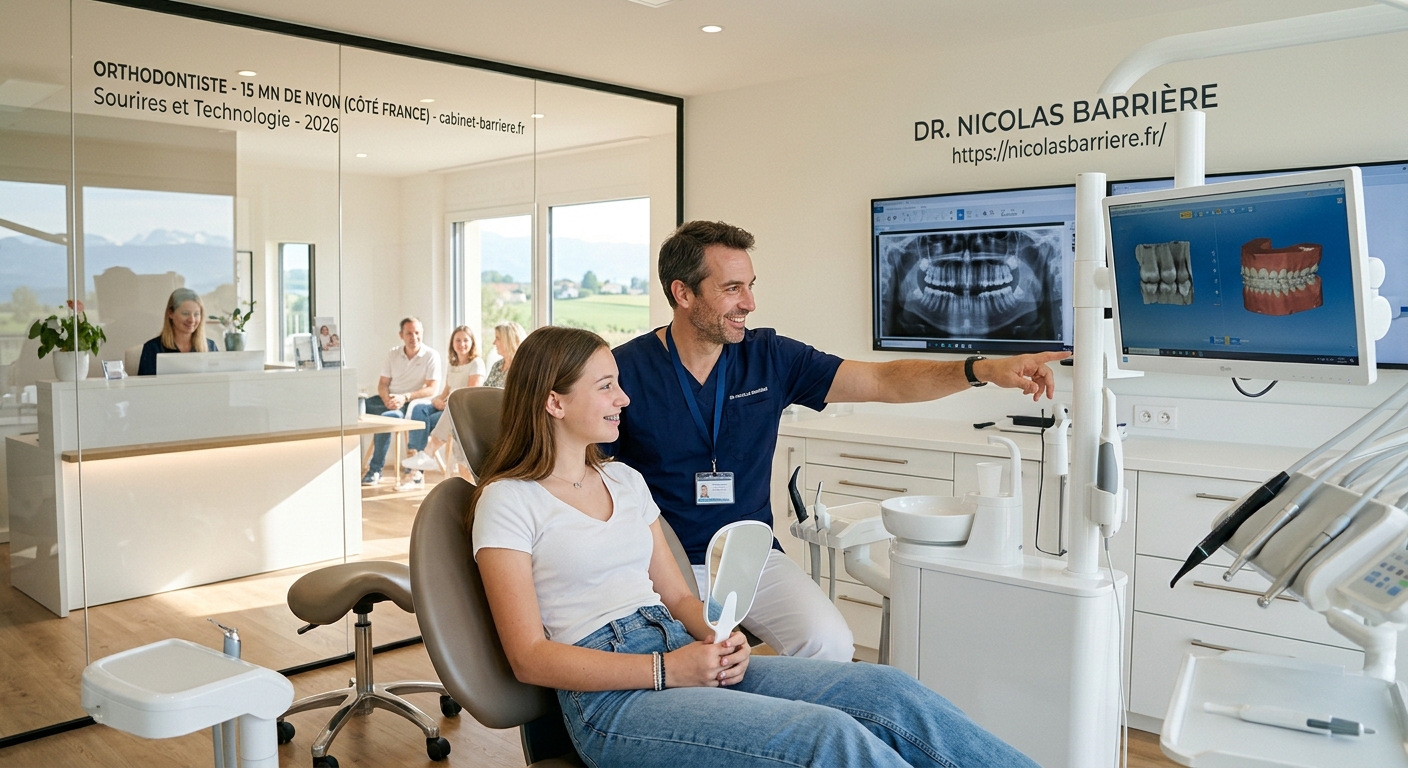
The transition from plaster impressions to digital optical impressions is one of the most significant advancements of recent years. It considerably reduces patient discomfort (no more impression material in the mouth), improves the accuracy of the working model, and speeds up the production chain for aligners. To better understand this key step, the practice has published a dedicated article on taking a digital impression and its relevance in planning adult treatment.
🖥️
3D simulation of the result
Even before the first aligner is fitted, the patient can visualize the expected outcome of their treatment on a screen, step by step. This educational tool facilitates decision-making.
📐
Micrometer precision
Intraoral scanners offer superior accuracy compared to older paste impressions.
⚡
Fast CAD/CAM chain
Mass production within a few weeks after validation of the treatment plan.
🔄
Possible revisions
During the treatment, new impressions allow for fine adjustments to the plan if necessary.
What the digital footprint actually changes for the patient
- No impression paste in the mouth, therefore no gag reflex.
- 3D model immediately usable, no waiting for the paste to set.
- Shared visualization of the case with the orthodontist during the consultation.
- Digital archiving of the model for comparison during processing.
- A quick new impression can be taken if adjustments are needed.
How long does aligner treatment last in adults?
Treatment with clear aligners in adults typically lasts between 12 and 24 months, depending on the complexity of the initial malocclusion and the patient's adherence to the prescribed wear protocol. Very mild cases (minor relapses, localized aesthetic alignment) can resolve in 6 to 9 months, while more complex cases sometimes exceed 24 months.
The treatment duration initially stated corresponds to the number of aligners planned multiplied by the wearing time of each aligner. It remains an estimate: several factors can cause it to vary slightly.
Indicative distribution of treatment durations with aligners in adults, for educational purposes.
Factors that influence the actual duration
-
The initial complexity
A simple aesthetic realignment after relapse is much faster than a case combining rotations, leveling and occlusal correction.
-
The discipline of wearing
Wearing the mask for a full 22 hours a day ensures adherence to the treatment schedule. Irregular wear mechanically lengthens the treatment time.
-
Individual biology
Each patient reacts differently to orthodontic forces, depending on bone density and age.
-
The possible need for refinements
At the end of the series, a new short series of aligners may be necessary to perfect the result (the so-called "refinement" stage).
📝 The duration indicated at the start of treatment is a projection. It is regularly reassessed during check-ups to take into account the actual progress.
Points to be aware of on a daily basis when wearing aligners
On a daily basis, clear aligners require rigorous hygiene, 22 hours of wear per day, and a few simple precautions: removing them to eat and drink anything other than water, cleaning them twice a day, and adhering to the replacement schedule. These habits are essential for the success of the treatment.
Key health concerns to remember:
- Never drink hot or sugary drinks while wearing aligners (material deformation, risk of cavities).
- Always remove the gutters for meals to avoid food buildup.
- Careful brushing after each meal significantly reduces the risk of cavities during treatment.
- Report any abnormal pain, broken splint or detached attachment promptly.
- Never interrupt wearing the mask "for a few days" without speaking to your healthcare provider.
Hygiene and care of aligners
One of the major advantages of aligners is their ease of hygiene: unlike with fixed braces, the patient brushes their teeth normally. However, the aligners themselves must be cleaned daily. Gentle brushing with a soft toothbrush and lukewarm (not hot) water is usually sufficient. Specific products are available for more thorough cleaning once or twice a week.
Social and professional life with aligners
It is precisely in this area that aligners appeal to working adults: meetings, public speaking engagements, business lunches, client presentations—nothing is visually affected. The only drawback is the discreet removal of the aligners during meals and a very slight speech impediment for the first few days, while the tongue adjusts to the presence of the aligners.
«"The adult patients we treat particularly appreciate being able to continue their professional lives without any visible constraints. This is often what removes the last obstacle to orthodontic treatment in adulthood."»
Frequently Asked Questions: Coverage for adult orthodontics
What factors determine the course of adult orthodontics?
The course of adult orthodontic treatment depends primarily on the clinical diagnosis: the nature and extent of the malocclusion, the periodontal condition, and the functional and aesthetic objectives. The technique is determined by the practitioner after a complete assessment, and a personalized quote is prepared based on the chosen treatment plan. Clinical expertise guides the treatment plan, not a commercial choice made by the patient.
What is the best orthodontic treatment for adults?
There is no single "best" treatment: the most suitable technique depends on the malocclusion, the patient's lifestyle, and their priorities. However, clear aligners offer the best compromise between aesthetics, comfort, and ease of hygiene for most mild to moderate cases in adults. More complex cases or requests for complete invisibility may lead to other techniques, following a clinical evaluation.
How is the orthodontic technique best suited to my case decided upon?
The treatment plan is determined by the practitioner following a thorough clinical assessment. They are responsible for choosing the appliance (visible braces, lingual braces, or clear aligners) based on the diagnosis and the required tooth movements. The patient does not select a solution independently; they benefit from a technique specifically tailored to their clinical situation.
Is adult orthodontics covered by insurance?
In France, national health insurance does not cover orthodontic treatment for adults over 16, except in preparation for specifically indicated orthognathic surgery. However, many private health insurance plans and supplemental plans (including those offered to cross-border workers) include an annual or semi-annual allowance specifically for adult orthodontics. It is advisable to consult your insurance policy or broker before starting treatment.
Which dental appliances are 100% reimbursed (%) for an adult?
No adult orthodontic appliance is fully covered by French Social Security under the general scheme. Surgical cases (preparation for orthognathic surgery) may be partially covered under certain conditions. To achieve a reimbursement close to 100%, it is generally necessary to combine Social Security coverage (for any potential portion) with supplemental health insurance that offers a high orthodontic allowance.
How to finance a complete dental brace for an adult?
Most orthodontic practices offer payment plans spread over the entire treatment period, with monthly or quarterly installments. It is also possible to combine these options with your supplemental health insurance's orthodontic coverage, and for cross-border workers, with benefits from their private health insurance. A personalized financing plan is always discussed when the treatment plan is presented.
Are clear aligners as effective as traditional braces?
For mild to moderate malocclusions in adults, clinical studies show comparable efficacy to multi-bracket appliances, provided that the recommended 22 hours of daily wear is observed. For more complex cases involving significant root movement, clinical evaluation determines the most appropriate technique. The opinion of a qualified specialist remains essential in each individual case.
Is it possible to resume orthodontic treatment after a relapse?
Yes, and it's actually one of the most common reasons for using clear aligners in adults. Relapse after childhood treatment (teeth that have shifted again due to inadequate retention) generally responds very well to a short course of aligners. A clinical assessment allows for a precise evaluation of the nature of the relapse and the most appropriate solution.
📌 Key points to remember
- Clear aligners are custom-made removable trays worn for approximately 22 hours a day, designed using 3D digital planning.
- They treat most mild to moderate malocclusions in adults: crowding, diastemas, overbite, post-orthodontic relapses.
- In-office follow-up appointments are scheduled every 6 to 8 weeks, a pace compatible with the professional lives of cross-border adults.
- The average duration of adult treatment is between 12 and 24 months depending on the initial complexity.
- The maintenance phase following active treatment is essential to prevent recurrence in the long term.
- In France, adult orthodontics is not reimbursed by the national health insurance (except in surgical cases): cross-border mutuals and supplementary insurance often provide a dedicated package.
- Each indication remains personal: a reliable opinion requires a clinical consultation and a complete examination.
A personalized orthodontic assessment in Divonne-les-Bains
Located 15 minutes from Nyon and the Swiss border, the practice assists cross-border patients with their discreet teeth alignment projects. A thorough clinical examination is essential to determine the most suitable solution for your individual case.

About the author: Nicolas Barrière
Dr. Nicolas Barrière is an orthodontist, a qualified specialist in dentofacial orthopedics, a former hospital intern, and the founder of his practice in Divonne-les-Bains. He treats children, adolescents, and adults with orthodontic treatments (invisible aligners, lingual orthodontics), paying particular attention to the care of patients living near the French-Swiss border.
Areas of expertise: Dentofacial orthopedics, invisible aligners, lingual orthodontics, adult orthodontics, complex cases and multidisciplinary treatments, retention and relapse prevention.
LinkedIn Profile · Our team Tel. 04 50 20 05 00
📚 Sources and references
Official and regulatory sources
- French National Authority for Health: Indications for dentofacial and dentomaxillofacial orthopedics
- Ameli: Orthodontic diagnosis of dental malpositions
- Legifrance: Qualification of dental surgeons in dentofacial orthopedics
- National Order of Dental Surgeons: specialties in dentistry
Academic and scientific sources
- Rossini et al., Clinical effectiveness of Invisalign orthodontic treatment: a systematic review, Progress in Orthodontics
- Progress in Orthodontics: A systematic review of the effectiveness of aligners
- The Potency of Invisalign in Class II Malocclusion in Adults: A Narrative Review
- CBCT and Intra-Oral Scanner: The Advantages of 3D Technologies in Orthodontic Treatment
Learned societies
- French Society of Dentofacial Orthopedics (SFODF)
- SFODF: Recommendations for good practice on retention in orthodontics (May 2023)
📖 Also read on the blog
- Discreet orthodontics for adults: lingual braces and clear aligners, two techniques with different indications
- Lingual braces in adults: principle, indications and daily wear
- Digital impressions in orthodontics: procedure and benefits in adult treatment planning
- Adult orthodontics: when veneers are considered and when orthodontics is indicated

 French
 English