
At 13, the permanent teeth are in place and bone growth is still active: this is the ideal time for a first orthodontic assessment. The initial appointment is painless: medical interview, clinical examination, X-rays, and impressions (often digital). The Association

First orthodontic consultation in adolescence: procedure and objectives of the first assessment
Written by Nicolas Barrière : Orthodontist, Qualified Specialist in Dentofacial Orthopedics, founder of the practice at nicolasbarriere.fr. Updated on . Reading time: approximately 12 minutes.
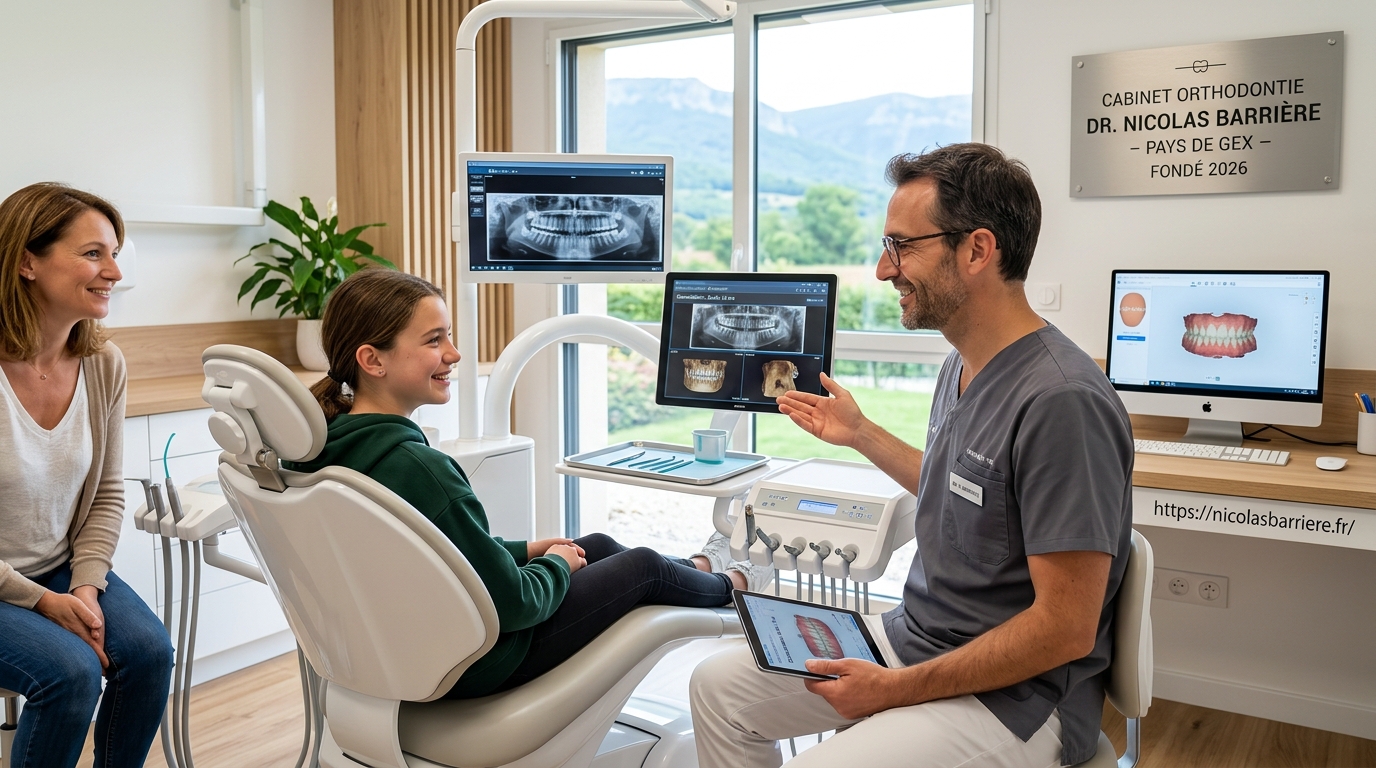
Your child has just turned 13, and their dentist or you yourself have noticed an overlapping or misaligned jaw, or simply a desire for a more aligned smile. The first orthodontic consultation is the appointment that will lay the foundation for any potential treatment.
- At 13 years old, the permanent teeth are in place and bone growth is still active: the window is ideal for a first orthodontic assessment at the Divonne-les-Bains clinic.
- The initial appointment is painless: medical interview, clinical examination, x-rays and impressions (often digital).
- Health insurance reimburses 100% of the agreed rate (€193.50 per semester) provided that the treatment begins before the sixteenth birthday.
For a 13-year-old attending the practice in Divonne-les-Bains, the first orthodontic consultation assesses the alignment of permanent teeth and jaw growth. This initial evaluation includes a complete clinical examination, X-rays (panoramic and lateral cephalometric), and impressions. It is essential to have this first visit before the child's sixteenth birthday to be eligible for coverage by the French National Health Insurance (Assurance Maladie).
Why schedule a first orthodontic appointment at age 13?
At 13 years old, an adolescent is in the most favorable biological window for a complete orthodontic assessment. All the baby teeth have usually fallen out, the permanent premolars and second molars are in place, and jaw growth remains active for several more months. This combination allows the practitioner to observe a stabilized dentition while also having sufficient bone potential to guide any necessary corrections.
This period also presents a specific administrative constraint. The French National Health Insurance (Assurance Maladie) makes coverage for dentofacial orthopedic treatments conditional upon the submission of a prior authorization request. before the sixteenth anniversary of the patient, as recalled Ameli's official information sheet on the treatment of dental malpositions. Passing this stage without a prior assessment exposes the family to a full out-of-pocket expense.
Health alert point: Don't confuse the age for the assessment with the age for starting treatment. A first appointment at 13 years old still allows for some flexibility, but if the preliminary agreement is submitted at 15 years and 11 months, the relevant semester is missed: therefore, several months' notice is necessary. For a personalized assessment of your teenager's situation, a clinical consultation and a thorough examination remain essential. make an appointment at the office.
16 years oldAge limit for prior agreement
193,50 €Reimbursement basis per semester
6Maximum semesters supported
100 %Coverage rate (conventional rate)
The cross-border context of the Pays de Gex adds a dimension that should not be overlooked. Many Franco-Swiss families juggle different insurance schemes: the administrative process must be coordinated from the first appointment to avoid unpleasant surprises with the Swiss health insurance (LAMal) or supplementary French insurance.
What is an orthodontic assessment?
Orthodontic assessment An orthodontic assessment is a complete clinical and radiological examination that allows a specialist in dentofacial orthopedics to establish a diagnosis of the position of the teeth, occlusion and jaw growth, in order to propose or not a treatment plan.
How does the clinical examination in the doctor's office take place?
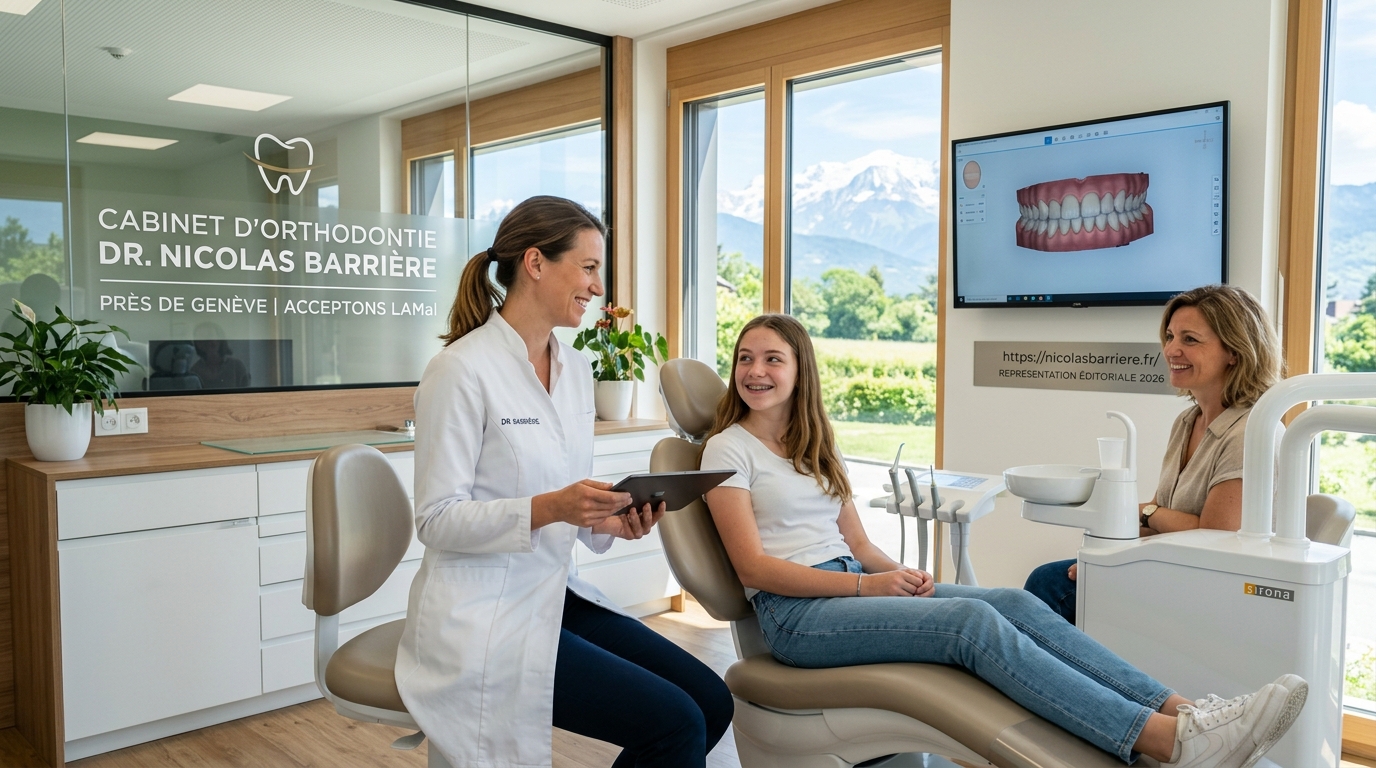
The first appointment lasts approximately 30 to 45 minutes and takes place without any painful procedures. The goal is to observe, listen, and gather enough information to consider (or rule out) treatment. Many adolescents arrive with a vague apprehension, often fueled by their perception of "the equipment"; this initial contact aims precisely to demystify the process.
Medical interview and information gathering
The initial exchange occupies a central place and represents approximately one third of the consultation time. The practitioner reviews general medical history, possible allergies, current treatments, but also elements that sometimes seem trivial: dental trauma in childhood, falls, sports practiced, possible use of a mouthguard.
Particular attention is paid to functional habits Breathing patterns (nasal or oral), tongue position at rest and during swallowing, prolonged thumb sucking in childhood, nail biting, noisy breathing at night, or snoring. This information guides the diagnosis far beyond simple dental alignment, as it can indicate a functional disorder that, if left uncorrected, increases the risk of relapse after treatment.
Good to know before your appointment: Please bring your teenager's health record, any referral letter from their dentist (if applicable), and any recent X-rays taken by the dentist. This avoids unnecessary radiation exposure and speeds up the analysis.
Visual examination of the teeth and jaw
The intraoral examination allows for the evaluation of several complementary parameters in a few minutes. The practitioner checks the occlusion (how the upper and lower teeth fit together when the mouth is closed), the possible presence of an anterior overlap, a transverse shift, an overbite or an inversion.
It also assesses the available space on each arch, the condition of the gums, overall oral hygiene, and the temporomandibular joint (looking for clicking or pain when opening the mouth). The extraoral examination completes the picture: facial profile, symmetry, lip position at rest, and smile.
«"In a 13-year-old adolescent, clinical observation is never limited to the teeth. The profile, breathing, and the way the mandible closes often provide more information than the alignment itself."»
What additional tests are performed during this consultation?
Clinical observation alone is never sufficient to make a complete orthodontic diagnosis. The roots of teeth, the buds of wisdom teeth, and the bony relationships between the upper and lower jaws are not visible to the naked eye. Three additional examinations are typically performed in conjunction with the initial assessment.
-
Panoramic dental X-ray
Overview of both arches, roots, developing wisdom teeth and alveolar bone.
-
Lateral cephalometric radiograph
Lateral view of the skull allowing cephalometric analysis: calculation of angles between maxilla, mandible and base of the skull.
-
Digital or classic imprints
Three-dimensional models of the arches to simulate the envisaged dental movements.
-
Intraoral and extraoral photographs
Documentation of the initial condition, useful for monitoring and for explaining the treatment plan to the family.
Panoramic radiographs and cephalometric radiographs
Panoramic radiography provides an overall view of both arches on a single image. It allows us to verify the presence of all permanent teeth, identify any agenesis (missing teeth from birth), locate the developing wisdom teeth, and check the health of the roots. In a 13-year-old adolescent, we can also visualize the canines that are still erupting, which, if misaligned, may require early intervention.
Lateral cephalometric radiography is used for cephalometric analysis. The practitioner measures precise angles between different anatomical points to characterize the skeletal type: Class I, II, or III, hyperdivergence or hypodivergence. These millimeter-precise measurements directly influence the choice of treatment. The French National Authority for Health (HAS) provides details on these indications. in its recommendations for good practice.
Digital or traditional dental impressions
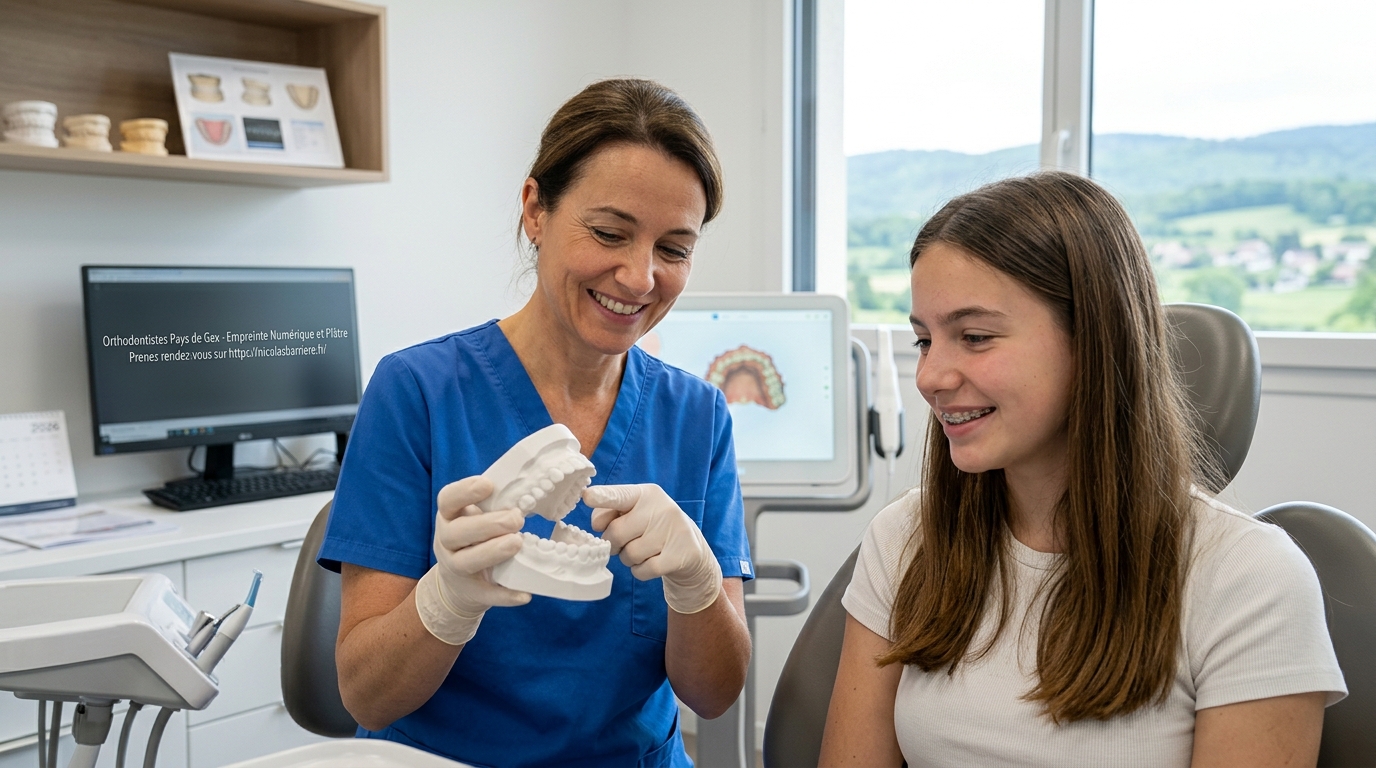
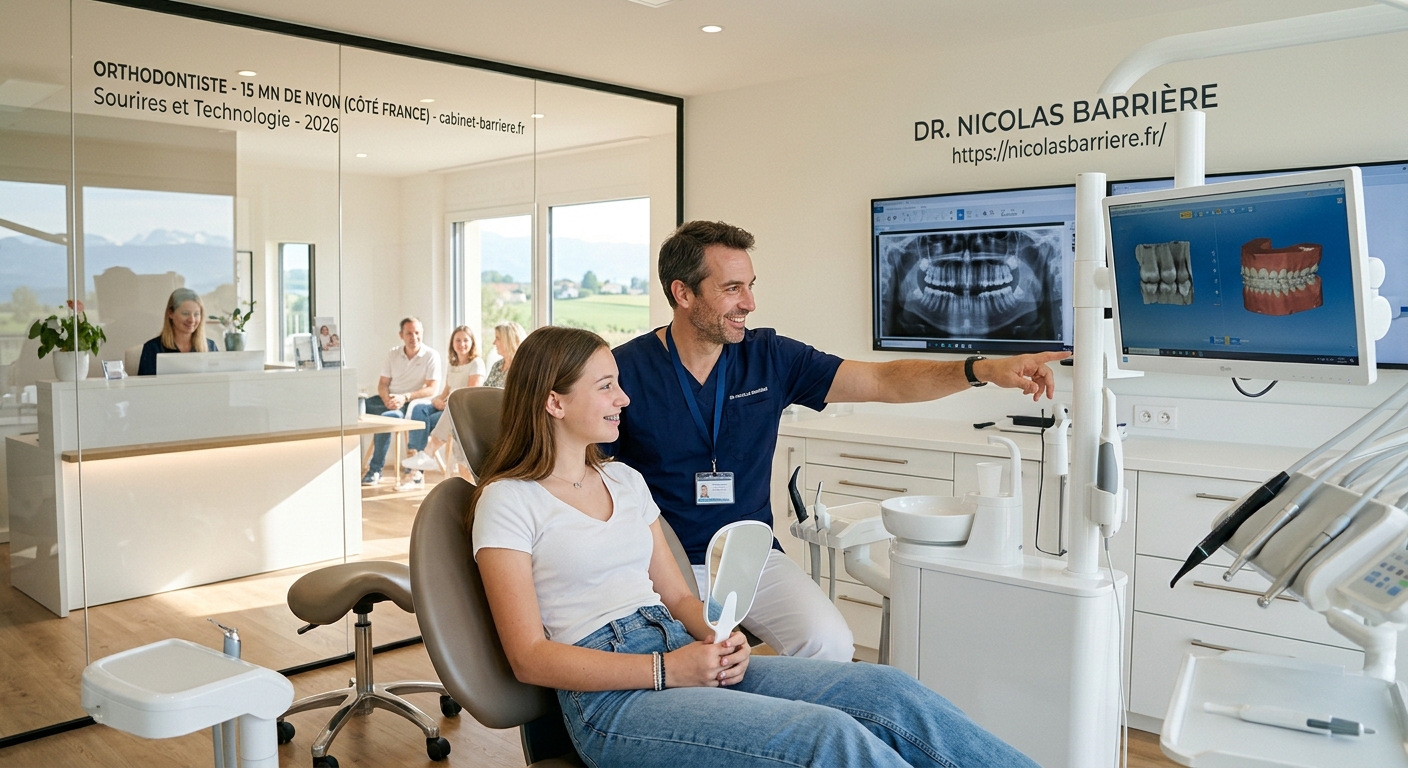
Taking impressions physically documents the initial state of the arches. Two techniques coexist today: the classic method using silicone or alginate, and the digital method using intraoral scanning. The latter is gradually becoming the standard in practices that are equipping themselves: it eliminates contact with the paste, reduces the gag reflex, and produces an immediately usable 3D file.
Classic impression (silicone)
- Mold holder filled with dough
- Feeling of congestion for 2 to 3 minutes
- Possible gag reflex
- Plaster model cast in the laboratory
Digital footprint (3D scanner)
- Small camera passed over the teeth
- No dough, dry procedure
- Significantly superior comfort for the teenager
- Instant 3D model, digital archiving
What devices can be considered for a teenager?
At 13 years old, three main families of fixed or removable devices are possible depending on the diagnosis. The choice of appliance depends on the nature of the malocclusion, the adolescent's estimated cooperation, perceived aesthetic concerns, and lifestyle (sports, musical instrument, visible or invisible braces). Based on the diagnosis, the practitioner remains responsible for choosing the appliance (visible braces, lingual braces, or clear aligners): the patient does not choose a brand.
The main common appliance options include metal bands, suitable for all malocclusions including complex cases and moderately demanding cooperation; ceramic bands, which are barely visible and indicated in aesthetically sensitive cases; clear aligners, which are almost invisible but require high cooperation (wearing for about 22 hours a day) for mild to moderate malpositions; and removable appliances, which are visible in the mouth and useful for targeted functional corrections.
Key points to remember: No type of device is inherently superior. The choice is made on a case-by-case basis, in discussion with the family, based on a complete diagnosis. This information is purely descriptive: only a thorough clinical examination can determine the appropriate option for a given adolescent.
What happens after the orthodontic diagnosis?
Following the initial assessment, the practitioner synthesizes clinical, radiological, and cephalometric observations to formulate a personalized treatment plan. This step does not always take place during the first appointment: depending on the practice, a second consultation, known as a "feedback" consultation, is offered to present the diagnosis, objectives, possible technical options, expected duration and detailed quote.
Once the treatment plan is approved and the appliance fitted, the treatment enters its active phase: the teenager returns to the office for regular follow-up appointments, during which the practitioner adjusts the appliance and monitors tooth movement. Only after this active phase is retention performed to stabilize the result.
The quote provided is a legally binding document governed by Health insurance billing rules. It specifies the cost per semester of active treatment, the fees for retention, any procedures not covered by the national health insurance, as well as the portion reimbursed by Social Security. Following this initial assessment, the parents have every right to seek a second orthodontic opinion to confirm the dentist's recommendation before embarking on a treatment lasting several semesters.
-
Written quote and treatment plan
A detailed document is given to the family, valid for several weeks to allow time for reflection.
-
Sending the quote to the health insurance company
Allows you to know the agreed package and the actual remaining cost before any commitment.
-
Request for prior approval from Social Security
Form completed by the practitioner, returned by mail with the panoramic radiograph and the treatment plan.
-
Signing of informed consent
Mandatory ethical step, provided for by the Kouchner law of March 4, 2002.
-
Installation appointment
Fixed after a favorable response from the cashier, usually 3 to 6 weeks later.
An initial assessment for your teenager in Divonne-les-Bains
A thorough clinical examination remains the only way to obtain a personalized opinion on your child's situation.
How does the financial support work?
Orthodontic treatment for a teenager is eligible for reimbursement by Health Insurance under strict conditions. Treatment must begin before the sixteenth birthday, the prior agreement request must be accepted, and treatment must be conducted continuously in six-month increments.
193,50 €
Reimbursement basis for one semester of active treatment. Health insurance covers this amount at 100% of the agreed rate, for a maximum of 6 consecutive semesters (source: Ameli, dental malposition treatment sheet, 2026).
The standard fee is the base rate on which Social Security calculates its reimbursement. In practice, most private orthodontists set their own fees, with the additional charge varying depending on the complexity of the case, the technique used (metal braces, ceramic braces, clear aligners, lingual braces), and the region where they practice. The difference between the fee charged and the reimbursement base rate constitutes the out-of-pocket expense, which is partially covered by supplemental health insurance.
What Health Insurance covers
- Treatment started before age 16: 100% of the conventional tariff.
- First year of retention: €161.25
- Second year of restraint: €107.50
- Initial examinations and assessments
What remains the responsibility of the family
- Excess fees (variable)
- Certain acts not listed in the nomenclature
- Treatment started after age 16 (except in exceptional circumstances)
- Aesthetic options (ceramic braces, clear aligners, lingual braces)
Health and administrative points of concern: Never sign a quote without first contacting your health insurance provider. Orthodontic coverage varies considerably from one policy to another, sometimes by as much as five times. Take the time to compare the amount reimbursed by your supplemental insurance with the quote you received before making any commitment.
What are the specific characteristics of Franco-Swiss border families?
The Pays de Gex region has a high proportion of families working in Switzerland, with mixed health insurance coverage. This reality necessitates more precise administrative coordination from the very first appointment. A teenager affiliated with LAMal through a cross-border parent receives different coverage than that provided by the French social security system: LAMal reimburses almost nothing for orthodontics except in strict medical cases, and Swiss supplementary insurance operates according to deductible and co-payment systems.
Conversely, a teenager affiliated with the French social security system through their other parent benefits from the French system described above. The initial assessment therefore provides an opportunity to clarify:
- Which insurance fund exactly does the teenager belong to?.
- If the family has supplementary French, Swiss, or both insurance.
- If coordinated care is possible between schemes.
- What documents are required for each reimbursement process?.
«"At the Divonne-les-Bains practice, the first consultation cannot be limited to the strictly clinical aspect. The question of the adolescent's insurance plan directly affects the financial feasibility of the treatment and deserves to be raised at the very first appointment."»
How to calmly prepare for your teenager's first date?
A well-prepared 13-year-old arrives more relaxed and actively participates in the clinical exchange. The preparation doesn't require much, but a few simple steps will prevent stress and oversights.
📋
Documents to prepare
Health record, health insurance card or LAMal certificate, letter from treating dentist, recent x-rays if applicable.
🦷
Hygiene of the day
Careful brushing before the appointment: facilitates the examination and shows respect for the practitioner.
💬
Questions to note
Inviting the teenager to prepare their own questions: they become an active participant in their own learning journey.
⏰
Timing
Allow 45 minutes to 1 hour: it's best not to follow it up with another commitment.
From a psychological perspective, it's helpful to dispel certain misconceptions. The first consultation involves no invasive procedures: no needles, no drills, no braces. It's a time for observation and discussion. The parent's role is to reassure without minimizing: acknowledging that the process may seem daunting, while emphasizing that the appointment is painless.
An adolescent who understands why they are seeking help, what will happen, and what can be offered to them cooperates much better throughout the treatment.
What signs should raise concern and prompt a consultation?
Certain observations, made by the parents or by the treating dentist, justify requesting an orthodontic assessment without delay. These signs do not systematically prejudge treatment, but deserve evaluation by a qualified specialist in dentofacial orthopedics.
🦷
Visible overlap
Overlapping teeth, rotated teeth, or abnormal spacing between incisors.
😬
Jaw misalignment
Receding or protruding chin, facial asymmetry, misalignment of the dental midline.
💨
Mouth breathing
Open mouth at rest, nighttime snoring, unexplained morning fatigue.
🥄
Difficulty biting
Inability to cut food with incisors, chewing on only one side.
A teenager exhibiting one or more of these signs would benefit from consulting a specialist before the age of 16. The time required to schedule an appointment, complete the full assessment, obtain prior approval, and prepare for the fitting of the hearing aid can easily take 3 to 6 months. Acting proactively protects the reimbursement window.
Why consult a qualified specialist in dentofacial orthopedics?
In France, any dental surgeon can perform orthodontic procedures, but only those holding the CECSMO or DES in dentofacial orthopedics bear the title of qualified specialist. This qualification, recognized by the National Order of Dental Surgeons, corresponds to additional training of 3 to 4 years after the diploma of Doctor of Dental Surgery.
CECSMO The CECSMO (Certificate of Special Clinical Studies in Orthodontics) is a 4-year university course, accessible after the degree of Doctor of Dental Surgery, which confers the qualification of specialist in dentofacial orthopedics.
ODF Orthodontics (orthofacial orthopedics) refers to the medical discipline that studies and treats positional abnormalities of the teeth, jaws, and face. It encompasses orthodontics proper and corrections of bone growth in children and adolescents.
To verify a practitioner's qualifications, the’official directory of the National Order of Dental Surgeons This remains the reference source. The designation "qualified specialist in dentofacial orthopedics" appears explicitly for authorized practitioners. This information is purely descriptive and is not intended to create competition between professionals: it informs families about the nature of existing qualifications.
Frequently Asked Questions: Your Frequently Asked Questions
What age is appropriate for a first orthodontist appointment?
An initial screening can be carried out as early as age 7, when the first permanent teeth appear. For comprehensive treatment with braces or clear aligners, the optimal age is 12 or 13, as the permanent teeth are in place and bone growth is still active. A consultation before age 16 remains essential to be eligible for reimbursement by the French National Health Insurance (Assurance Maladie).
How much does a first consultation with an orthodontist cost?
The basic fee for a specialist consultation (CS) is set by the French National Health Insurance at €23. This price may be increased if the practitioner immediately performs additional procedures such as panoramic X-rays, cephalometric X-rays, or impressions. A complete estimate of the assessment is provided at the end of the appointment.
Is it possible to start orthodontic treatment before the age of 16?
It is not only possible but strongly recommended to start treatment before the age of 16. This is a strict condition set by the French Social Security system: treatment must begin before the sixteenth birthday to be covered at the standard rate (100%). After this age, reimbursement is no longer guaranteed except in exceptional medical circumstances validated by the health insurance fund's medical department.
What is the price of orthodontic treatment for a teenager?
The cost of complete orthodontic treatment for a teenager depends primarily on the clinical diagnosis and the technique best suited to the case (metal braces, ceramic braces, or clear aligners), as well as the duration of treatment. The choice of appliance falls under the practitioner's expertise, who always prioritizes the most appropriate option before considering cost. French national health insurance (Assurance Maladie) reimburses €193.50 per semester, and supplemental health insurance covers the remaining cost according to the plan's terms.
Do health insurance companies cover orthodontic treatment?
Yes, almost all supplemental health insurance plans offer orthodontic coverage to offset out-of-pocket expenses. The reimbursement amount depends directly on the chosen plan: it is expressed either as a fixed amount in euros per semester or as a percentage of the Social Security reimbursement rate. It is strongly advised to contact the supplemental health insurance provider with a quote before committing to any plan.
Is orthodontic treatment covered by insurance for children?
Yes, the French National Health Insurance (Assurance Maladie) reimburses orthodontic treatments for children and adolescents under 16 years of age at a rate of 100% of the standard fee, which is €193.50 per semester of active treatment, for a maximum of 6 consecutive semesters. Post-treatment retention is also covered: €161.25 for the first year and €107.50 for the second.
Is the first orthodontic appointment painful?
No, the first consultation does not involve any painful procedures. It is limited to a medical interview, a visual examination of the mouth, possibly X-rays, and taking impressions. No invasive procedures are performed: no anesthesia, no braces are bonded. The teenager leaves with the same teeth as when they arrived.
How long does an initial orthodontic assessment take?
A first comprehensive appointment generally lasts between 30 and 45 minutes, sometimes up to an hour if all the additional examinations (X-rays, impressions, photographs) are carried out on the same day. Some practices organize the assessment in two stages: an initial consultation, followed by an appointment to discuss the diagnosis and treatment plan.
📌 Key points to remember
- At 13 years old, the adolescent is in the ideal biological window for a first orthodontic assessment: permanent teeth in place and bone growth still active.
- The first appointment is painless and combines a medical interview, clinical examination, panoramic radiographs, lateral cephalometric radiograph and impressions.
- The prior agreement request must be submitted before the sixteenth birthday to benefit from reimbursement by Health Insurance.
- The Health Insurance reimburses 193.50 euros per semester at 100% of the agreed rate, for a maximum of 6 consecutive semesters.
- The remaining cost depends on the practitioner's fees and the health insurance coverage: always ask for a quote before committing.
- Border families in the Pays de Gex must clarify the adolescent's insurance scheme (LAMal, French social security, supplementary insurance) at the first appointment.
- A personalized opinion always requires a clinical consultation and a thorough examination by a qualified specialist in dentofacial orthopedics.
About the author: Nicolas Barrière

Dr. Nicolas Barrière is an orthodontist, a qualified specialist in dentofacial orthopedics, a former hospital intern, and the founder of his practice in Divonne-les-Bains, in the Pays de Gex region. He treats children, adolescents, and adults with orthodontic treatments (clear aligners, lingual orthodontics, multi-bracket appliances), with particular attention paid to the care of Franco-Swiss border patients.
Areas of expertise: dentofacial orthopedics, child and adolescent orthodontics, clear aligners, lingual orthodontics, multi-bracket orthodontics, complex multidisciplinary cases, sleep apnea and respiratory disorders, retention and relapse management.
Consider a first orthodontic assessment for your teenager
Each clinical situation is unique. A thorough consultation at the office allows for a personalized diagnosis and answers to all your questions.
📚 Sources and references
Official and institutional sources:
- Ameli, Treatment of dental malpositions: dentofacial orthopedics and orthodontics
- Ameli, Reimbursement for orthodontic treatments
- Ameli, Orthodontic treatment: prior authorization request and billing
- French National Authority for Health, Indications for dentofacial orthopedics in children and adolescents
- French National Authority for Health, Criteria for the successful completion of dentofacial orthopedic treatment
- Legifrance, Code of Ethics for Dental Surgeons (articles R4127-201 to R4127-284)
- National Order of Dental Surgeons, Specialties in Dentistry
- Service-Public.fr, Dental Care Reimbursement
Academic and scientific sources:
- Prevalence of Orthodontic Malocclusions in Healthy Children and Adolescents: A Systematic Review, NCBI
- Malocclusions and oral dysfunctions: A comprehensive epidemiological study on 359 schoolchildren in France
📖 Also read
- Orthodontic consultation: how does a referral from your dentist and a second opinion work?
- How an orthodontic practice operates: organizing follow-up and continuity of care
- Orthodontic consultation for children: welcoming and addressing their apprehension
- Being referred to an orthodontist by your dentist: the steps in the treatment process

 French
 English