
Nearly 50% of adults with dental phobia developed this fear in childhood: prevention begins with the first consultations. The clinical method of saying, showing, doing defuses anxiety by explaining each step before performing it. Sensory adaptation (lights, noises,

Orthodontic consultation for children: how to welcome and support them through the process of overcoming their apprehension.
Written by Nicolas Barrière : Orthodontist, Qualified Specialist in Dentofacial Orthopedics, founder of the practice at nicolasbarriere.fr. Updated on . Reading time: approximately 12 minutes.
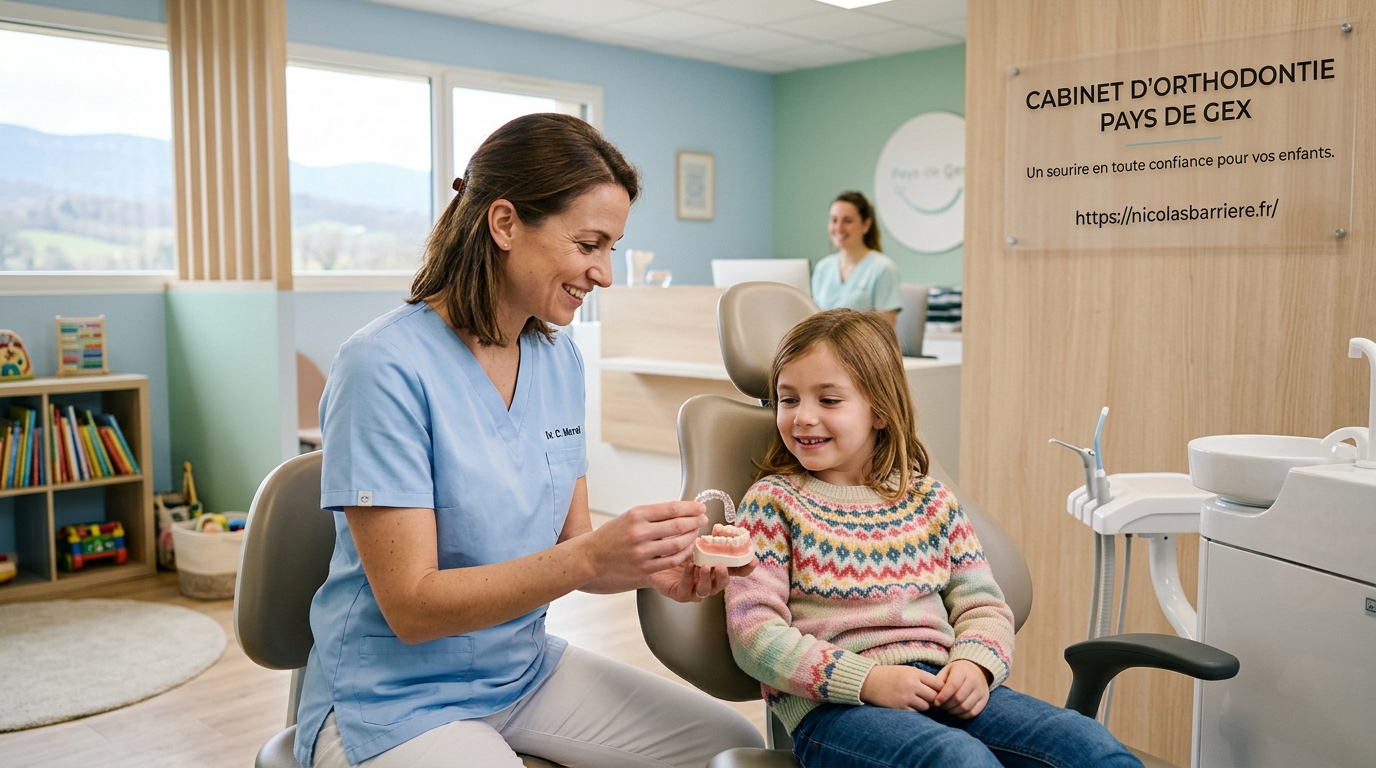
Fear of medical treatment is common among young patients, and orthodontics is no exception. An orthodontic practice in Divonne-les-Bains that reassures children who are afraid relies on precise teaching methods, a suitable environment, and a progression that respects each child's pace.
- Next to 50 % Adults with a phobia of the dentist developed this fear in childhood: prevention starts with the first consultations.
- The clinical method to say, to show, to do It defuses anxiety by explaining each action before performing it.
- Sensory adaptation (lights, noises, pauses) is essential for hypersensitive children, ASD or ADHD.
- Conscious sedation with MEOPA remains a regulated medical option for highly anxious children.
An orthodontic practice in Divonne-les-Bains that reassures fearful children combines four key elements: a welcoming approach without any technical procedures at the first appointment, the pediatric method to say, to show, to do, A sensory environment adapted to hypersensitivities, and, in cases of severe anxiety, conscious sedation with nitrous oxide/oxygen (MEOPA). This gradual approach establishes a climate of trust and allows the child to calmly participate in their treatment. To go further, it is useful to understanding the steps of an orthodontic referral initiated by the dentist.
Why is a child afraid of the orthodontist's office?
A child's fear of the orthodontist comes from a combination of factors: apprehension of the unknown, unusual noises of instruments, the feeling of lying with their mouth open in front of a stranger, and sometimes the unintentional transmission of parental anxiety. This fear is not irrational: it is a natural reaction to a situation perceived as intrusive.
Public health studies converge on one striking finding. According to an article published by Dental Dynamics, Approximately half of adults with a phobia of the dentist developed this phobia in childhood. In other words, the way early pediatric consultations take place has a lasting impact on the adult's relationship with oral healthcare.
Dentophobia Intense and persistent fear of dental treatment, which can lead to chronic avoidance of appointments. In children, it manifests as crying, refusal to open the mouth, or even panic attacks in the waiting room.
🔊
Noises and vibrations
Saliva aspirator, turbine motor: new sounds that cause concern even before the first treatment.
👀
Loss of control
Lying down with an open mouth: the child feels vulnerable and unable to anticipate actions.
💬
Anxiety-inducing stories
A phrase from siblings or a school friend ("it stings", "it hurts") anchors a fear even before the first visit.
👪
Parental transmission
An anxious parent often unintentionally transmits their tension to the child from the moment they enter the waiting room.
50 %Adults with phobias developed their fear in childhood
4 yearsage at which an orthodontic assessment is possible
≈1one in five children affected by marked apprehension
Important point to note: Avoid using anxiety-inducing words at home ("injection," "it's going to hurt," "be brave") before the appointment. These phrases reinforce fear instead of alleviating it. Opt for neutral language: "The smile doctor is going to look at your teeth.".
What methods can be used to reassure a fearful child during orthodontic treatment?
Effective methods are based on three complementary pillars: age-appropriate communication, a controlled sensory environment and, if necessary, the use of medically supervised conscious sedation. None of these methods is sufficient on its own: it is their combination, tailored to each child, that produces a lasting climate of trust.
How does the "say, show, do" technique work?
The "say, show, do" technique (in English) Tell-Show-Do) is a validated pediatric communication method that breaks down each action into three steps: the practitioner explains with simple words, shows the instrument to the child, then performs the action gently. It significantly reduces anxiety in young patients according to several clinical studies.
Tell-Show-Do Pediatric behavioral management technique described as early as 1959 by Addelston. It consists of describing (Tell), demonstrating (Show) then executing (Do) each clinical gesture, in order to make the unknown predictable and restore a sense of control in the child.
There Practitioner's Review It emphasizes in its recommendations on preventing dental anxiety that this approach is among the best-documented non-pharmacological interventions. It gives the child a sense of control, precisely what fear has taken away.
-
Say
The practitioner explains using vivid language and avoiding medical terms. For example: "I'm going to count your teeth with a small mirror, as if I were looking into an aquarium.".
-
To show
The instrument is presented to the child: he can touch it, feel it vibrate on his finger, understand what it is used for. The unknown becomes familiar.
-
Do
The action is performed slowly, with verbalization at each step. The child maintains a pre-arranged pause signal (raising their hand).
-
Congratulate
Immediate positive reinforcement consolidates the successful experience: sincere compliment, sticker, praise in front of the parent.
«"The first orthodontic appointment for an apprehensive child is not intended to treat the problem, but to build a relationship. When the child leaves understanding what happened and feeling respected, half the work is done for the following sessions."»
How is the environment adapted for hypersensitive children?
For children with sensory hypersensitivity, autism spectrum disorder (ASD) or ADHD, the office environment is designed to reduce anxiety-provoking stimuli: dimmed lights, muted sounds, visual pictograms and segmented session time. This inclusive approach is particularly valuable in Divonne-les-Bains, where Franco-Swiss border families seek care that respects the particularities of each child.
ASD Autism Spectrum Disorder : a group of neurodevelopmental disorders characterized in particular by heightened sensory sensitivity and a need for predictability. In a dental office, these children require a calm environment and clear visual cues.
🎨
Visual aids and pictograms
A visual sequence of images shows the child, before the consultation, what will happen and in what order. This anticipation greatly reduces stress related to the unexpected.
💡
adjusted light
Indirect lighting in the waiting room, surgical light directed out of sight as much as possible.
🔇
Controlled noise
Suction set to the minimum useful level, noise-canceling headphones available for sensitive children.
⏸️
Regular breaks
Agreed signal to stop at any time. The child remains in control.
🧸
cuddly toy
The child can keep their familiar object throughout the session.
Predictability Pictograms Noise-canceling headphones Breaks Transitional object Appropriate vocabulary Short session
In what cases should conscious sedation (MEOPA) be used?
MEOPA is a gaseous mixture of oxygen and nitrous oxide administered by inhalation, which relaxes the child without making them sleepy: they remain awake, cooperative and conscious. Its use in dental practice is governed by specific training and a strict safety protocol.
MEOPA Equimolar Mixture of Oxygen and Nitrous Oxide : analgesic and anxiolytic gas inhaled via mask, reserved for trained practitioners. Its effect is reversible within a few minutes after inhalation is stopped.
According to the MACSF, The prescription and dispensing of MEOPA in dental offices are strictly regulated. The use of this conscious sedation is only considered after behavioral approaches have failed and with the informed consent of the parents.
The use of MEOPA is not systematic. It is reserved for well-defined situations: severe phobia resistant to behavioral methods, a child with a disability making traditional care impossible, or a lengthy or uncomfortable procedure. The decision is based on a clinical examination and a discussion with the family.
What exactly happens during the first meeting?
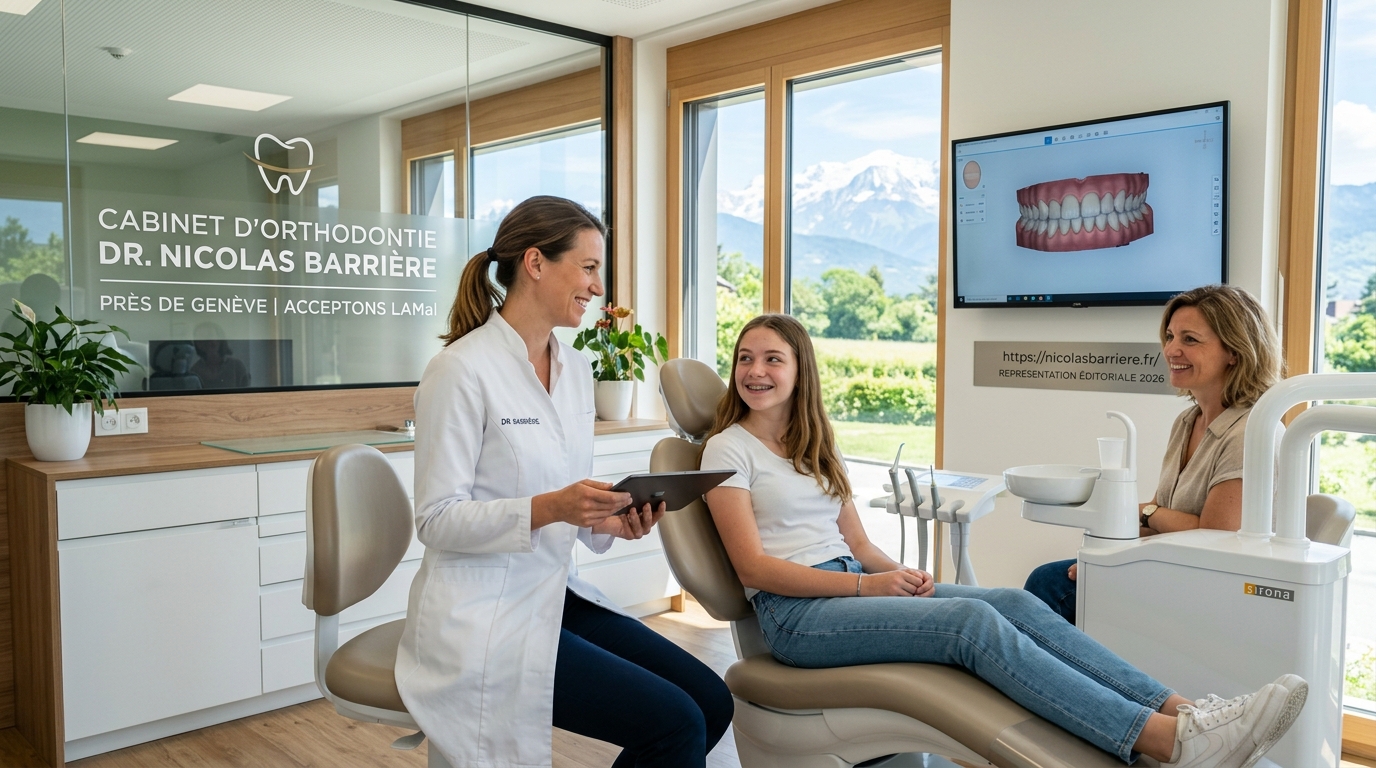
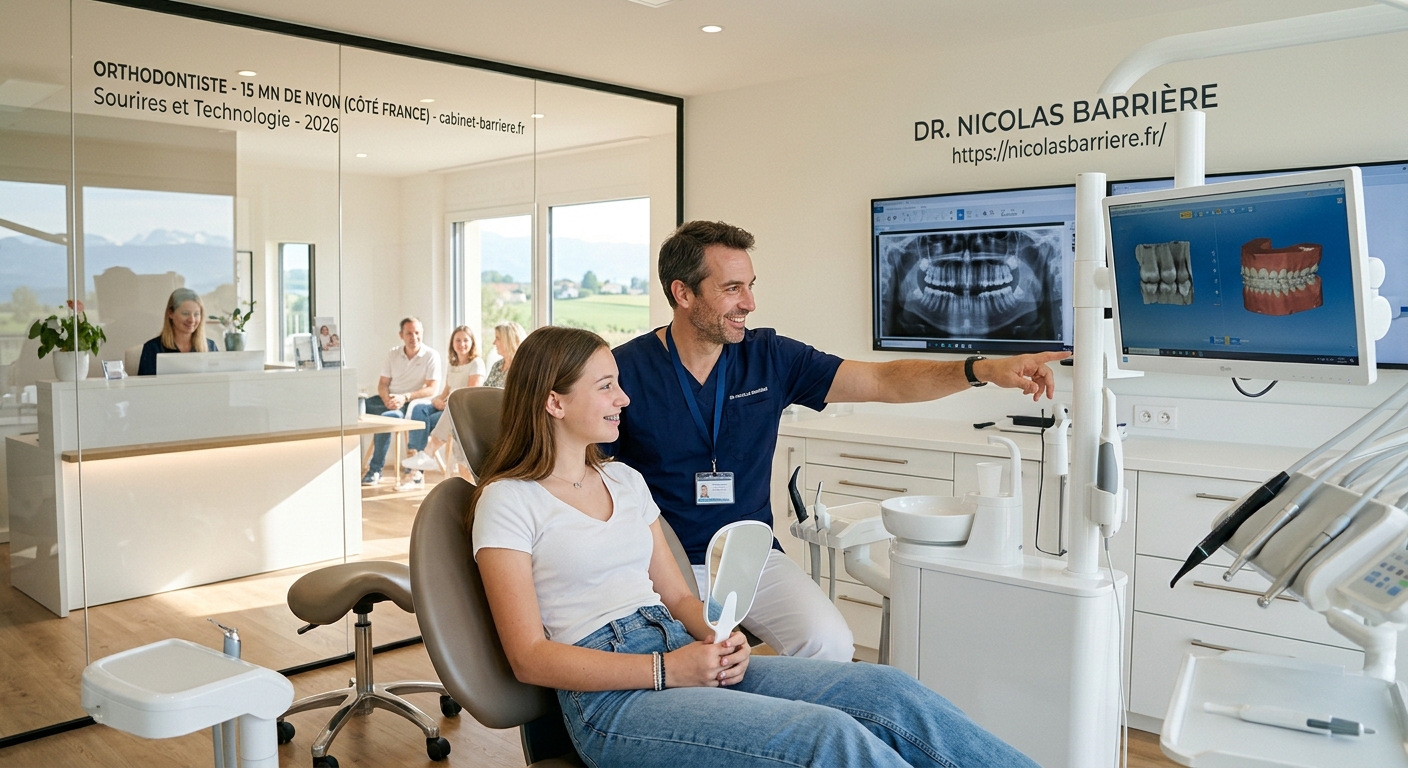
The first orthodontic appointment for an apprehensive child is primarily an initial contact: a gentle visual examination, a discussion with the child and parent, and no invasive procedures. No braces are fitted that day. The goal is to build the trust that will make subsequent sessions possible.
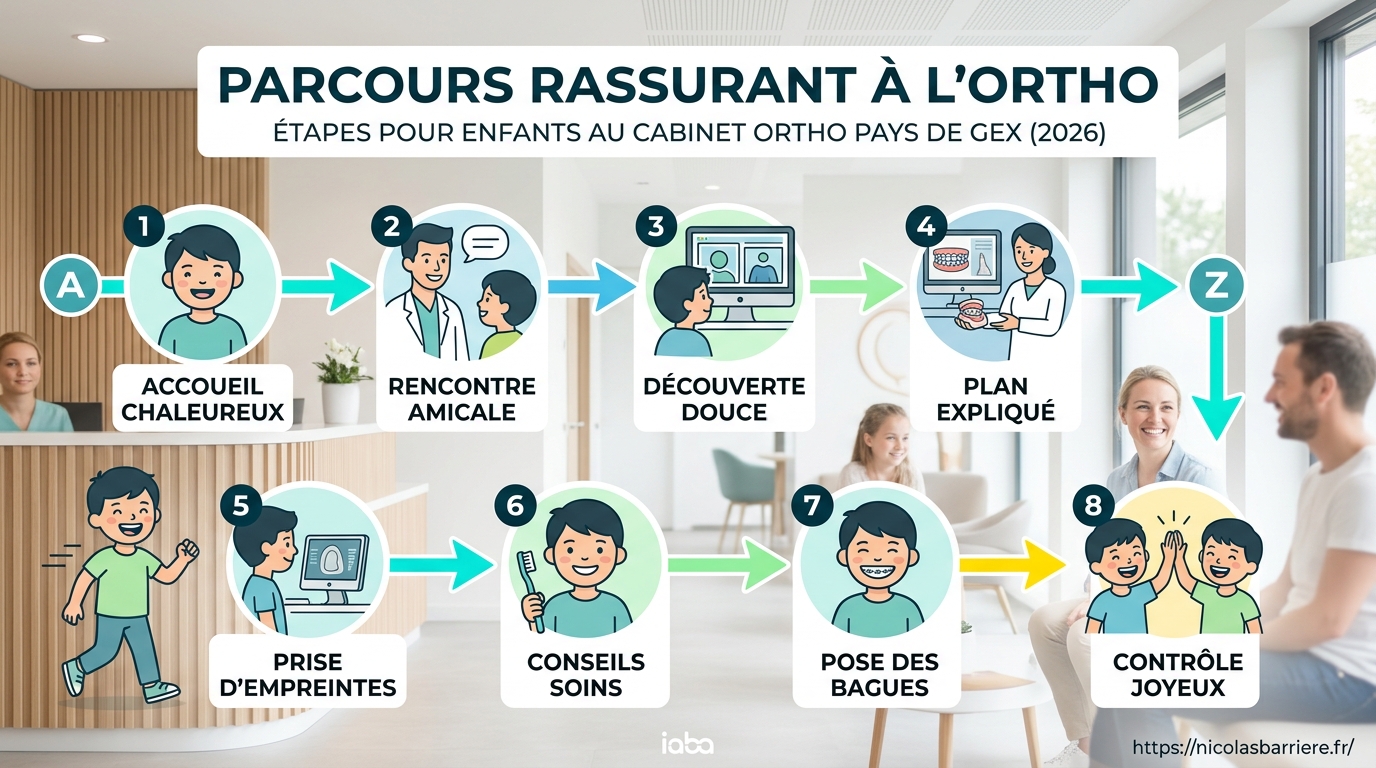
WelcomeWelcoming waiting room, time to observe
EncounterA discussion at a child's level, without an imposing white coat.
Armchair tourThe child sits down without being required to open their mouth
Visual examinationMirror, count teeth, no sound instrument
ExplanationVisual feedback for parents and child
What happens if the child refuses to open their mouth?
The practitioner never forces the patient. Two options are possible: suggest a desensitization game (counting teeth aloud, showing one's own teeth to the doctor), or postpone the examination to a second appointment dedicated to familiarization. Forcing a first consultation creates a psychological block that is much harder to overcome later.
A consultation tailored to the apprehensive child
An initial orthodontic appointment is non-binding: it allows us to assess your situation and calmly decide on the next steps. For a personalized opinion, only a clinical consultation with a thorough examination can provide a reliable answer.
How can parents prepare for the appointment in Divonne-les-Bains?
Home preparation plays a crucial role: it accounts for approximately 50% of the success of the first appointment. The parent becomes the practitioner's primary ally. A few simple principles can help to defuse anxiety even before entering the office.
Avoid
- «"You'll see, it doesn't hurt at all" (establishes the idea of pain).
- «"Be brave" (implies that there is reason to be afraid).
- Promise a conditional reward ("if you are good").
- To recount one's own bad dental experiences.
- Arriving late, stressed, and without having eaten.
To be preferred
- Use neutral vocabulary: "the doctor is going to look at your smile".
- Read a children's book about going to the dentist a few days beforehand.
- Playing doctor at home with a small mirror.
- Arrive early so that the child can calmly take in the surroundings.
- Staying calm yourself: children perceive parental anxiety.
What is the best age for the first consultation?
The French National Authority for Health (HAS) and the recommendations of the French Federation of Orthodontics (FFO) converge: an initial assessment is possible as soon as 6 to 7 years old, The age at which the first permanent teeth appear. In some cases of prolonged thumb sucking or jaw growth disorders, a consultation may be requested as early as age 4. This early intervention allows for gentle interceptive orthodontics before problems become established.
⚡ Consulting early is not about treating early: it is above all about detecting in time and reassuring the child by establishing a relationship of trust before adolescence.
How to choose an orthodontic practice suitable for fearful children?
A practice suitable for apprehensive children can be identified by four objective criteria: a practitioner holding the CECSMO or the DES in dentofacial orthopedics, a team trained in pediatric behavioral management, an environment designed for the child, and an initial consultation dedicated solely to contact and visual examination.
To identify a practice truly suited to welcoming fearful children, several criteria should be verified: the practitioner's qualifications, specifically as a specialist in dentofacial orthopedics (code 36), guarantee advanced pediatric training and a thorough understanding of growth. An initial appointment of at least 30 to 45 minutes allows time to build rapport, without rushing the session. The explicit use of the scientifically validated Tell-Show-Do method helps reduce anxiety. Sensory adaptation (pauses, noise-canceling headphones, pictograms) is essential for hypersensitive children, those with autism spectrum disorder (ASD), or those with ADHD. The availability of nitrous oxide/oxygen (MEOPA) is a last resort for severe anxiety. Finally, a team that speaks directly to the child recognizes them as a genuine partner in the process.
Practical tip: When making a phone appointment, ask about the process for a first appointment with a fearful child. The quality and accuracy of the answer provided by the receptionist are already a reliable indicator of the practice's philosophy.
What is the specific characteristic of the Pays de Gex?
The practice is located in Divonne-les-Bains, in the Franco-Swiss border region, and serves a diverse patient population with varied healthcare needs. Many patients come from the Pays de Gex, the Ain department, or neighboring Switzerland. According to Wikipedia, The metropolitan area has over 100,000 inhabitants. This cultural diversity makes a standardized, compassionate approach particularly valuable, regardless of the family's background. The choice between an independent practice and a larger facility depends on several factors, including continuity of care with the primary practitioner: the same orthodontist who follows the child from the first consultation to the final retention.
«"Orthodontic treatment in children requires a rigorous clinical evaluation and appropriate information for the patient and their family."»
What results can be expected from a compassionate approach?
A caring orthodontic approach produces three measurable benefits: better cooperation from the child throughout the treatment, a significant reduction in anxiety between sessions, and a healthy relationship with dental care in adulthood.
Qualitative indicators observed in pediatric clinical practice, drawn from good practice recommendations.
An example of an anonymized journey
An eight-year-old child, referred by his dentist for malocclusion, arrived in tears at his first appointment after a negative experience. The dentist decided against a full examination that day: the child was simply asked to sit in the chair, handle a small mirror, and count his parent's teeth. At the second appointment, he agreed to a visual examination. At the third, the X-rays were taken calmly. Interceptive treatment began six weeks later, without any apprehension. Once the treatment plan was approved, the child was seen at regular follow-up appointments, dedicated to adjusting the appliance, before moving on to the retention phase. This journey illustrates why initial patience is an investment, never a waste of time.
«"A child who is afraid is not a capricious child: it is a child who does not yet have the reference points to understand what is going to happen. Our role is to give them these reference points, at their own pace, without ever compromising on clinical quality."»
Important reminder: This article is for informational purposes only. Every child is different, and a personalized opinion requires a clinical consultation and a thorough examination. The guidance provided here is not a substitute for a diagnosis from a healthcare professional who is familiar with your child's medical history.
What are the alternatives and complements to the traditional consultation?
Beyond the consultation, several complementary tools reinforce the psychological preparation of the child: dedicated children's books, role-playing games at home, progressive desensitization sessions, and in complex cases, support from a psychologist specializing in medical anxiety.
Gradual desensitization
This technique involves gradually exposing the child to the office: the first visit is to say hello, the second to visit the chair, and the third for the examination. Each step is validated before moving on to the next.
Audiovisual entertainment
Video glasses or music headphones are offered during longer sessions. They divert attention from anxiety-provoking stimuli without interfering with the clinical procedure.
Positive reinforcement
Immediate and sincere recognition of each effort made by the child. A certificate of courage, a sticker, a compliment in front of the parents: these are all markers that build a positive image of care.
Interceptive orthodontics
Early treatment between 6 and 10 years of age aims to correct a growth abnormality before it becomes established. Often shorter and better tolerated than late treatment.
📝 To assess whether your child needs an orthodontic consultation, a online career guidance quiz It can provide initial indications, but does not replace clinical examination.
What to do in case of an orthodontic emergency in an anxious child?
An orthodontic emergency in an apprehensive child (a wire that pricks, a bracket that comes loose, pain) requires a quick but always caring reaction: reassure first, explain second, act last. The practitioner sees the child in a short time slot dedicated to the emergency, with the same communication principles as in a scheduled consultation.
For any urgent situation concerning ongoing treatment, the page dedicated to orthodontic emergencies details the steps to take at home while waiting for the appointment, and the cases that justify immediate contact with the office.
Frequently Asked Questions about Children's Anxiety in Orthodontics
Does an appointment with the orthodontist hurt?
No. The first appointment consists of a visual examination and, if necessary, completely painless X-rays. No instruments are used that day. The goal is to establish an accurate diagnosis in a trusting environment, without any painful procedures.
What should I do if my child absolutely refuses to open their mouth?
The practitioner is patient and never forces the child. They may suggest a desensitization game, a partial examination, or postpone the full examination to a later session. Forcing a child creates a psychological block that is much more difficult to overcome.
Is there a clinic in Divonne-les-Bains that is suitable for very anxious children?
Yes. The practice in Divonne-les-Bains has a specially designed layout, visual distraction tools, staff trained in providing a welcoming environment, and, if necessary, conscious sedation with nitrous oxide. Asking about the first appointment allows you to assess this adaptation right from the start of the call.
At what age should you take your child to the orthodontist?
An initial assessment is recommended between the ages of 6 and 7, when the first permanent teeth erupt. In some cases (prolonged thumb sucking, mouth breathing, growth disorders), a consultation as early as age 4 may be warranted to consider gentle interceptive orthodontics.
Is MEOPA dangerous for a child?
MEOPA is considered safe when administered by a trained practitioner, respecting the contraindications. According to MACSF, its use in dental practices is strictly regulated. Its effects are reversible within minutes of stopping inhalation. It is prescribed only after behavioral approaches have failed.
How can you tell if an orthodontist is well qualified?
A qualified orthodontist holds the CECSMO or a DES (Diploma of Specialized Studies) in dentofacial orthopedics, and is registered as a qualified specialist (code 36) with the National Order of Dental Surgeons. This information can be verified in the Order's official directory.
Should you stay with your child during the consultation?
It depends on the child's age and temperament, as well as the practice's setup. For a very anxious young child, parental presence is reassuring. For an older child, spending time alone with the practitioner fosters independence and a direct, trusting relationship. The practitioner adapts to each situation.
How long does a first orthodontic consultation for a child last?
An initial consultation tailored to an apprehensive child typically lasts between 30 and 45 minutes. This time includes welcoming the child, building trust, a visual examination, X-rays if necessary, and a detailed explanation to the parents. A rushed 15-minute session is not suitable for a fearful child.
📌 Key points to remember
- About half of adults with a phobia of the dentist developed their fear in childhood: the quality of the first consultations is crucial.
- The method to say, to show, to do is scientifically validated to reduce pediatric anxiety in clinical practice.
- The sensory environment must be adapted for hypersensitive children, ASD or ADHD: light, noise, breaks, pictograms.
- MEOPA is a regulated medical solution, reserved for cases where behavioral methods are insufficient.
- The first appointment does not involve fitting any device: it is a time for meeting and visual examination.
- Preparation at home (neutral vocabulary, games, readings) accounts for about half of the success of the appointment.
- A personalized opinion always requires a clinical consultation with a thorough examination.
Consider an orthodontic consultation for your child
Every child is unique and deserves an individual assessment. Making an appointment allows us to discuss the situation, examine the clinical picture, and decide together on the best course of action.

About the author: Nicolas Barrière
Dr. Nicolas Barrière is an orthodontist, a qualified specialist in dentofacial orthopedics, a former hospital intern, and the founder of his practice in Divonne-les-Bains. He treats children, adolescents, and adults with orthodontic treatments (clear aligners, lingual orthodontics, dentofacial orthopedics), paying particular attention to the care of Franco-Swiss border patients and to welcoming apprehensive young patients.
Areas of expertise: Orthodontics, Dentofacial orthopedics, Clear aligners, Lingual orthodontics, Pediatric orthodontics, Adult orthodontics, Management of anxious patients.
📚 Sources and references
Official and institutional sources:
- Legifrance: Code of ethics for dental surgeons (Articles R4127-201 to R4127-284)
- French National Authority for Health: Indications for dentofacial orthopedics in children and adolescents
- National Order of Dental Surgeons: Specialties in Dentistry
- Ameli: Reimbursement for orthodontic treatments
Professional press and clinical articles:
- The Practitioner's Review: Prevention of dental anxiety in adults and children
- Dental Dynamics: Half of patients with dental phobia developed their fear of the dentist in childhood.
- MACSF: MEOPA in dentistry, regulated prescription and dispensing
- Dental Information: Why the first orthodontic assessment should be done early
Academic sources:
- PMC: Comparison of Tell-Show-Do, Tell-Play-Do and app-based modeling techniques in pediatric dental behavior management
- PMC: Impact of Tell-Show-Do and audio-visual distraction techniques on pediatric dental anxiety
- Wikipedia: Pays de Gex
📖 Also read:
- Orthodontic consultation: how does a referral from your dentist and a second opinion work?
- How an orthodontic practice operates: organizing follow-up and continuity of care
- Being referred to an orthodontist by your dentist: the steps in the treatment process
- First orthodontic consultation in adolescence: procedure and objectives of the first assessment
- Orthodontic emergencies: what to do if you have a problem with your appliance


 French
 English