
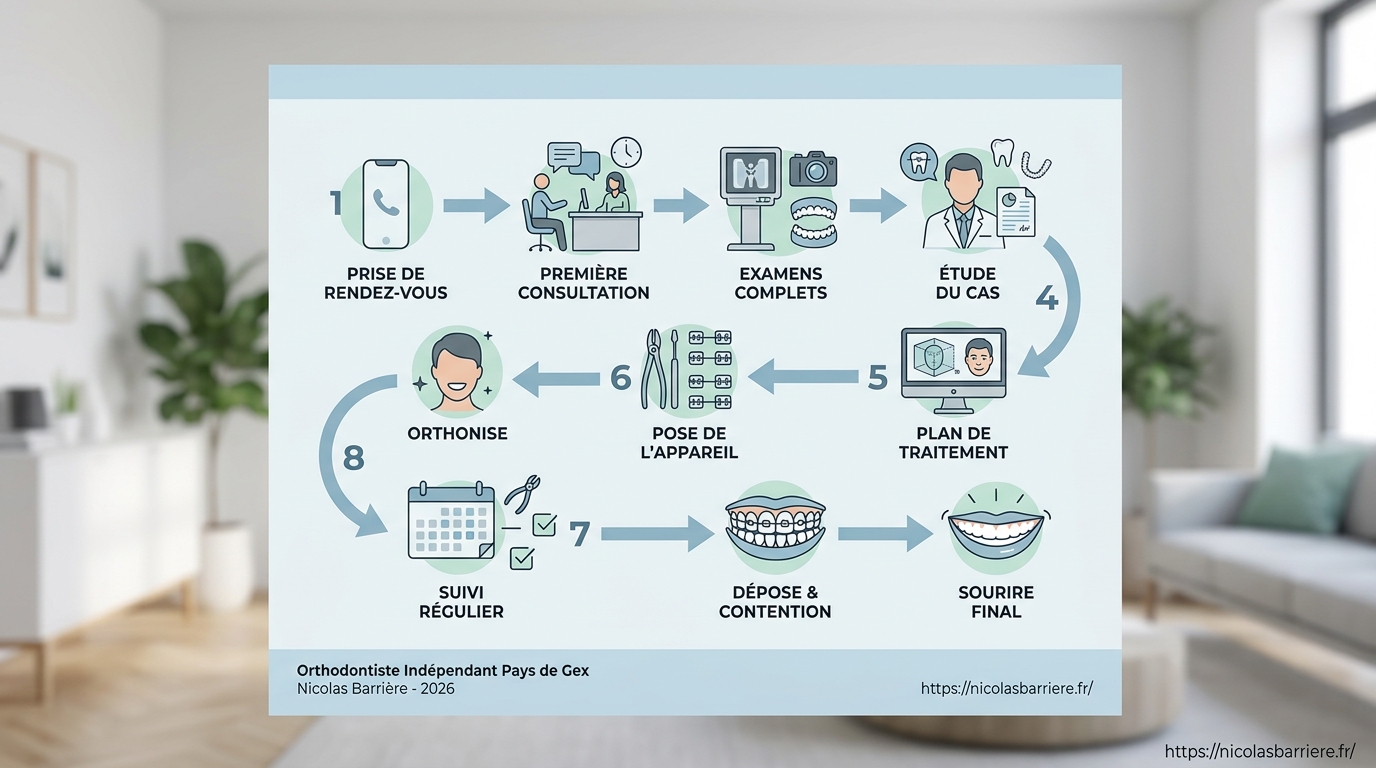
An independent orthodontist in Divonne-les-Bains ensures continuity of care with the same referring practitioner throughout the treatment, which lasts on average 18 to 30 months. The follow-up is organized into 4 phases: a complete initial assessment, regular activations every 4 to 8 weeks, removal of the appliance, and continuation of treatment.

How an orthodontic practice operates: organizing follow-up and continuity of care
Written by Nicolas Barrière : Orthodontist, Qualified Specialist in Dentofacial Orthopedics, founder of the practice, at nicolasbarriere.fr. Updated on . Reading time: approximately 12 minutes.
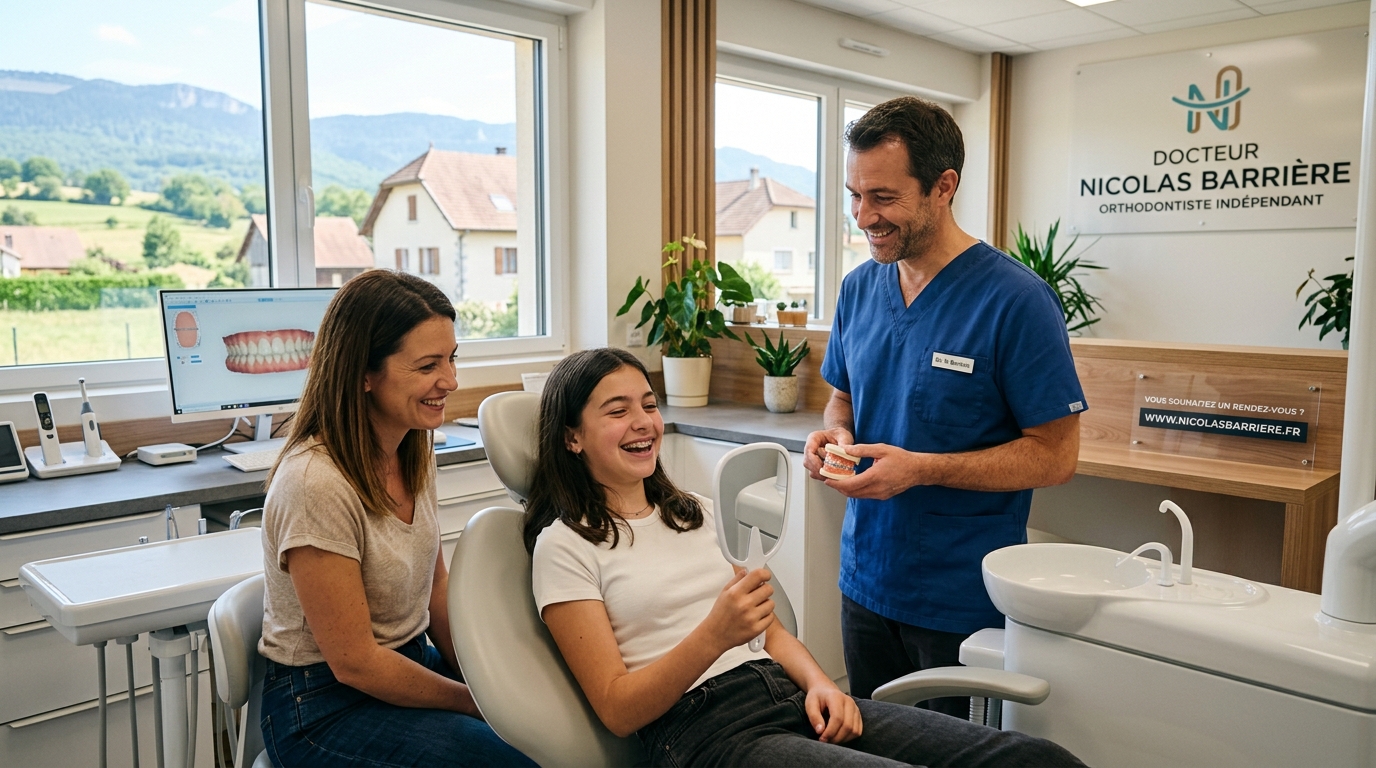
Understanding how an orthodontic practice operates helps you better cope with a treatment that often lasts 18 to 30 months. This article complements the guide on the referral from their dentist during an initial consultation, details the organization of follow-up in a private practice in Divonne-les-Bains.
- An independent orthodontist in Divonne-les-Bains ensures continuity of care with the same referring practitioner throughout the treatment, which lasts on average 18 to 30 months.
- The follow-up is organized into 4 phases: complete initial assessment, regular activations every 4 to 8 weeks, removal of the device, retention for a minimum of 24 months.
- The 2023 IGAS report points to frequent breaks in follow-up in some large dental centers, which the liberal structure structurally limits.
An independent orthodontist practicing in Divonne-les-Bains guarantees personalized care, with patients seeing the same referring practitioner at every appointment. Unlike large dental centers with high staff turnover, this private practice ensures complete continuity from the initial diagnosis through to retention checkups several years after braces are removed.
What happens during the initial diagnosis with an independent orthodontist?
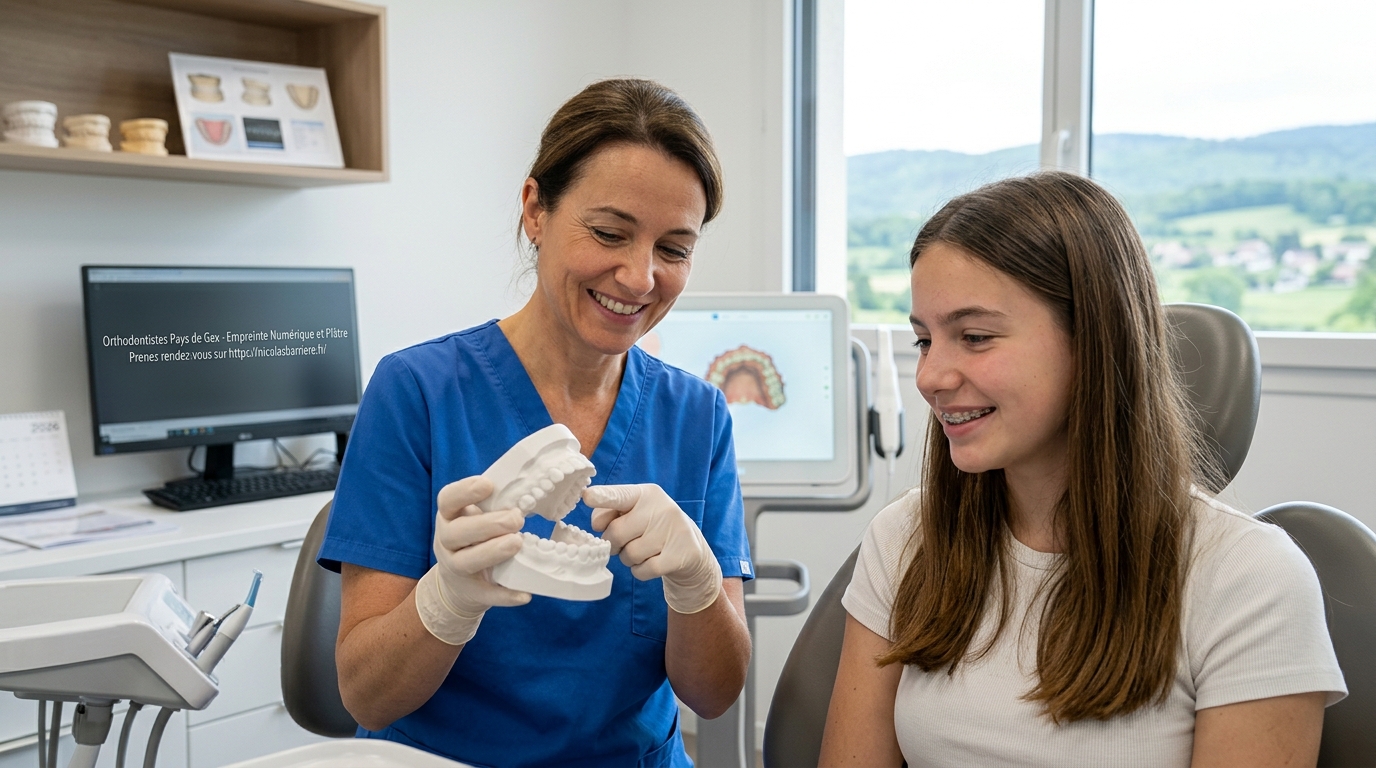
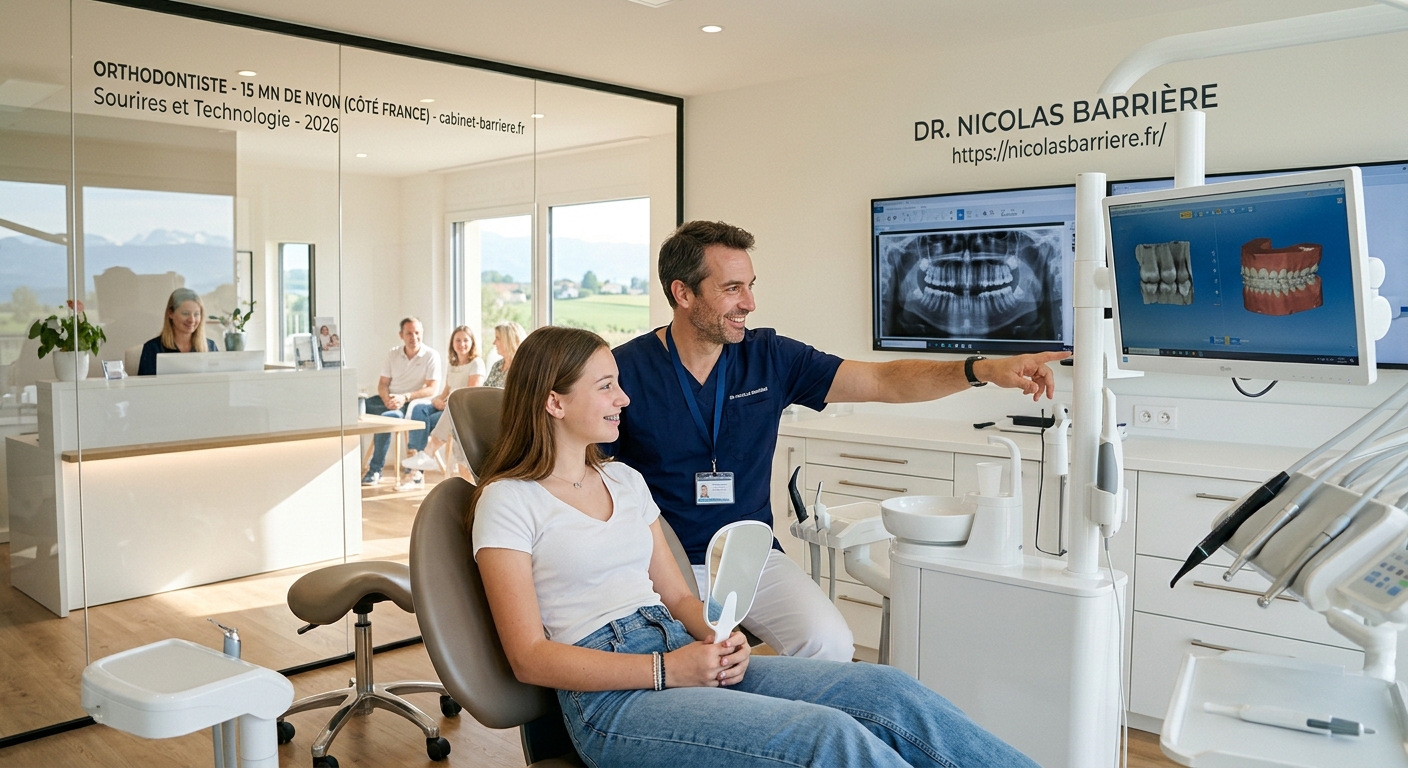
The first diagnosis with an independent orthodontist takes place in a thorough consultation combining clinical examination, panoramic and cephalometric radiographs, digital or physical impressions, then delivery of a written treatment plan accompanied by a detailed quote. This essential phase determines the entire subsequent course of treatment.
Patients often come to the office on the recommendation of their primary dentist. This step is described in our dedicated guide to a patient's referral by their dentist to a specialist. The independent orthodontist then takes the time, usually 45 minutes to an hour, to establish a complete assessment of the dental arches, occlusion and skeletal structures.
Orthodontic diagnosis A set of clinical and complementary examinations (radiographs, impressions, photographs) allowing the orthodontist to assess the position of the teeth, the occlusion and the growth of the jaws in order to establish a personalized treatment plan.
The tests carried out during the initial assessment
A complete orthodontic assessment comprises several inseparable steps. The clinical examination evaluates overall oral health, the possible presence of cavities, the condition of the gums, and chewing function. Radiographic images (panoramic radiograph, lateral cephalometric radiograph, sometimes cone beam CT) clarify the position of the roots, the presence of impacted teeth, and the skeletal relationships between the maxilla and mandible.
-
Medical interview
Gathering of medical history, reason for consultation, expectations of the patient or parents.
-
Clinical examination
Analysis of occlusion, teeth present, soft tissues, lingual and respiratory function.
-
Additional tests
X-rays, 3D optical impressions, intra- and extra-oral photographs.
-
Cephalometric analysis
Geometric analysis of the profile to guide therapeutic decisions.
-
Treatment plan and quote
Oral and written presentation of options, expected duration, detailed cost and reimbursement terms.
The detailed quote: a legal obligation
The provision of a written estimate is regulated by the Health Insurance system. According to the rules published by Ameli, All orthodontic treatment must be preceded by a quote, specifying the nature of the procedures, their cost, the Social Security reimbursement rate, and the remaining amount payable by the patient. This obligation is reinforced by the Code of Ethics for Dental Surgeons, available at [website address]. Legifrance, protects the patient and engages the practitioner's responsibility.
Important point to note: No orthodontic treatment should begin without a signed written estimate and prior authorization from Social Security for those under 16. A personalized assessment always requires a clinical consultation and a thorough examination.
«"The initial assessment is the foundation of treatment. Taking the time to explain each examination and each option to the patient determines their adherence for the months to come, which is particularly crucial for young patients."»
Why choose a private practice in Divonne-les-Bains rather than a dental center?
Choosing a private orthodontic practice in Divonne-les-Bains offers the stability of a single referring practitioner, better continuity of care and a close clinical relationship, elements that are structurally weakened in some large dental centers. This organizational difference has direct consequences on the quality of monitoring.
The IGAS report and the supervision of health centers
The report from the General Inspectorate of Social Affairs, published in 2023 and available on the official website of the IGAS, formulates twenty recommendations to improve the safety of care in dental health centers. This work directly inspired the Law of May 19, 2023 aimed at improving the regulation of health centers, This strengthens the control of Regional Health Agencies (ARS) over these structures. These texts reflect the recognition by public authorities of specific risks linked to the organizational model of certain large structures.
The independent private practice is distinguished by a dedicated practitioner present at every appointment, personalized follow-up of the patient's file throughout its duration, and direct clinical responsibility assumed by the practitioner. The frequency of appointments is tailored to the patient and tissue biology, and communication with the referring dentist is handled directly between colleagues.
The question of the practitioner's continuity
Continuity of care is an ethical requirement enshrined in the Code of Ethics for Dental Surgeons. It is particularly important in orthodontics, where treatment extends over 18 to 30 months and relies on successive clinical decisions within a comprehensive framework. Changing practitioners mid-treatment necessitates restarting the initial assessment and can lengthen the process.
Advantages of a liberal practice
- Stable referring practitioner, in-depth knowledge of the case
- Clinical decisions made by the professional who made the diagnosis
- Direct and personal correspondence with the treating dentist
- Adapting the appointment schedule to the patient's biology
- Clinical responsibility clearly identified
Points to consider
- Waiting times for a first appointment are sometimes longer.
- More limited opening hours than a large structure
- It is necessary to plan appointments in advance, especially in border areas.
The specific context of the Pays de Gex
The practice is located in Divonne-les-Bains and receives patients from across the surrounding area, which is experiencing strong population growth due to the Geneva employment hub. According to the Wikipedia article dedicated to the Pays de Gex, The population exceeds 100,000 inhabitants, with a significant proportion of Franco-Swiss border families. This reality creates particular challenges for orthodontics: managing French and Swiss insurance files (LAMal, supplementary insurance), scheduling appointments that fit with cross-border work hours, and providing care for bilingual patients.
A question about your orthodontic treatment in the Pays de Gex?
An initial consultation at the office allows us to assess your situation and explain the follow-up methods adapted to your profile.
How is regular follow-up organized during orthodontic treatment?
Regular follow-up during orthodontic treatment is organized around appointments scheduled every 4 to 8 weeks, dedicated to activating the appliance, checking oral hygiene and verifying progress compared to the initial plan. This regularity determines the effectiveness of the treatment.
The frequency of appointments
The biology of tooth movement imposes an unavoidable physiological delay between two activations. The French National Authority for Health (HAS), in its work available on the HAS portal, It is important to remember that the bone remodeling necessary for tooth movement takes place over several weeks. An appointment too soon would not allow the bone tissue to regenerate.
Week 0Installation of the device
Weeks 4 to 6First check and adjustment
Weeks 8 to 24Regular activations
Weeks 24 to 78Main active phase
End of processingRemoval of the appliance and impressions for retention
What actually happens during an activation appointment
A typical activation appointment lasts between 20 and 40 minutes. The practitioner first checks the condition of the appliance (braces, archwires, brackets, or clear aligners), inspects the patient's oral hygiene, and then makes the adjustments outlined in the treatment plan. For patients wearing clear aligners, the appointment allows the practitioner to verify progress and dispense the next set of aligners. The practitioner remains responsible for choosing the appliance, whether it be visible braces, lingual braces, or clear aligners, based on the clinical diagnosis.
- Visual inspection of the device and soft tissues
- Oral hygiene check and reminders if necessary
- Comparison of progress with the initial treatment plan
- Activation or change of components (archwires, elastics, aligners)
- Answering questions from the patient or parents
- Scheduling the next appointment
Adjustments currently being processed
The stability of the referring practitioner is crucial here. An orthodontist who has followed their patient from day one perceives the subtle changes in the smile, anticipates resistance to tooth movement, and immediately adapts the treatment strategy. These micro-adjustments, often invisible to the patient, make the difference between timely treatment and prolonged treatment.
Good to know: Orthodontic treatments for children under 16 are covered by French National Health Insurance (Assurance Maladie) for each six-month period of treatment, up to a maximum of six consecutive six-month periods. Specific details are available on [website/link]. the dedicated Ameli page.
Managing unforeseen events and emergencies
A poking wire, a loose bracket, a damaged retainer: minor incidents are part of the orthodontic journey. A private practice handles these situations directly, often the same day or within 48 hours. The patient contacts reception, explains the situation, and an appointment is offered without having to go through a call center or external platform.
🔧
Ring detachment
Quick appointment for regluing, usually within 48 hours.
📎
Wire sticking out
Temporary solution at home with orthodontic wax, then visit to the dentist.
💊
Pain after activation
Common painkillers, soft diet for 2 to 3 days.
🦷
Lost gutter
Resumption of the previous process and quick contact with the firm.
What are the steps in the restraint phase and the final checks?
The retention phase begins immediately after the removal of the active appliance and aims to stabilize the results permanently using a wire glued behind the teeth or a retainer worn at night, with check-ups spaced out over at least 24 months after the end of treatment. This phase is as important as the active treatment itself.
Restraint Post-orthodontic treatment phase consisting of maintaining the teeth in their new position using a fixed device (bonded wire) or removable device (aligner), in order to prevent relapse and allow time for the tissues to stabilize.
Why restraint is essential
Teeth have elastic memory. After they shift, the periodontal ligaments (which connect the tooth to the bone) exert residual tension that tends to pull them back to their original position. Splinting counteracts this phenomenon by immobilizing the teeth while the alveolar bone and soft tissues reorganize around the new position.
A thin metal wire is bonded behind the front teeth (incisors and canines). Invisible and discreet, it remains in place for several years, often for life in the case of the front teeth. It requires rigorous oral hygiene (flossing, interdental brushes) and an annual check-up.
A transparent retainer is worn at night, generally for a full 12 months, then alternately. This solution requires good patient discipline. The retainer is replaced if it becomes worn or is lost.
This involves combining a bonded wire (often in the lower anterior arch) and a splint (upper arch). This is the most common solution in daily practice, combining stability and flexibility.
The frequency of post-processing checks
Retention checkups are gradually spaced further apart. The first checkup takes place 1 to 3 months after the retention appliance is fitted, then at 6 months, 12 months, and 24 months. These appointments allow the technician to verify the stability of the alignment, the integrity of the retention wire, and to replace the retainer if necessary.
D-Day
Device removal
Impressions and immediate application of the retainer.
3 months
First check
Checking the stability of the wire and the gutter.
6 months
Second check
Possible adjustment to the nighttime wearing protocol.
12 months
Annual inspection
Complete assessment, follow-up X-ray if necessary.
24 months
Final assessment
Assessment of long-term stability, submission of the file.
Preventing relapse
Orthodontic relapse is a natural phenomenon that can occur years after the end of treatment, particularly on the lower incisors. Rigorous retention monitoring significantly reduces this risk. The independent practice, which has followed the patient since the initial assessment, has all the necessary data to compare the current condition to the condition achieved at the end of active treatment.
«"The quality of the retention and its long-term follow-up are what distinguish a beautiful smile in the short term from a stable result for a lifetime. It's an investment of time that pays off."»
How does the independent practice adapt to the cross-border patient population of the Pays de Gex?
An independent practice in Divonne-les-Bains is adapting its organization to the cross-border patient population by managing French and Swiss insurance files, offering slots compatible with cross-border schedules, and ensuring bilingual correspondence with Swiss orthodontists and pediatricians. This adaptation is an important local characteristic.
The management of Franco-Swiss reimbursements
Cross-border patients are often covered by mixed insurance schemes: Swiss health insurance (LAMal), French national health insurance (Assurance Maladie française), and various supplemental health insurance plans. Our independent practice, with its manageable size, can dedicate time to preparing quotes in the format required by each insurer, which is crucial for reimbursement.
A well-prepared application speeds up reimbursements.
A compliant quote, dated x-rays, a written treatment plan and detailed billing are the documents expected by most French supplementary insurers and Swiss insurers.
Coordination with the treating dentists in the area
The independent orthodontist works in a network with local dentists, who refer patients, particularly from the Pays de Gex and the Ain region. This close relationship allows for smooth communication: referral letters after the initial assessment, progress reports, and coordination of preventative care to be carried out before, during, or after orthodontic treatment. For apprehensive children, there are also... specific approaches to support in practice.
Geographic stability: an advantage over 3 years
A complete orthodontic treatment, including retention, typically lasts 3 to 5 years. Over this period, the stability of the practice and the referring dentist provides peace of mind for families. This independent practice, firmly established in Divonne-les-Bains, offers the continuity that practices with higher staff turnover cannot always guarantee.
Are you looking to arrange orthodontic treatment in the Pays de Gex region?
A clinical consultation remains the only way to obtain a personalized opinion on your situation or that of your child.
What are the key points to consider before choosing your orthodontic practice?
Before choosing an orthodontic practice, it is advisable to check the practitioner's qualifications (Qualified Specialist in Dentofacial Orthopedics), the presence of a detailed written estimate, the clarity of the explanations on the treatment plan, and the announced stability of the care team for the duration of the treatment.
Health alert box: Orthodontic procedures engage the practitioner's liability for several years. Always verify the practitioner's registration with the National Order of Dental Surgeons via the...’official directory. The designation "Qualified Specialist in Dentofacial Orthopedics" attests to several years of additional training after a doctorate in dental surgery.
Check the practitioner's qualifications
The specialty in dentofacial orthopedics is obtained after a supplementary course of study lasting 3 to 4 years, culminating in a Diploma of Specialized Studies (DES) or a qualification recognized by the Order. This in-depth training, described on the pages of the National Council of the Order of Dental Surgeons, This distinguishes the specialist from the general practitioner who practices orthodontics on an occasional basis.
Read the treatment plan carefully
A clear written treatment plan must specify: the nature of the initial problem, the therapeutic objective, the technique used, the expected duration, the estimated number of appointments, the total cost and the cost per semester, the methods of retention, and any potential risks. The absence of any of these elements is a warning sign. The choice of technique depends on the clinical diagnosis and the practitioner's expertise, who selects the appliance best suited to the patient's case before any consideration of cost.
A written treatment plan and a detailed quote are your best tools to understand and commit to the process with full knowledge of the facts.
📌 Key points to remember
- An independent orthodontic practice in Divonne-les-Bains ensures continuity of care with a single referring practitioner throughout the entire duration of the treatment.
- The follow-up is organized into four main phases: complete initial assessment, regular activations every 4 to 8 weeks, removal of the device, post-treatment retention.
- The 2023 IGAS report and the law of May 19, 2023 have strengthened the regulation of large dental centers, recognizing structural issues of continuity and safety.
- The retention phase, often neglected, conditions the long-term stability of the result and extends over at least 24 months of spaced follow-up.
- The Franco-Swiss border patient population in the Pays de Gex requires specific administrative management (LAMal, French supplementary insurance) which the liberal structure can personalize.
- The qualification "Qualified Specialist in Dentofacial Orthopedics" is an indicator of in-depth training that can be verified with the National Order of Dental Surgeons.
- A detailed written estimate and a clear treatment plan are legal obligations and essential guidelines for the patient.
About the author: Nicolas Barrière

Dr. Nicolas Barrière is an orthodontist, a qualified specialist in dentofacial orthopedics, a former hospital intern, and the founder of his practice in Divonne-les-Bains. He treats children, adolescents, and adults with orthodontic treatments (clear aligners, lingual braces), paying particular attention to the care of patients living near the French-Swiss border.
Areas of expertise: Orthodontics, Dentofacial orthopedics, Clear aligners, Lingual orthodontics, Pediatric orthodontics, Adult orthodontics, Orthognathic surgery, Retention and relapse management.
LinkedIn profile of Dr. Nicolas Barrière · Our team at the firm
Frequently Asked Questions about Orthodontic Follow-up
Who earns more, a dentist or an orthodontist?
Historically, specializing in orthodontics has generated higher average revenue than general dentistry, due to the additional years of study, the specific equipment used, and the longer treatment times. Actual earnings vary depending on employment status (self-employed or salaried), region of practice, and the practitioner's experience.
What is the average salary of a self-employed orthodontist?
A self-employed orthodontist's income depends heavily on the practice's volume of activity, overhead costs (premises, staff, equipment), and the range of treatments performed. It is not a fixed salary but a variable income after professional expenses are deducted, making any average unrepresentative of individual situations.
What are the advantages and disadvantages of an orthodontist?
The main advantage is specialized expertise that allows for the treatment of complex cases of dental alignment and jaw correction, with lasting functional and aesthetic results. The disadvantages are primarily related to the duration of treatments (18 to 30 months on average), their cost, and the necessary commitment from the patient regarding adherence to treatment and hygiene.
What is the difference between a dentist and an orthodontist?
A dentist, or dental surgeon, is a general practitioner of oral health who treats cavities, prostheses, extractions, and performs restorative treatments. An orthodontist is a dental surgeon who has completed several years of additional specialization dedicated exclusively to the alignment of teeth, occlusion, and jaw growth.
Can a dentist perform orthodontics?
Yes, a general practitioner can legally perform orthodontic procedures in France. However, complex cases are generally referred to a qualified specialist in dentofacial orthopedics, whose extensive training and dedicated equipment offer optimized management of demanding clinical situations.
Can an orthodontist pull a tooth?
Although qualified as a board-certified dental surgeon, orthodontists almost always delegate tooth extractions to the patient's primary dentist. This arrangement allows each practitioner to focus on their area of expertise and maintains the patient's overall care relationship with their regular dentist.
How long does a complete orthodontic treatment take?
Active orthodontic treatment typically lasts 18 to 30 months, depending on the complexity of the case, the patient's age, and the technique used (braces, clear aligners, lingual orthodontics). This is followed by a retention phase lasting several years, essential for the long-term stabilization of the results.
What to do in case of an orthodontic emergency between two appointments?
If you experience a sharp wire, a loose bracket, or a damaged retainer, contact your orthodontist's office promptly. They will offer you an appointment as soon as possible. For minor issues, a temporary solution using orthodontic wax allows you to wait for your appointment without significant discomfort. More information is available at [website address]. the page dedicated to orthodontic emergencies.
📚 Sources and references
Official and institutional sources:
- General Inspectorate of Social Affairs, report on dental health centers, 2023
- Law No. 2023-378 of 19 May 2023 aimed at improving the regulation of health centers, Legifrance
- Code of ethics for dental surgeons, Legifrance
- Orthodontic diagnosis of dental malpositions, Ameli
- Mandatory quote, Health Insurance
- Orthodontic treatment, prior authorization request, Ameli
- French National Authority for Health, indications for dentofacial orthopedics
- National Order of Dental Surgeons, specialties in dentistry
- Official directory of dental surgeons
Academic and scientific sources:
📖 Also read:



 French
 English